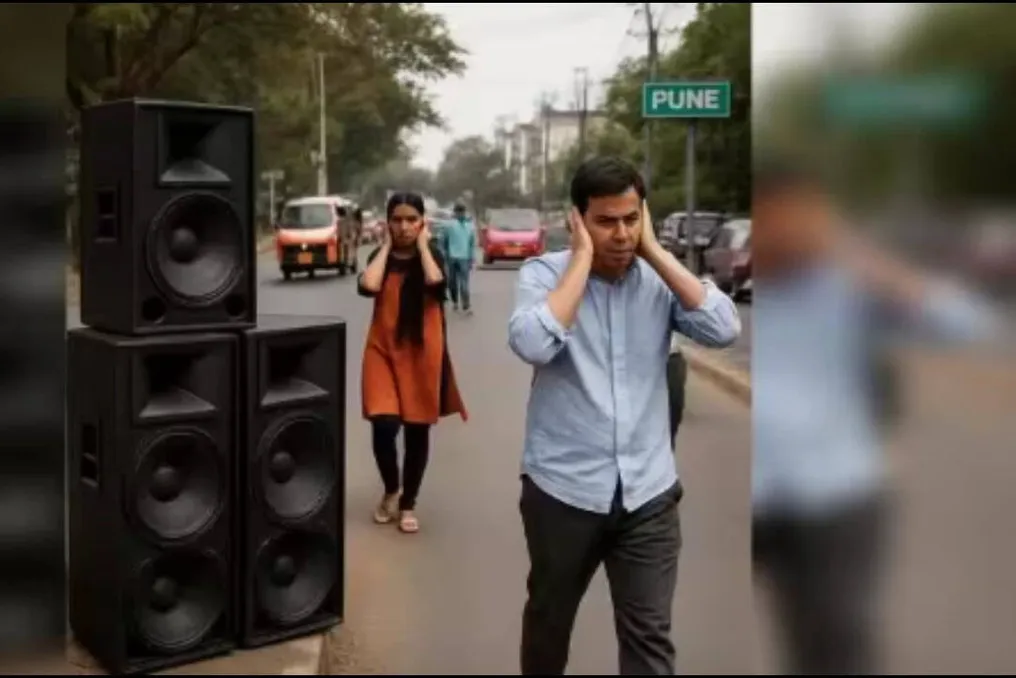
Loud music from DJs after midnight, sounds that drown out conversations, or noise from a celebration that disrupts sleep in entire neighborhoods—the question arises when a public celebration violates the law?
Amplified music is a common element of public celebrations across India, including religious processions, community festivals, weddings, political rallies, and DJ parties. However, when powerful speakers, low bass, and prolonged performances intrude into residential areas, festivities can become a source of stress for local residents.
Similar problems can arise during other religious gatherings when loudspeakers operate near homes, hospitals, or educational institutions.
Noise pollution rules in India are governed by the Noise Pollution (Regulation and Control) Rules 2000, which were developed under the Environment Protection Act 1986. These rules differentiate between daytime, which runs from 6 am to 10 pm, and nighttime, from 10 pm to 6 am, establishing different permissible background noise levels for industrial, commercial, residential, and silent zones.
Nighttime noise limits are lower than daytime limits across all four categories.
Requesting a reduction in volume should not become a matter of life and death. Nevertheless, a number of registered incidents across India have shown how objections to loud music and nighttime noise can escalate into violence. In some cases, people were allegedly attacked after confrontations with the perpetrators of the disturbances. In other instances, deaths occurred during celebrations, prompting families to claim that excessive sound played a role.
Prolonged exposure to high-decibel noise can trigger a physiological stress response, affecting heart rate, blood pressure, and sleep. Health consequences depend on the intensity and duration of exposure, as well as the individual's existing health conditions.
Death during a loud celebration does not in itself prove that noise was the cause. Medical evidence and legally sufficient causation are crucial.
Noise exposure can cause particular anxiety in people with pre-existing cardiovascular diseases. Wadlamudi noted: 'Noise rarely causes a heart attack out of thin air, but it can push a vulnerable heart to the edge.' He added that WHO-commissioned studies linked chronic noise exposure to an increased risk of heart disease and hypertension.
Residents affected by excessively loud music can file a complaint with the police and the authorities responsible for enforcing noise pollution regulations. If their complaints go unanswered, they can escalate the issue to senior police officers, local administration, or pollution control bodies, and also approach the court for enforcement.