The temporary reduction in fuel levies announced in the Medium-Term Budget Policy Statement (MTBPS) will provide some relief to South Africans grappling with the rising cost of living. Nevertheless, doubts persist regarding whether taxpayers are receiving adequate returns on the funds they already contribute to the state budget.
The Organisation Undoing Tax Abuse (OUTA) welcomed the R10 billion fuel levy reduction package announced by Finance Minister Enoch Godongwana. However, OUTA warned that inefficient spending, deteriorating infrastructure, and weak financial management continue to put pressure on households and businesses.
Godongwana announced a temporary reduction of R1.50 per litre of petrol and R3 per litre of diesel, effective from November 4 until December 1, after which smaller cuts will follow until January 5, 2027.
OUTA noted that this measure will offer some respite amid rising transport and food costs, but asserted that the temporary relief will do little to solve the fundamental problems facing taxpayers.
OUTA CEO Wayne Duvenage stated: 'South Africans feel the pressure every time they fill up their tanks, buy groceries, or pay for transport. This help will assist, but only temporarily.'
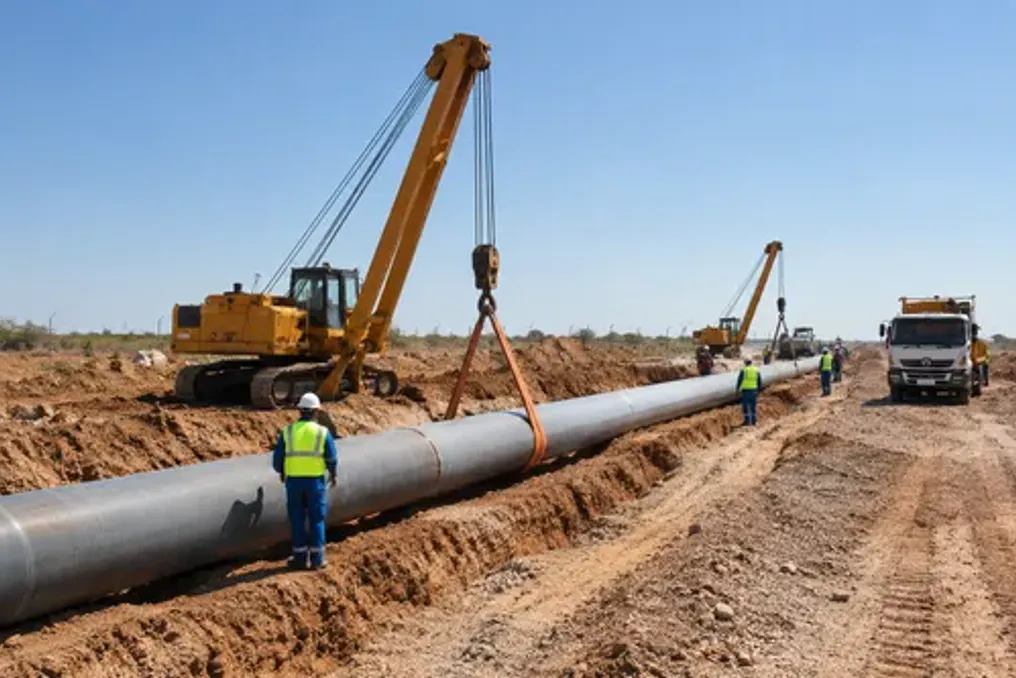
The organization drew attention to a Financial Affairs audit concerning R887 billion transferred to provinces and municipalities through targeted infrastructure grants between the 2017/18 and 2023/24 fiscal years. This raised concerns about how consistently state funds have been converted into functioning infrastructure and improved services.
According to OUTA data, the audit revealed that infrastructure projects were often delayed, left incomplete, or failed to meet planned objectives. The organization stressed that this does not mean all R887 billion was wasted, but pointed out that these findings call into question accountability and the consequences of poor project execution.
Duvenage added: 'Spending money is not the same as getting work done. The Ministry of Finance must tell South Africans which projects failed, how much was spent, who is responsible, and what actions have been taken.'
Another issue is local government funding. The MTBPS provides an additional allocation of R21.8 billion for a fair share of local government in the medium term to help municipalities cover rising costs of providing basic services.
However, OUTA countered that many municipalities dedicate too large a portion of their budget to operational expenses, neglecting adequate investment in infrastructure maintenance.
Duvenage remarked: 'When municipalities charge for electricity and water but fail to maintain those networks, residents pay twice. First through municipal bills, and then through the cost and disruptions caused by faulty infrastructure.'
The property sector also reacted positively to the temporary fuel levy reduction, but cautioned that broader economic improvements are necessary to alleviate pressure on consumers.
Dr. Andrew Golding, CEO of Pam Golding Property Group, said the measure would help cushion the blow to households and businesses from increased transport and operating costs.
Golding emphasized: 'Higher fuel costs have repercussions far beyond drivers, affecting transport, distribution, food prices, and inflation overall. While the relief is temporary, it gives households and businesses facing rising costs some room to manoeuvre.'
He also noted that sustainable housing affordability will depend on stronger economic growth, job creation, and access to competitive housing finance.
Samuel Seeff, Chairman of Seeff Property Group, characterized the MTBPS as a 'stable and fair fiscal plan amidst complex macroeconomic conditions.' He also called for interest rate reductions to ease pressure on consumers and support demand in the housing market.
Momentum Group economist Sanisha Pakrisamy warned that the temporary fuel levy reduction cannot permanently shield consumers from high international oil prices.
Pakrisamy pointed out that the Ministry of Finance lowered its economic growth forecast for 2026 to 1.2% compared to the 1.6% projected in February. Furthermore, the Ministry of Finance increased its non-interest expenditure framework by R45 billion.
According to Pakrisamy, the additional spending is intended to support areas such as healthcare, education, local government, and law enforcement. However, stronger economic growth and stable implementation of infrastructure projects are crucial for achieving long-term improvements.
OUTA also demanded a thorough review of the R38.1 billion in planned medium-term savings by the Ministry of Finance, including measures aimed at combating social grant fraud and inefficient programmes.
The organization cautioned that efforts to curb losses should not harm legitimate grant recipients or undermine essential public services. Thus, the debate over fuel levy reductions extends beyond the immediate cost of filling a car; while temporary cuts give drivers a breather, OUTA argues that long-term benefits from public spending require improved financial management and higher quality service delivery.