The Indian payment ecosystem has demonstrated its ability to function on a massive scale. However, as fintech companies expand into cross-border business payments and implement artificial intelligence, they face a different set of challenges.
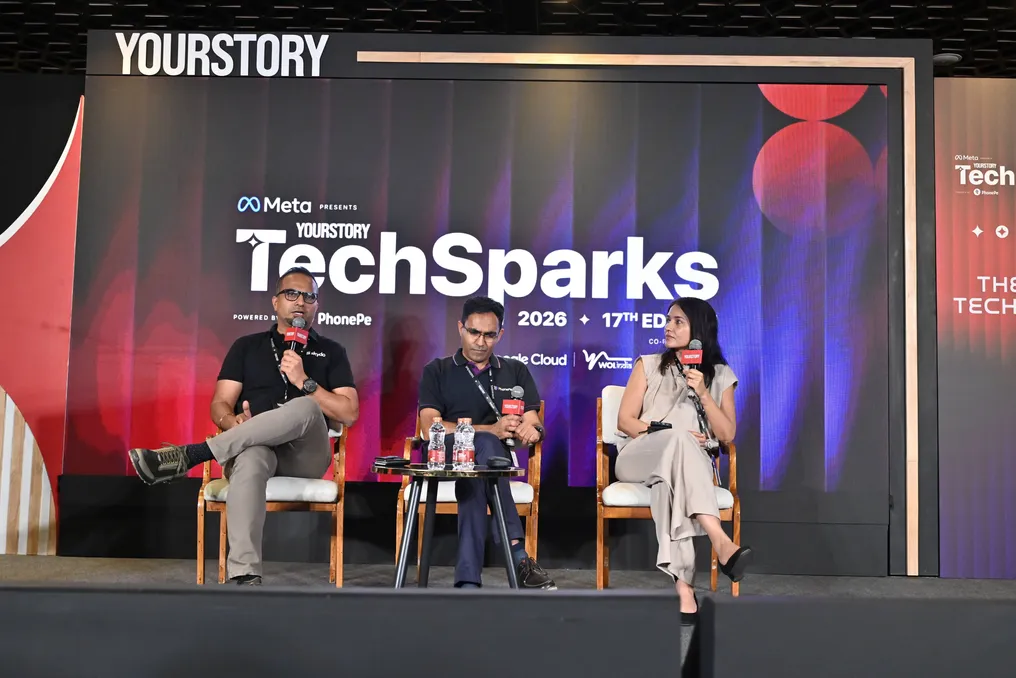
At the TechSparks 2026 event, Mevin Jane, founder of Skydo, and Srijon Biswas, CTO of PhonePe, discussed large-scale payment technologies, the need for transparency in international transactions, and the opportunities opened up by AI.
The panel discussion, moderated by Priya Patankar, Head of Corporate Communications at PhonePe, focused on the topic 'From domestic scale to global channels: The evolution of India's fintech infrastructure.' Jane believes that cross-border payments present significant prospects because the adoption rate of fintech solutions remains relatively low.
India exports goods and services worth about $850 billion annually and imports approximately $1 trillion, with both figures growing. Nevertheless, according to Jane, less than 10% of these transactions are processed by fintech companies; most payments are still handled by banks.
Skydo specializes in B2B payments, where the adoption of fintech solutions is even lower than in consumer payments. Many businesses still do not understand how fintech companies can help them manage international transactions. Jane believes that the immediate opportunity lies in raising awareness of this category, rather than competing on price.
He noted: 'Wasting time worrying about other fintech players and how to compete with them is not a good use of time. That time may come, perhaps in 5–10 years, when all of us have much greater market penetration.' Currently, the priority is demonstrating to businesses how fintech companies can solve payment problems traditionally solved by banks.
Despite venture capital activity and regulatory changes contributing to the sector's progress, Jane sees significant growth potential. PhonePe's experience highlights the importance of making the right architectural decisions early on. Biswas stated that the company planned for scaling from the beginning. Its early architects created systems and engineering practices that continued to support the platform as it grew 100–1000 times.
'We used the same template, the same set of libraries, the same set of constructs that we used. So, it was built in from the start. We effectively did not conduct a major refactoring of our architecture in the longest time I can remember,' he said. Instead of a major architectural overhaul, PhonePe focused on understanding its technology stack and making informed decisions about the systems used.
The company formed its own SRE (Site Reliability Engineering) team, implemented a sharded database architecture from the start, and chose technologies that its engineers understood well. Biswas also emphasized the importance of engineering hygiene, instrumentation, testing, quality assurance, and load testing. According to him, at PhonePe's scale, even unlikely failures can become operational problems.
Biswas recalled bugs that appeared in another organization many years ago. He explained that building a scalable system requires not only increased capacity but also robust architecture, careful technology selection, and the ability to understand and manage systems in complex conditions. Biswas added that regulation is not necessarily a constraint for fintech companies; it can prompt businesses to establish proper practices from the outset.
A more serious engineering challenge, he explained, relates to the combination of scale and diversity in India. He compared India's scale to China, noting that differences between geographical regions, use cases, and merchant environments create additional complexity. PhonePe encountered this during its early expansion into offline payments. When integrating with merchants, including pharmacy chains like Apollo Pharmacy, the company found that different systems were already in use across various states and cities. Supporting these merchants required creating integrations for multiple systems, rather than relying on a single standardized setup.
These differences generate numerous exceptions and edge cases that must be managed alongside high transaction volumes. Patankar also noted that PhonePe received a license in the UAE, opening new opportunities and challenges. Biswas stated that the company will need to adapt its infrastructure for international markets, rather than simply replicating its Indian operations. Most of PhonePe's existing payment architecture was designed specifically for India. The company is currently exploring additional layers of abstraction that could simplify international expansion without needing to deploy the entire existing stack and build large teams in each new region.
For businesses receiving payments from foreign clients, speed and cost are not the only factors. Jane believes that transparency is equally important. Small businesses, freelancers, and service providers should know how many dollars the client transferred and how many rupees will ultimately arrive in their accounts, but they may not understand the exchange rate used, foreign currency fees, or how the final amount is calculated. Without this information, businesses may find it difficult to dispute charges or compare payment service providers.
Jane reported that Skydo is working on educating clients about these costs and helping them understand where savings are possible. He cited an example of a business receiving a $5,000 payment from an international client. In a transparent system, the business immediately knows after the client makes the payment how many rupees it can expect to receive and when the money is likely to arrive. They can also see the applicable exchange rate, understand how the final amount was calculated, and learn the applicable GST.
The discussion also touched upon the growing role of AI in fintech and its potential impact on business. Jane noted that Skydo collaborates with service companies, ranging from law and consulting firms to IT companies and freelancers. He believes that AI agents and automation can enable small firms to provide services that previously required the resources of much larger organizations. This can create opportunities for smaller, specialized businesses and freelancers to earn more than previously possible, especially in India.
At PhonePe, Biswas described the implementation of AI in three areas: user experience, developer productivity, and operational efficiency. In the PhonePe app, users can search and ask questions about their transactions using an on-device model. AI is also used in workflows to interpret regulatory and compliance documents. This helps teams understand what regulatory changes mean for the business without manually processing every document. Developer productivity is another area where PhonePe has achieved improvements. Biswas said that AI assistance in coding reduced some processes that previously took three to five days to about 15 minutes. Generating test cases became 5–6 times faster in some cases, and some customer service and support workflows also showed a 5–6 times saving.
However, Biswas stressed that automation does not eliminate the need for human oversight. In regulated business, workflows that can affect users, systems, or processes will still require human involvement. India already possesses several foundational elements, including payment infrastructure and identity and consent systems. Biswas believes this provides an advantage as the fintech sector develops. Nevertheless, cross-border payments remain structurally complex. There is no single central counterparty linking all central banks and currencies through a unified accounting system. Consequently, businesses must navigate a fragmented payment infrastructure, solving the problems that fintech companies are trying to address.
The next task for India's fintech sector is to leverage the strengths of its domestic infrastructure while adapting to international markets. This will require increasing the transparency of cross-border payments, managing the complexity of diverse markets, and utilizing AI to boost business productivity.