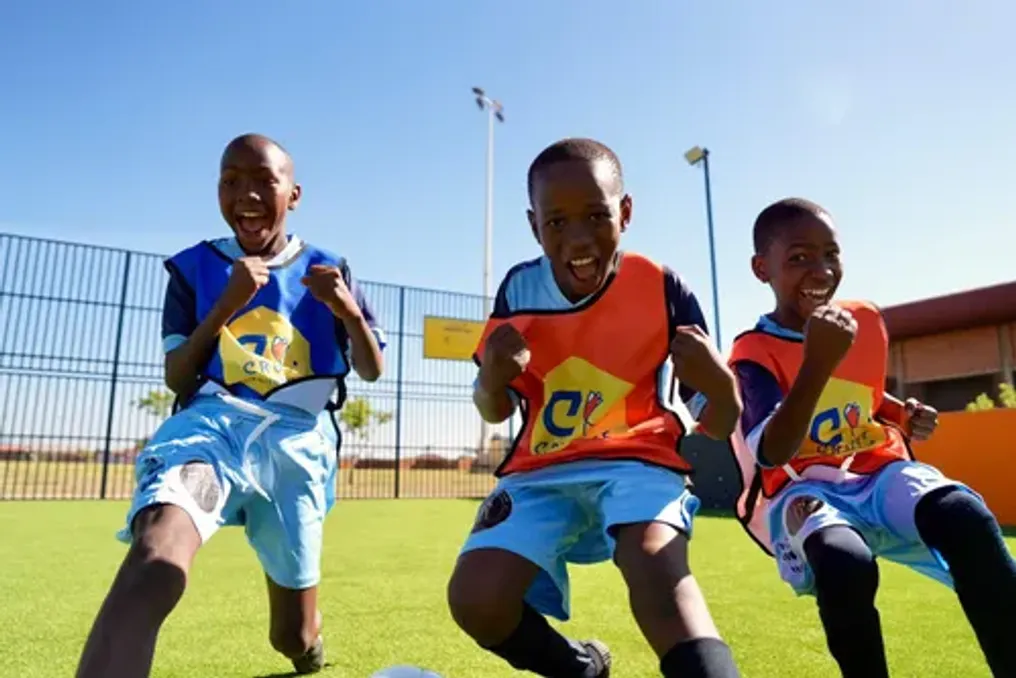
The opening of the first Criff court in Mamelodi demonstrates how restoring sports infrastructure can be a catalyst for raising mental health awareness, empowering youth, and fostering community cohesion, addressing the long-standing issue of a lack of safe public spaces in township areas.
The renovated football pitch on the northeastern outskirts of Pretoria was created not merely as a place for games, but as an initiative that uses sport to promote teamwork, self-confidence, and positive community involvement.
The non-profit organization Rhiza Babuyile launched the first Criff court in Mamelodi on October 20th, collaborating with the Johan Criff Foundation to restore an existing, dilapidated facility.
The main goal was to create a space where children and young people could engage in organized sports while simultaneously developing life skills, building relationships, and learning accountability for their actions.
The Johan Criff Foundation is an international non-profit organization founded by Dutch footballer Johan Criff, aiming to improve children's access to sports and play. It supports sports facilities in underserved areas, inclusive sporting opportunities, and programs that promote physical, social, and mental development.
For Alefa Mulenberg, founder of Rhiza, providing a place to play is only part of the solution. He emphasized that it is important to look beyond the game itself: 'It is important to give a young person a safe place to play, but we must consider what happens outside of the game. Are they learning to make responsible decisions? Are they developing the confidence to voice their opinions, work with others, and take responsibility for their actions? That is what helps young people become active participants in their community,' he stated.
The Importance of Public Spaces
A 2019 study by researchers Yente Osthuizen and Cora Burnett from the University of Johannesburg examined access to safe places for physical activity in Mamelodi East. Based on discussions with 80 sixth-grade students, nine sports coaches, and interviews with community and school representatives, the researchers found that safety and support in spaces used for sports and informal play varied.
The study results highlighted the necessity of considering both the physical environment and the support available to children when creating participation opportunities. The 2021 dissertation by Dembaye Martina Dembe from the University of Pretoria identified a shortage of publicly accessible and recreational areas that were in poor condition or abandoned, linking these issues to the long-term consequences of apartheid-era spatial planning.
The work argued for the regeneration of existing recreational areas so that they could become significant places for community interaction and promote greater urban cohesion.
Sport Beyond Scores
Through structured activities, young people can learn to cooperate, cope with disappointment, respect peers, and develop leadership qualities. The launch of the court coincided with Mental Health Awareness Month and took place three days after International Day for the Eradication of Poverty, drawing attention to the role of public facilities where access to organized leisure activities is limited.
Mulenberg noted that a safe space must offer more than just physical protection; it must be a place where children feel accepted, respected, and supported by peers and trusted adults. He added: 'The community becomes stronger when young people feel they belong and have a role in it. We want children to understand that they are not just recipients of opportunities. They can contribute, they can lead, and they can help create the community they want to live in.'
Sport can also serve as a starting point for discussing mental health issues, especially for young people who find it difficult to talk about personal problems. Mulenberg explained: 'Not every young person will easily be able to talk about what they are going through. Sometimes the first step is having a place where they feel comfortable, where they can spend time with others and know they are welcomed. Through sport, young people can build relationships and gain confidence.'
Creating Inclusive Space
Ensuring equal access for girls to sports opportunities is another part of the approach. An inclusive environment gives girls a chance to participate, develop their abilities, and take on leadership roles.
Mulenberg concluded: 'Although a sports court cannot solve the structural causes of poverty, unemployment, or violence, it can provide a platform for sustainable youth engagement and participation in community life. Its effectiveness depends on the quality of the programs, the people who run them, and the extent to which local communities embrace this space.'