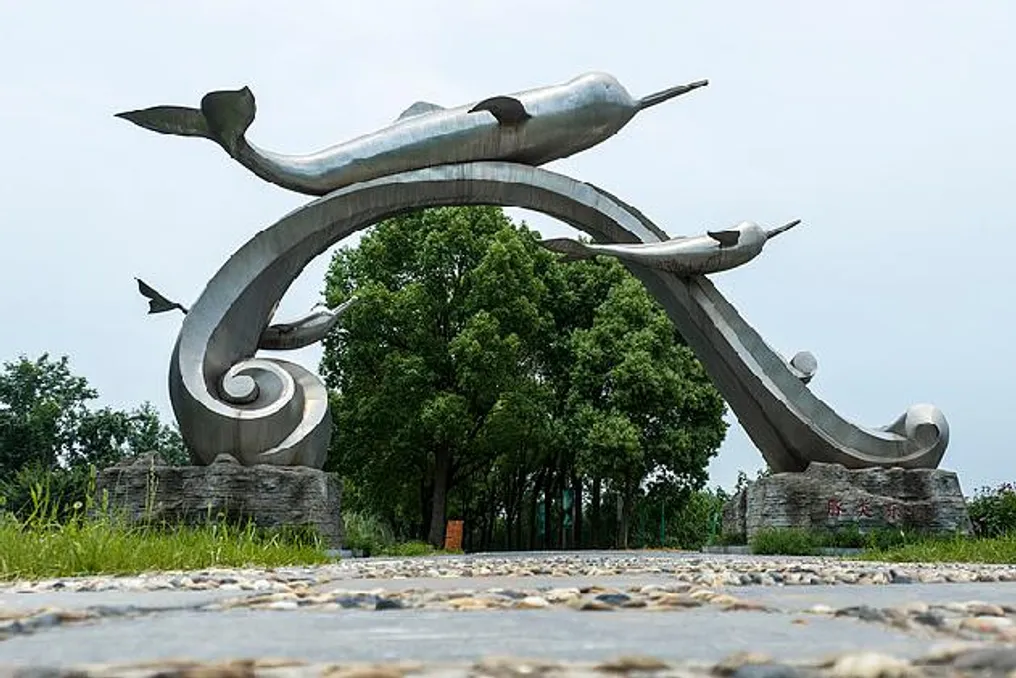
October 24th marks International Freshwater Dolphin Day. This date is not officially recognized by the United Nations; it was proposed at a seminar on establishing protected areas for freshwater cetaceans held in East Kalimantan, Indonesia, in October 2009, according to data from the IUCN SSC Cetacean Specialist Group.
The purpose of this day is to raise awareness about freshwater dolphins and their habitats, including the Ganges dolphin, Irrawaddy dolphin, Amazon river dolphin, and the Yangtze finless porpoise.
Freshwater cetaceans worldwide face pressure from habitat degradation, accidental bycatch in fisheries, and other human activities.
In China, the population of the Yangtze finless porpoise is showing signs of recovery. According to an official statement at a press conference by the State Council Information Department on January 30, 2026, a special survey in 2025 recorded 1,426 individuals, which is 177 more than the 2022 survey.
This recovery is attributed to a ten-year fishing ban in key Yangtze waterways, which began in 2021, as well as the expansion of protected areas and targeted rescue programs, as indicated by the Ministry of Agriculture and Rural Affairs during a briefing.
This positive experience contrasts with the vulnerable status of other river dolphin populations in South and Southeast Asia. The Ganges dolphin, found in India and Bangladesh, is listed as endangered on the IUCN Red List.
The main threats to it are dams and water releases that fragment river habitats, water abstraction, industrial and agricultural pollution, and accidental entanglement in fishing nets, according to IUCN and WWF estimates.
The freshwater populations of the Irrawaddy dolphin in the Mahakam River of Indonesia and the Ayeyarwady River of Myanmar are classified by the IUCN SSC Cetacean Specialist Group as critically endangered. These small, isolated groups are extremely susceptible to accidental trawl bycatch, vessel collisions, and habitat loss.
Local authorities and conservation groups have established protected zones and implemented fishing monitoring regulations, but persistent risks are slowing down population recovery.
Conservation experts from WWF note that river dolphins serve as important biological indicators of river ecosystem health. While the Yangtze case demonstrates that targeted regulation can reverse decline, many transboundary river systems still lack coordinated cross-border action to protect remaining freshwater dolphin habitats in Asia and South America.