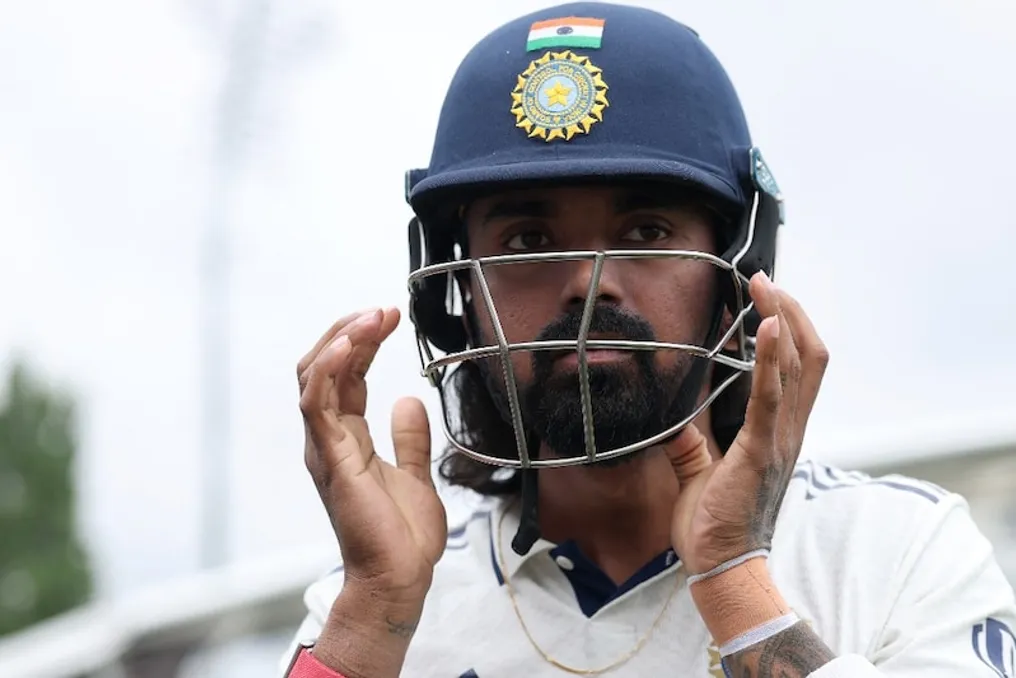
The search for a player capable of replacing Hardik Pandya, who is a valuable all-rounder, remains relevant for the Indian team. Such a player must be able to play in the starting lineup, reliably bowl four overs, and have the ability to finish the match at a critical moment. However, if Hardik is unavailable, the Indian team found an answer to this question in Christchurch when playing against New Zealand, thanks to Tilak Verma, Naman Dheer, and Nitish Kumar Reddy.
Instead of preparing one player to replace Hardik, the team bet on three young athletes. India needs players who can contribute both in attack and defense. Therefore, the search for alternative all-rounders constantly remains important. This season, Shivam Dube played his role in the T20 World Cup, and players like Nitish Kumar Reddy and Naman Dheer also received opportunities. Tilak Verma possesses attacking qualities that strengthen the team's middle order.
In the second T20 International match against New Zealand, India needed to score 181 runs. At one point, the team lost five wickets with only 70 runs. Mitchell Stainer's bowling created difficulties for the Indian batting, taking four wickets while conceding 21 runs in 4 overs.
Naman Dheer helped revive hopes of an Indian victory by scoring 31 runs off 17 balls, including a six against Stainer. After Dheer came out, Tilak Verma and Nitish Kumar Reddy took responsibility. Tilak remained on the field with 51 runs unbeaten, and Reddy scored 26 runs unbeaten off 13 balls. Both players formed a strong partnership of 69 runs for the seventh wicket.
India won by four wickets, scoring 181 runs in 19.5 overs with six wickets down, gaining a 2-0 advantage in the five-match series. This partnership was the largest in the history of Indian T20 International cricket for the seventh wicket.
Tilak demonstrated that he is capable not only of stabilizing the innings under pressure but also of scoring quickly, scoring 51 runs unbeaten off 26 balls. The specialty of his game lies in understanding the bowler's plan and choosing appropriate shots. New Zealand bowler Jacob Duffy tried to play considering the long boundary from the outside, but Tilak changed his position and utilized the short boundary on the left side. He did not rush, waiting for the right moment, and stayed on the field until the end.
Like Hardik, Tilak is capable of big hits under pressure, but his main role is related to the attack. Thus, he may not be a direct replacement for Hardik, but rather a player who strengthens the team's middle order and finishing ability.
Naman Dheer scored 31 runs off just 17 balls in this match. His innings gave speed to India at a time when the pressure to score was increasing due to consecutive wicket losses. He adopted an aggressive stance against spinners and showed that he can counter bowlers even in difficult circumstances.
Dheer's usefulness is not limited to just batting; he can also bowl, giving the team an additional option. Nevertheless, to fulfill a regular role in four overs, like Hardik, he will need to consistently contribute to his defensive play.
Nitish Kumar Reddy is one of the most natural options for an all-rounder in this trio. He bowls fast and is capable of scoring quickly in the lower middle order. In the second T20, he supported Tilak well, scoring 26 runs unbeaten at a strike rate of 200. At the end of the match, playing in the attack, it is important to know how to read the bowler's next move and remain calm. Reddy managed this task in a difficult situation, helping India take control of the match and scoring the winning runs.
India is preparing him to take on important responsibilities in defense. However, quick innings in the attack alone will not be enough to replace Hardik. Reddy must regularly influence the defensive play as well.
The performance of Tilak, Dheer, and Reddy showed India a useful alternative. Together they scored 108 runs off 56 balls, proving their potential in a tough match. However, Hardik's specialty is that he contributes significantly in both attack and defense. These young players are still in the process of fulfilling such comprehensive responsibility at that level. The good news for India is that it has young players with various strengths. If Tilak continues to score in the middle order, Dheer will contribute to the defense with aggressive batting, and Reddy...