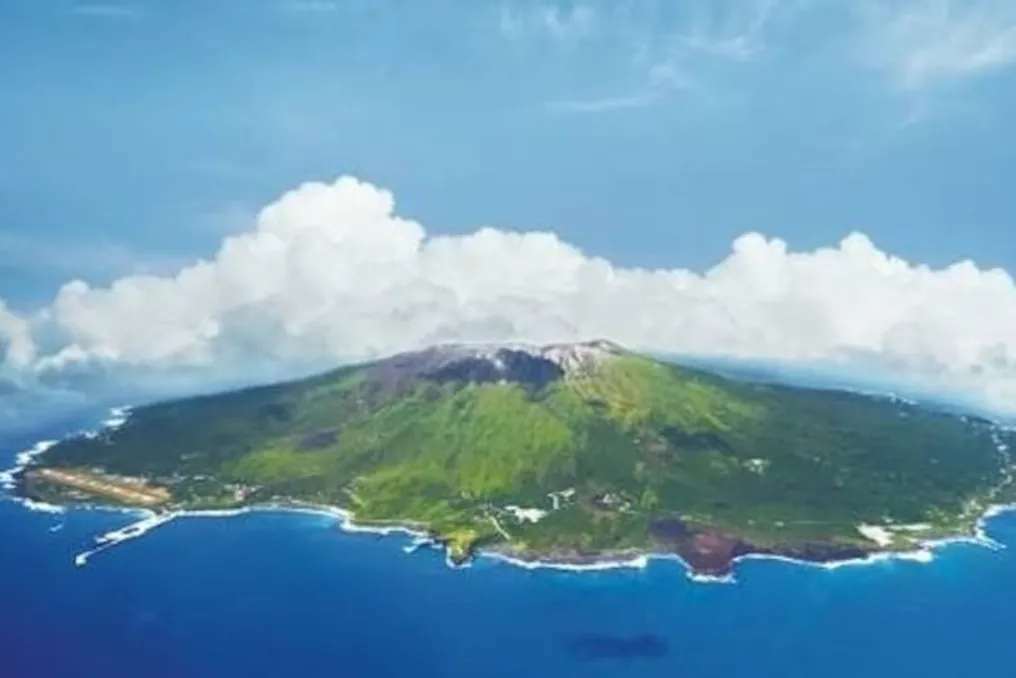
There is an island where wearing gas masks has become an integral part of daily life, and the course of events depends on a siren signal. In such a place, where gas masks are as necessary an element as a mobile phone or a wallet, life is governed not by the ticking of clocks, but by warnings about toxic air.
The residents of this place, whether they are shoppers at the market, children riding bicycles, women selecting vegetables, or fishermen gathering nets by the sea, constantly wear black masks around their necks. Upon the sound of a loud siren, the streets instantly stop; traffic freezes, market bustle ceases, and within seconds, every person puts on their mask without haste.
This scenario is not the plot of a Hollywood horror film or a science fiction thriller. It is the everyday reality of Miyakejima Island, located in the Pacific Ocean. This town, known worldwide as the 'gas mask island,' lives by the signal of sirens, and the fate of its inhabitants is determined by the poison circulating in the atmosphere.
Miyakejima is located approximately 180 kilometers south of Tokyo, the capital of Japan, and falls under the administrative jurisdiction of the Tokyo Metropolitan Government. From a distance, the island appears as a picturesque tourist destination, surrounded by green hills and clear blue sea. However, right in the center of the island rises a highly active volcano called 'Mount Oyama.' This volcano not only erupts fire and lava but also continuously emits a huge amount of extremely toxic sulfur dioxide.
Sulfur dioxide is an invisible and highly irritating gas capable of causing instant lung burns. If the concentration of this gas in the air increases, it becomes difficult for a person to breathe even with a single inhalation, and death can occur in just a few minutes. The history of Miyakejima is rich with events related to volcanic eruptions. Events in the mid-2000s cemented this island in history. Mount Oyama experienced a series of powerful eruptions, and land collapse allowed millions of tons of sulfur dioxide to disperse into the atmosphere.
The level of air pollution became so dangerous that in September 2000, the Japanese government took emergency measures and ordered the evacuation of the entire island overnight. All 3600 residents were transported to the mainland part of Tokyo using ships and military helicopters. In the following years, this beautiful island remained practically a ghost town, accessible only to scientists and research groups in special chemical suits.
When the gas emissions from the volcano slightly decreased, the residents who had been away from their homes began demanding a return. After careful analysis, the Tokyo Metropolitan Government and the Japan Meteorological Agency permitted people to return, but under very strict official guidelines. The local administration issued a clear order: every citizen and tourist entering the island's boundaries must constantly wear a working gas filter around their neck.
The administration installed over 19 high-tech gas monitoring stations across the island, which measure the level of sulfur dioxide every second. Depending on the readings, sirens activate: green, yellow, and red alert levels. When the red alert is activated, residents are informed that the gas level has exceeded the lethal limit, and they must immediately put on masks and head to shelters. According to emergency response services, this is the only legal and practical way to survive on the island.
Today, about 2200 people live on the island. What seems like a terrifying picture to the outside world has become a routine for the locals. In local primary and secondary schools, children are taught not only mathematics and natural sciences but are primarily taught how to put on a gas mask within three seconds of the siren sounding. Even while playing football or volleyball on the field, a child wears a black mask around their neck. Fishermen, when launching boats into the sea, always have a box with a gas mask next to their life jacket.
Special air filtration systems are installed in homes, offices, and public buildings. If a red alarm sounds for a long time in any area, people calmly move to nearby sealed underground shelters and await the normalization of the situation.
Interestingly, this deadly threat has spawned a completely new model of tourism on Miyakejima, known as 'damage tourism.' Thousands of extreme travelers, geologists, and ecologists from all over the world come to see this unique island. As soon as a passenger ship arrives at the port of Miyakejima, tourists must first purchase or rent gas masks. They come to see the roads covered in black volcanic ash, the phantom forests of dead trees, and a unique example of human resilience in the face of survival.