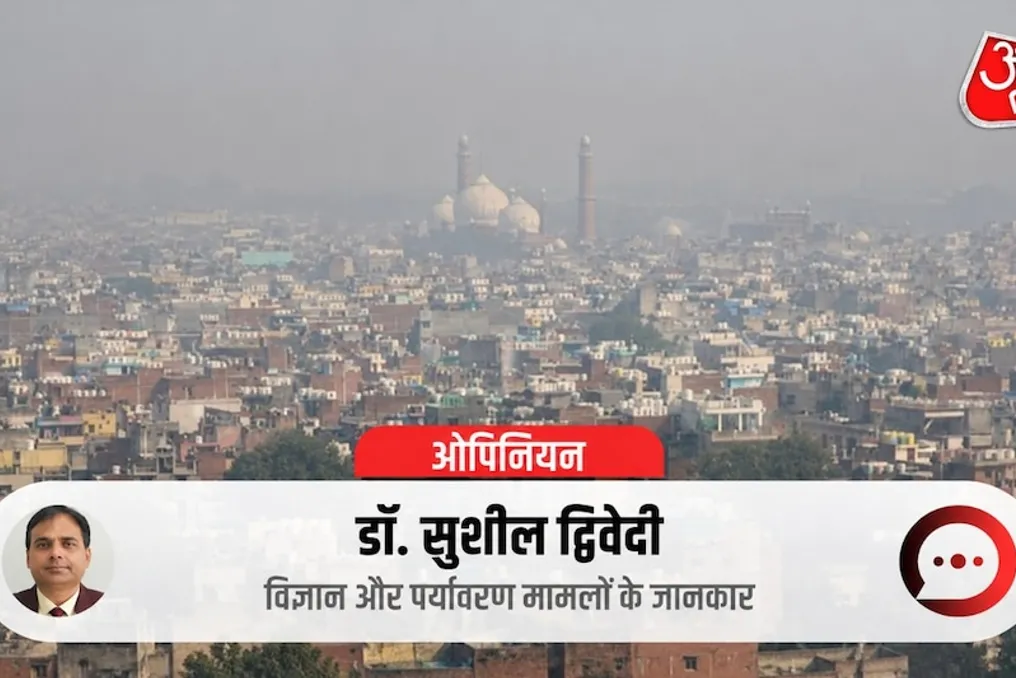
Air pollution is no longer merely an environmental issue; it has become a national crisis linked to public health, economic productivity, and the future of coming generations. Solving this problem requires not just seasonal restrictions, but long-term strategies based on scientific facts, effective monitoring, and control over emission sources.
Breathing is the most natural function of life, but polluted air is making this process dangerous for health. The impact of air pollution is not limited to coughing, eye irritation, or difficulty breathing; exposure also increases the risk of heart disease, stroke, lung cancer, and premature death. Therefore, ensuring clean air is not just a matter of environmental protection, but also a constitutional and administrative responsibility to protect the lives and health of citizens.
A study published in 'The Lancet Planetary Health', led by researchers affiliated with Karolinska Institute in Sweden, presented a grim picture of the health effects of air pollution in India. This study analyzed data from 655 districts across the country between 2009 and 2019. According to the findings, every increase of 10 micrograms per cubic meter in the annual average concentration of PM2.5 was associated with an 8.6 percent rise in mortality risk.
The researchers estimated approximately 3.8 million deaths during this period based on exposure to PM2.5 exceeding the Indian National Ambient Air Quality Standards. However, when based on the stricter guidelines of the World Health Organization (WHO), this estimate rose to 16.6 million. It is important to note that these figures are estimates based on statistical models, not individual confirmations of every death. Nevertheless, these statistics highlight a deep link between long-term pollution and mortality risk.
PM2.5 particles are ultra-fine particles with an aerodynamic diameter of 2.5 micrometers or less. Due to their small size, they can penetrate deep into the lungs. Exposure to these particles can affect processes such as inflammation and oxidative stress in the body. Scientific research links long-term exposure to increased risks of cardiovascular and respiratory diseases, as well as premature death.
In 2021, the WHO set the guideline for the annual average of PM2.5 at 5 and the 24-hour average at 15 micrograms per cubic meter. In contrast, India's National Ambient Air Quality Standards set the annual limit at 40 and the 24-hour limit at 60 micrograms per cubic meter. There is a significant difference between the two standards; Indian standards are limits set for regulatory compliance, while WHO guidelines are recommendations based on scientific health evidence. This does not mean that there is no health risk from pollution within the national limit.
WHO guidelines also indicate that the risk of pollution can persist even at low levels. Therefore, the goal should not just be to enforce adherence to the prescribed limit, but to continuously reduce pollutant concentrations.
It is no longer appropriate to consider air pollution solely an issue of Delhi-NCR. Industrial emissions, vehicle smoke, construction work, and road dust are affecting smaller cities as well. The poor air quality in the industrial area of Barniahat, located on the Assam-Meghalaya border, points to this broader challenge.
According to a report released by the Centre for Science and Environment (CSE) in March 2025, the PM2.5 pollution problem was observed in Delhi, Mumbai, Kolkata, Bengaluru, Hyderabad, and Chennai between October 2024 and January 2025. During this period, Delhi recorded an average level of approximately 175 micrograms per cubic meter. The report also mentioned that in cities like Mumbai, Chennai, and Bengaluru, local pollution increased sharply in several places during the winter. In some areas, pollution levels were found to be about 60 percent higher than the city average.
These findings make it clear that a city's overall average figure does not reflect the actual situation in every area. The risk may be higher near industrial zones, busy roads, and construction sites. Therefore, expanding monitoring centers and ensuring the availability of localized pollution data is essential.
The effect of polluted air affects all sections of society, but the risk and the ability to avoid it are not equal for everyone. Children, the elderly, pregnant women, and people with pre-existing heart or lung diseases are particularly vulnerable. Since children's lungs are in a developmental stage, prolonged exposure to pollution is considered a serious concern for their respiratory health.
Furthermore, construction workers, street vendors, rickshaw pullers, and traffic police officers spend most of the day in open environments. For economically weaker families, installing air purifiers or opting to stay indoors when pollution rises is limited. For individuals dependent on daily wages, absence from work due to pollution can lead to loss of income.