Macaw opens lock and escapes with another in Juína (MT); one bird rescued after six days
Read more
Grupo Globo
g1.globo.com

Macaw opens lock and escapes with another in Juína (MT); one bird rescued after six days

A macaw managed to open the lock of its enclosure and escaped accompanied by another bird in the city of Juína, located 735 km from Cuiabá. This Saturday (24), one of the birds was rescued and returned home, while the other remains missing.

The two birds, named Lara and Larinha, have been cared for for approximately eight years by veterinarian Gabriela Souza and her husband, Fernando Bergamin. According to Gabriela, the escape occurred just a few hours after she performed the routine of feeding the birds, changing the water, and checking the enclosure's closure.

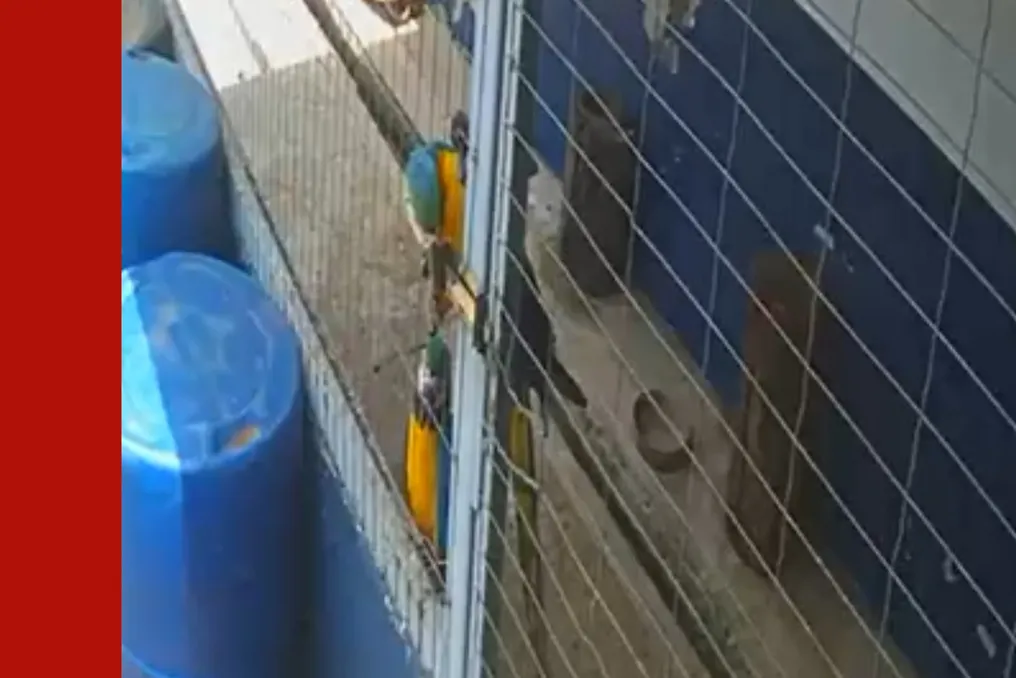
Images captured by a security camera recorded the moment one of the macaws manipulated the lock until it managed to unlock it. After the object came loose, both birds waited a short period before taking flight.

Gabriela was notified by a resident who spotted a macaw in a tree in the Module 4 area. Due to the height at which the bird was, the veterinarian requested support from the Fire Department. Through persistence and dialogue, she managed to follow the macaw's flights between progressively lower trees until finally attracting it with its usual feed to a transport cage.

The team managed to place the bird in a transport cage, and according to Gabriela, it showed signs of health, although it was visibly thinner and exhausted after the days away from home. She reported that the bird arrived very hungry, being fed the usual ration and drinking water desperately.

Searches continue to locate the second macaw

Efforts are ongoing to find the second bird. Gabriela speculates that it may be in the central area of Juína, particularly in the Módulo 1 and Módulo 4 neighborhoods, areas where residents reported seeing macaws flying at low altitude and landing on trees.

The veterinarian clarifies that the birds do not have amputated wings, but they are not accustomed to long flights. For this reason, she presumes that the lost macaw is moving short distances and landing on nearby trees. The greatest concern is the possibility that it may have difficulty finding water and food on its own, given that the birds lived under the family's care for eight years and had an established routine of feeding and access to water.

The family asks residents that if they see a lone macaw, they should contact the guardian or call the Fire Department, providing the exact location. Gabriela adds that the birds are curious and show attention when someone interacts with them, but they are not used to landing on strangers' arms.
Similar stories

Rare Macuco bird rescued and returned to nature on the coast of São Paulo
Read more
g1.globo.com

Rare Macuco bird rescued and returned to nature on the coast of São Paulo

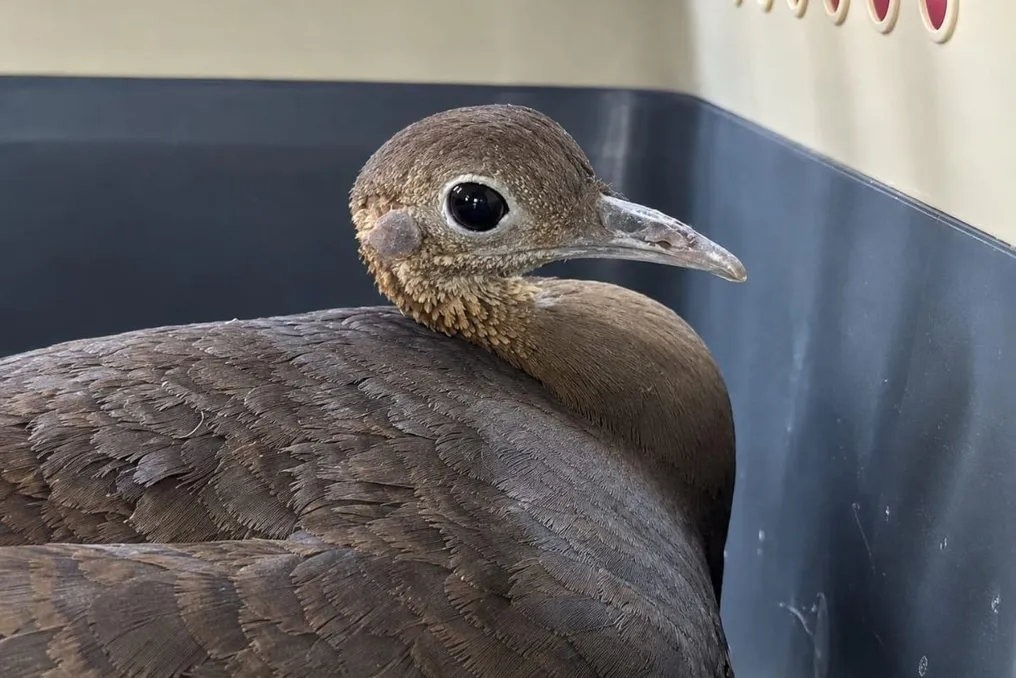
A macuco (Tinamus solitarius), an endemic species of the Atlantic Forest, was rescued and subsequently returned to its natural habitat after being found disoriented on a busy road in the city of Mongaguá, located on the coast of São Paulo.

The animal remained under observation for a period of 24 hours before being released. The encounter occurred on Tuesday, the 20th, when a local merchant spotted it in front of his establishment on Avenida São Paulo. Due to the high volume of traffic in the area and because this is not typical behavior for this species, the citizen collected the bird and transported it to the Zoonosis Surveillance Unit.

Environmental Inspection teams from the municipality took the macuco to the Mongaguá Ecological Park for a clinical evaluation. Biologist Daniel Bortone and veterinarian Marco Belmonte verified that the bird had no injuries and was in suitable condition to return to nature. After 24 hours of monitoring, the animal was released on Wednesday, the 21st.

Guidance for the Community

The Municipality of Mongaguá issued a statement advising residents not to attempt to capture wild animals that are injured, cornered, or at risk within the urban area. Instead, the recommendation is to immediately contact the municipality's specialized teams.

Characteristics of the Macuco

This bird has notable characteristics: it can reach a length of 48 centimeters and weigh up to 1.5 kilograms. Its coloration is described as grayish-brown on the back and light gray on the belly. Its natural environment consists of preserved areas of the Atlantic Forest, preferably in forests near streams. Regarding diet, it feeds on seeds, fruits, insects, and worms.

In the reproductive cycle, the female lays between three and five turquoise-green eggs. The male takes responsibility for incubation, which lasts from 19 to 21 days, in addition to caring for the chicks.

It is estimated that the mature population of this species is less than 10,000 individuals, according to ICMBio data, and it is recognized by birdwatchers as a rare sighting. The species is classified as vulnerable and faces threats such as deforestation and illegal hunting.

According to the Chico Mendes Institute for Biodiversity Conservation (ICMBio), linked to the Ministry of Environment and Climate Change (MMA), the macuco is categorized as nearly threatened with extinction, indicating that although it is not yet in this category, it is close to meeting the criteria for such classification.

Ecological Relevance

Since the macuco predominantly inhabits the interior of forests, its appearance in urban and commercial areas is unusual. Its presence serves as an indicator of the forest's conservation conditions, as it depends on preserved forest ecosystems. Furthermore, the city hall emphasizes that the species contributes significantly to forest regeneration by participating in the dispersal of native tree seeds.

Popular