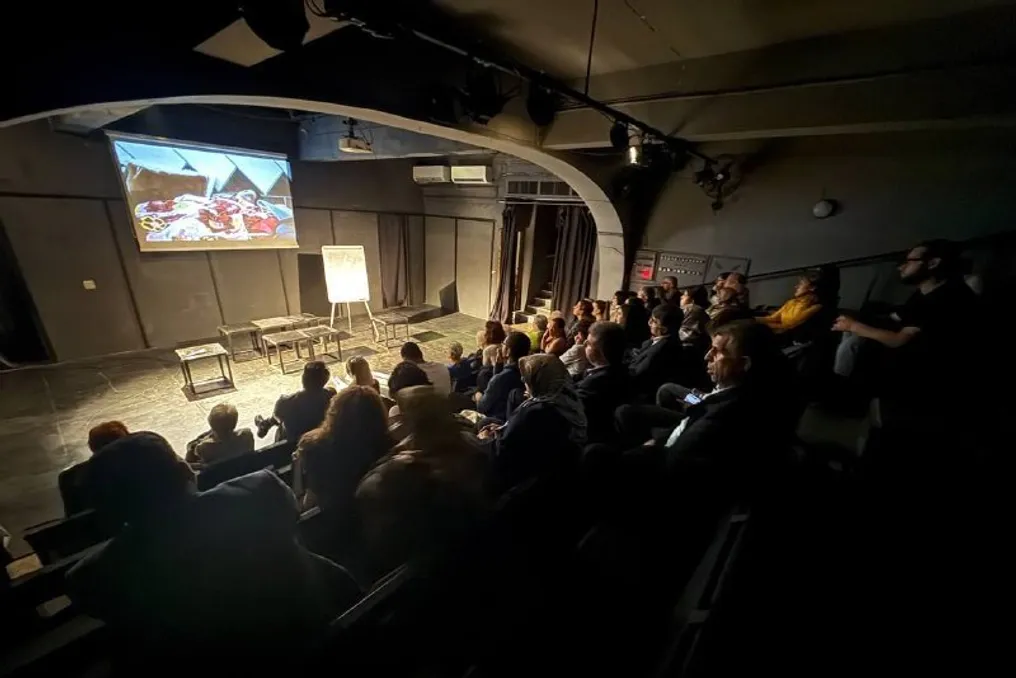
A theatrical performance was held in Athens, Greece, dedicated to the schoolchildren who died as a result of the attack on the Shajarah Tayeb school in Minab, USA-Israeli attack. This event was part of a cultural program designed to shed light on the human consequences of this tragedy.
The play 'Reading the Memories of Sara from Minab,' written and directed by Greek theatre figure Andreas Zafeiris, was presented at the Brecht Cultural Center 2510. It took place on Thursday in cooperation with the Cultural Attaché Office and the Embassy of Iran in Greece.
The play is based on the memories of Sara, a girl who survived the attack on a school in southern Iran. Through a child's perspective, it depicts daily life, fear, loss, and the long-term consequences of this attack, focusing attention on the experiences of the victims.
The program also featured documentaries about the attack on the school in Minab, as well as the short film 'MINAB 168.' After the theatrical performance and film screenings, writers and media activists participated in a discussion titled 'The Role of Art in Resistance and the Fight Against Oppression and Injustice.'
Mohammadreza Bahmani, Iran's Cultural Attaché in Greece, addressed the issue of thousands of children killed in Gaza, Palestine, Yemen, Lebanon, and Iran over the past three years. He emphasized that protecting children and upholding human dignity are responsibilities that extend beyond political and geographical borders.
Bahmani also highlighted the importance of art in exposing injustice, giving voice to victims, and preventing such tragedies from being forgotten in collective memory. He expressed gratitude to the Greek artistic group for their efforts to commemorate the children killed in Minab.
Palestinian writer and translator Nawzat Hadid spoke about the role of art in preserving the collective memory and historical identity of the Palestinian people. She described artistic expression as a way to document displacement, transmit the experience of resistance, and present the suffering of people whose lives might otherwise disappear into statistics and reports.
Greek journalist, writer, and director Thomas Sideris discussed the responsibility of the media when covering wars and humanitarian crises. Based on his professional experience, he stated that journalists must avoid reducing victims to numbers and must inform the audience about their real lives and experiences.
Konstantina Karouti, a representative of the 'To Victory / MINAB 168' campaign, stressed the importance of remembering the 168 children who lost their lives and transforming public sympathy into social action. She called art and cultural events ways to counter indifference, racism, and the normalization of violence.
Zafeiris noted that theatre has the ability to bring audiences closer to the experience of victims and encourage them to listen to their stories. He emphasized that taking time to hear other people's stories can help transform passive viewers into responsible participants.
The program also included video messages from artist and eyewitness Jafar Kassemi from Minab, Lebanese journalist Marwa Otman, and Australian researcher Tim Anderson.
Another part of the event was an art exhibition titled 'MINAB 168,' which was dedicated to the memory of the children killed in the attack.
According to the organizers, the funds raised from the program will go towards the reconstruction of the Shajarah Tayeb school. The performance is scheduled to return to the stage on October 29th in Athens at the Brecht stage.