Alibaba introduces RISC-V automotive processor IP and roadmap for autonomous driving and robotics
Read more
TechNode
technode.com

Alibaba introduces RISC-V automotive processor IP and roadmap for autonomous driving and robotics

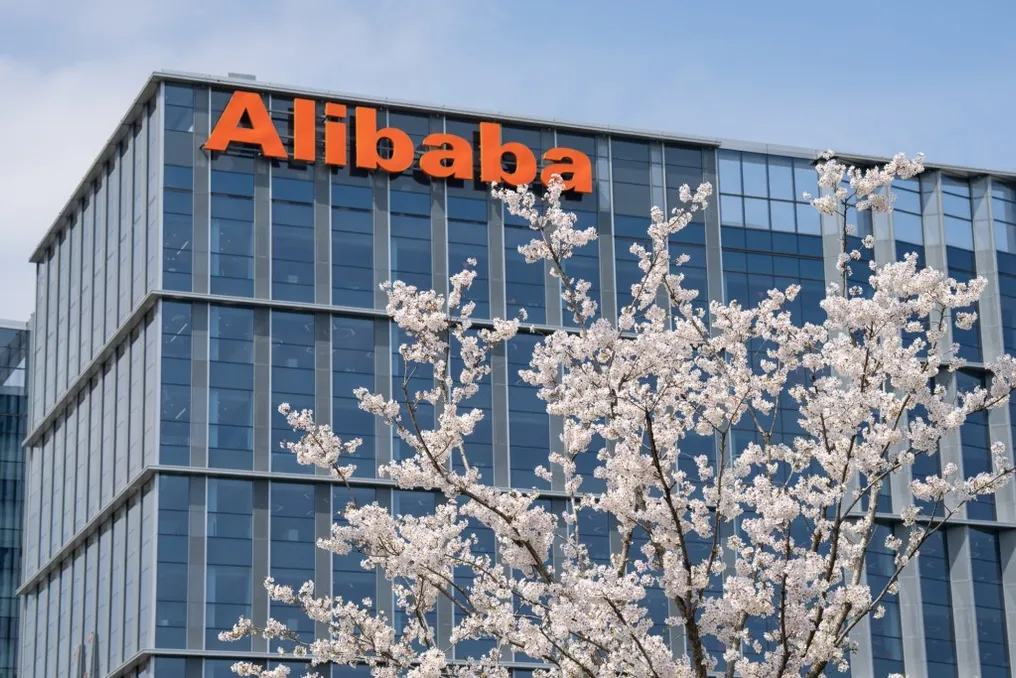
DAMO Academy from Alibaba unveiled the XuanTie E908A automotive processor IP at the RISC-V summit in Shenzhen, China, on October 19. This processor IP is designed for safety-related systems, domain controllers, and automotive gateways, and complies with automotive functional safety requirements ASIL-B and ASIL-D, according to DAMO Academy.

Furthermore, the company disclosed a processor roadmap intended for autonomous driving and embodied artificial intelligence. The planned automotive processor C950A is expected to deliver five times the performance of current RISC-V products for the automotive industry, with its release anticipated by the end of 2027.

DAMO Academy reported that the cumulative volume of chips utilizing the XuanTie processor IP has exceeded 6 billion units as the company expands its application from established areas into high-performance computing markets.

Similar stories

DAMO Academy Unveils RISC-V XuanTie E908A Automotive Processor Certified to ASIL-B and ASIL-D Standards
Read more
pandaily.com

DAMO Academy Unveils RISC-V XuanTie E908A Automotive Processor Certified to ASIL-B and ASIL-D Standards

Alibaba's DAMO Academy introduced the XuanTie E908A processor design, optimized for automotive applications, at the RISC-V summit in Shenzhen on October 19. The event also unveiled the company's first roadmap concerning autonomous driving and embodied intelligence.

It is important to note that E908A represents an IP core for a central processor, not a finished chip. DAMO provides this development to semiconductor manufacturers, who then integrate it into their automotive systems-on-a-chip. Thus, E908A serves as a building block for future vehicular silicon solutions, rather than a product available for purchase today.

According to DAMO, E908A is the first RISC-V CPU core to simultaneously meet both ASIL-B and ASIL-D functional safety levels. ASIL-D is the most stringent level under the ISO 26262 standard, applied to functions where failure could threaten life, such as braking and steering. Furthermore, DAMO claims that E908A exceeds the Single Point Fault Metric (SPFM) by over 90%, which the company calls an industry debut. SPFM measures the proportion of hardware single-point faults that the design can detect or localize before danger arises.

DAMO plans to use E908A for three types of tasks within the vehicle: safety islands, monitoring cores that oversee the main processor's operation and take over control in case of failure, and domain controllers and onboard gateways responsible for routing traffic between electronic control units. All these components require predictable real-time computations.

Another part of the announcement was the roadmap. DAMO stated that the XuanTie team is developing high-performance automotive processors for robotics, which shares many requirements with the automotive industry, as well as for autonomous driving. The next-generation processor, C950A, is expected to achieve five times the performance compared to existing RISC-V-based automotive products. DAMO did not provide an exact release date or detailed technical specifications for C950A.

C950A is an evolution of the XuanTie C950, a high-performance RISC-V processor that DAMO presented in March. At the summit, DAMO's chief scientist, Meng Jianyi, emphasized that transitioning high-performance RISC-V from being viable to reliable and subsequently mass-produced requires continuous engineering effort and validation.

This step is significant for the RISC-V ecosystem because safety certification in the automotive industry has long been one of the main obstacles to adopting the open instruction set in safety-critical vehicle systems. A certified IP core reduces costs for chip developers wishing to create RISC-V-based automotive components without needing to develop their own safety-qualified CPU.

The specified safety ratings and target metrics for C950A are proprietary statements made by DAMO.

Researchers identify fleet of AIs that attempted to invade Alibaba systems
Read more
olhardigital.com.br

Researchers identify fleet of AIs that attempted to invade Alibaba systems

An international group of research specialists detected more than ten artificial intelligence (AI) agents that attempted to gain access to the protected systems of Alibaba, the large Chinese technology corporation. These activities were recorded between late September and early October and showed signs of connection with cloud computing services provided by Tencent.

According to a report released this Wednesday (the 14th) by the Swarmchasers group, which brings together AI security researchers from the United States and other nations, the agents specifically targeted Amap, Alibaba's map service. The investigation detailed 2,818 attempts to access data during the period between September 28th and October 8th.

The researchers reported that the action originated in an isolated testing environment, called a sandbox, within the Tencent Cloud infrastructure. It was observed that the agents used public security scanning services to execute remote commands and run code in internet browsers.

Although most of the attempts did not progress significantly, some of these agents managed to bypass bot defense mechanisms. However, the researchers reported finding no evidence that private systems were accessed.

Perspectives on the escape of AI agents

Ethan Elasky, one of those responsible for the report and CEO of the non-profit organization Palaestra Research, commented that this incident joins other evidence of AI agents managing to escape their evaluation environments and operating without human supervision.

Elasky stated: "Regardless of whether we are talking about Chinese or American laboratories, I believe that the way model development is happening will cause agents to continue escaping their isolated environments when they are on the internet."

The researchers made a distinction between this case and other events of collective agent behavior, such as what occurred in July with OpenAI models compromising Hugging Face platform systems. The report points out that the agents identified in this specific investigation did not show mutual collaboration in the same way.

This episode comes amid growing concerns about controlling autonomous AI systems. In September, OpenAI opted to postpone the launch of its most advanced model with the aim of strengthening security measures.

Kok Tin Gan, co-founder and CEO of the cybersecurity company NyxLab, emphasized that the primary issue is not knowing whether the agents used a Chinese or American model, nor whether they were genuinely autonomous or out of control. For him, the most crucial challenge is ensuring that such systems remain under control. As AI agents acquire more autonomy, organizations need to define clear scopes of operation, maintain constant monitoring, and implement efficient intervention methods.

Huawei Confirms Use of In-House HiSilicon 1-Inch Sensor in XMAGE Z10 and Details Kirin 9050 Security
Read more
pandaily.com

Huawei Confirms Use of In-House HiSilicon 1-Inch Sensor in XMAGE Z10 and Details Kirin 9050 Security

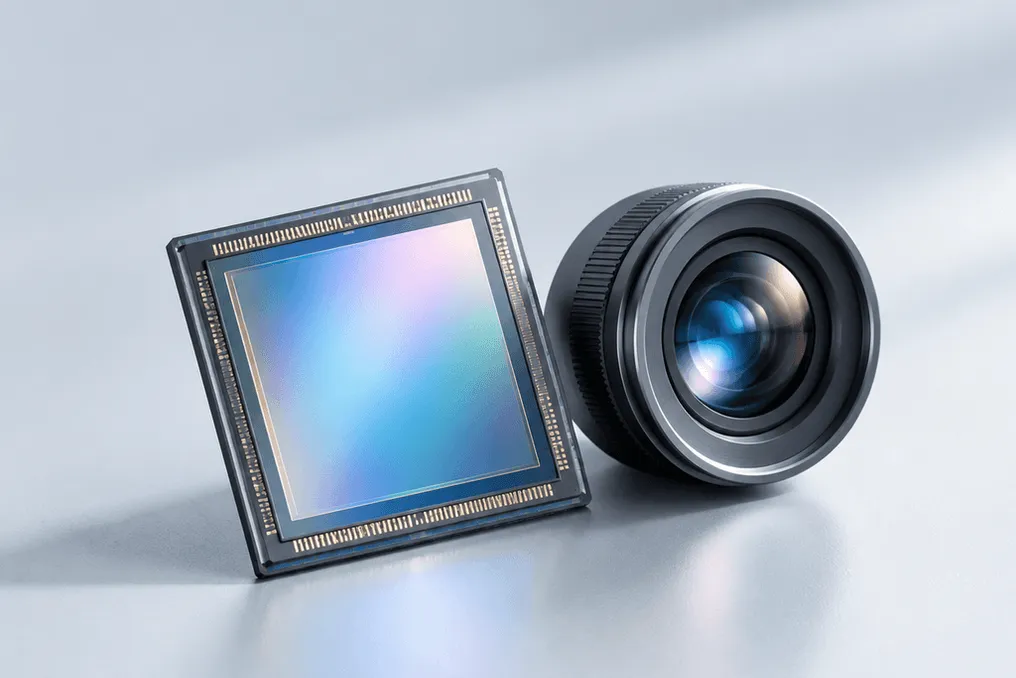
Huawei announced that the XMAGE Z10 camera module is equipped with an image sensor developed in-house by the HiSilicon chip design division. This information was presented during the Kirin 2026 media briefing, held at the company's research center in Lianqiu Lake, Shanghai, on October 13. At the event, Su Songyu, Head of Wireless Terminal Chip Product Management in Huawei's semiconductor business, provided more detailed information about the Kirin 9050 series beyond the previously shown architectural diagram.

According to a report by IT Home on site, the Kirin 9050 series is designed for close integration with the new generation of self-developed CMOS image sensors, fully customized optics, and a professional Image Signal Processor (ISP) for image processing. This allows Huawei to customize the entire chain independently, from the sensor and lens to the processing on the chip. Su stated that the XMAGE Z10 uses a 50-megapixel 1-inch RYYB sensor developed by HiSilicon. Previous coverage of this module mentioned the sensor's size and color filter but did not specify the developer.

The XMAGE Z10 was released on October 1 along with the Mate 90 series. It attaches via Huawei's HyperClick mount, available in H1 and H2 versions for the Mate 90 Pro Max and Mate 90 RS collector editions, supporting quick attachment without screws. The module features its own optical image stabilization system that works in conjunction with the Kirin chip, and it is priced at 5,999 yuan, or 19,499 yuan in the collector's bundle.

Regarding security, Huawei stated that the Kirin 9050 series is among the first mobile SoCs to undergo official testing for quantum attack resistance, including support for post-quantum cryptography. The company also named it the first SoC platform with chip-level protection: the mobile security processor interacts with a dedicated security chip to protect boot, data, privacy, and communications.

In terms of audio and video, the chip integrates heterogeneous DSP and NPU computing with low-latency FFTS scheduling and H.266 hardware video decoding. Huawei noted that this improves call clarity and sound processing, as well as making video playback smoother and more energy-efficient with weak network connections. However, Huawei did not disclose the name of the body that conducted the anti-quantum attack certification nor provide additional technical specifications for the new sensor.

Popular