ACE Robotics releases model for robot spatial perception
Read more
TechNode
technode.com

ACE Robotics releases model for robot spatial perception

ACE Robotics, founded by SenseTime co-founder Xiaogang Wang, introduced its embodied artificial intelligence model, ACE-Brain-0.6, on October 19. This model was developed through fine-tuning Qwen3.5-9B and is designed for object recognition, determining their location in images, and establishing interaction points for robots.

According to the company's statement, the model was trained using approximately one million spatial grounding samples. In conducted evaluations, ACE-Brain-0.6 demonstrated superiority over GPT-6 Astra in six out of eight grounding benchmarks.

The model scored an average of 74.53 across seven publicly available benchmarks, and achieved a result of 94.13 on the RobotGrounding test, which is based on real-world robot scenarios. These figures are higher than those of Astra, which scored 73.68 and 91.10 respectively.

Similar stories

OpenAI to develop humanoid robots; first demonstration expected in 2027
Read more
www.aajtak.in

OpenAI to develop humanoid robots; first demonstration expected in 2027

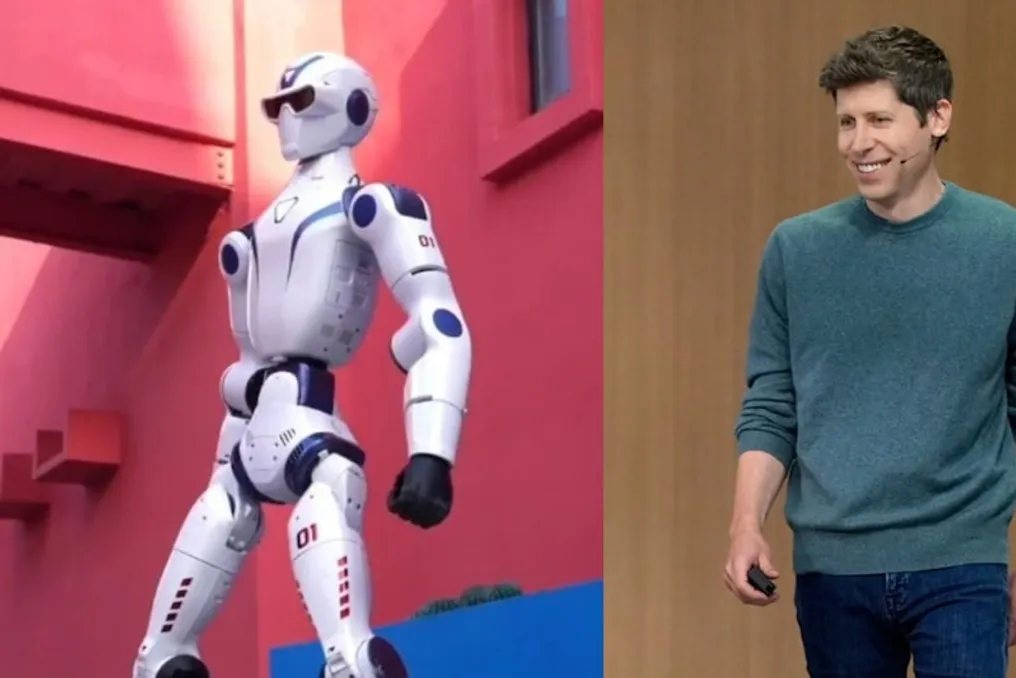
OpenAI, the company that created ChatGPT, plans to undertake an even larger project—the development of robots that resemble humans externally. Special attention is paid not only to these robots' ability to move but also to their capacity to understand their environment and perform tasks.

OpenAI CEO Sam Altman has hinted at a robot demonstration. This raises questions about the robot's capabilities and its expected arrival timeline.

First demonstration possible in 2027

According to a report, Sam Altman stated that OpenAI could present a demonstration of its humanoid robot in 2027. However, the company has not yet disclosed full information regarding the release date, price, or characteristics of the robot, and this does not mean it will go on sale specifically in 2027.

A natural question arises regarding the necessity of creating humanoid robots, given that machines already exist. Modern homes, offices, and factories are designed with human anatomy in mind. A robot with a structure similar to a human can function more easily in such environments.

However, simply creating a human body is not enough. The robot must possess the ability to analyze what is happening around it and make decisions about subsequent actions.

The robot's brain will be the most important

OpenAI's main strength lies in its artificial intelligence technologies. The company intends to use this technology to give the robot intelligence. For example, if the robot is tasked with picking up an object, it must first recognize the object, understand how to lift it, and then complete the task. Thus, what becomes critically important is not just following pre-set commands, but the robot's ability to make decisions based on understanding the current situation.

Competition with Tesla?

OpenAI is not the only company participating in the humanoid robot race. Tesla, led by Elon Musk, is also working on its Optimus robot. Other companies are also advancing this technology.

Currently, complete information about the OpenAI robot is unavailable. It remains to be seen what the company will demonstrate in 2027 and how effectively its robot will be able to operate in the real world.

Hello Inc.'s Robotaxi Unit Releases HelloWorld — A World Model for On-Demand Driving Scenario Generation
Read more
pandaily.com

Hello Inc.'s Robotaxi Unit Releases HelloWorld — A World Model for On-Demand Driving Scenario Generation

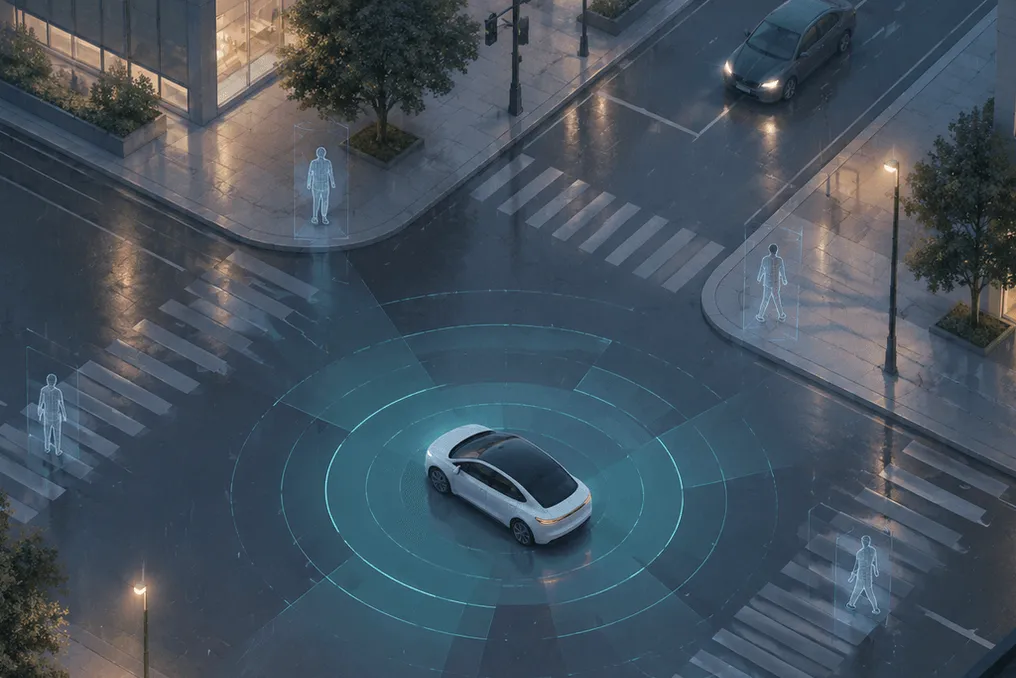
The robotaxi division of Hello Inc. has introduced HelloWorld, a generative world model for driving. This model is designed to create on-demand driving data and facilitate interactive testing of vehicle control policies.

The team announced the model on October 12th and published the corresponding scientific paper on arXiv, as well as a project page. HelloWorld integrates scene control, continuous generation, multi-sensor observation, and efficient data output.

Engineers can directly edit vehicles, pedestrians, and their trajectories, after which the model generates corresponding videos from multiple cameras along with lidar data. Examples of such edits include adding a pedestrian crossing the road, changing the route of a leading vehicle, or altering weather conditions—for instance, transitioning from rain to snow, or from day to night.

The model also accepts simple language descriptions of situations as a second method for building scenes. The user describes the desired scenario, and a specialized application pipeline converts this description into the conditions required for the model to operate. Elements such as construction sites, heavy traffic, pedestrians crossing the road, fog, and various lighting conditions can be used to guide the generation process.

The primary goal of the development is to fill gaps in real-world collected data. Long-tail scenarios, such as rare hazards or unusual combinations of weather and movement, are difficult to collect in sufficient quantity solely by gathering road data. The ability to generate such scenarios on demand allows developers to create targeted training data and conduct counterfactual tests: reproducing the same moment while changing one element to assess the reaction of a driving policy.

According to the presented scientific paper, HelloWorld contains approximately 2 billion parameters, generates views for seven cameras with conditional lidar output, and utilizes multi-step causal generation. This architecture is intended to ensure sufficient output speed for repeated interactive simulation, not just for generating individual clips.

World models have become a common tool in autonomous driving and embodied artificial intelligence, where teams use them to reduce the costs of collecting and labeling edge cases. HelloWorld is the first public research publication of this kind from this company's robotaxi team. However, the company has not yet announced when or how the model will be integrated into its vehicle testing programs.

Popular