As more AI hardware focuses on voice assistants, information processing, and workplace productivity enhancement, one Chinese startup is taking a different approach: it uses artificial intelligence to help people preserve life experiences.
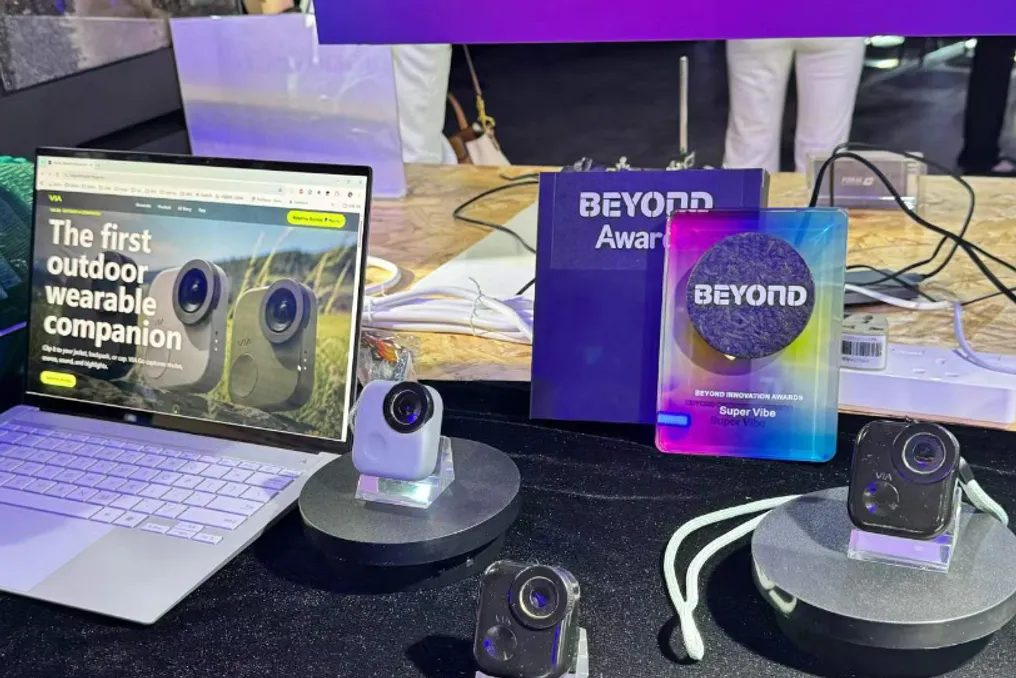
Vibe Technology, a Shanghai-based company, introduced Souvi—an AI-powered memory recording device designed for activities such as hiking, camping, traveling, and city exploration. By combining seamless recording with AI-driven content processing, the product aims to transform disparate photos and videos into more cohesive personal memories.
Unlike traditional action cameras that primarily focus on capturing video footage, Souvi answers a different question: what can people extract from an experience after the trip is over?
Deng Jiawei, the company's CEO, stated in an interview with TechNode: 'We are focusing on AI and personal memory because AI can help people work more efficiently while also offering them new ways to preserve life experiences.'
For many people, travel provides countless memorable moments, but capturing and organizing them requires effort. Taking photos can distract people from the experience itself, and subsequent sorting of material, timeline organization, and video editing can take a long time. A significant portion of this content ultimately remains untouched in phone galleries.
Souvi seeks to eliminate these hurdles. According to the company's product vision, the device captures materials during trips, and AI helps interpret, select, and organize them into curated photos, illustrated travel diaries, videos, or interactive memory pages. The goal is to simplify the user's process of saving and revisiting their experiences.
The slogan 'You live it. Souvi remembers' reflects the idea behind the device, which is designed to record and organize travel memories using AI.
Souvi has been showcased at various tech events, including BEYOND 2026, VivaTech in France, the World Artificial Intelligence Conference (WAIC), and the Hong Kong Electronics Fair HKTDC (Autumn Session). Unlike action cameras that prioritize sports shots, or AI wearables focused on voice interaction and meeting transcription, Souvi targets light outdoor activities and travel.
Deng noted that the initial concept for the product arose from the team's own experiences in hiking and traveling. People want to enjoy the moment while preserving valuable experiences. Souvi focuses on how naturally the device captures everyday events and whether the resulting content can be transformed into meaningful personal memories, rather than just maximizing the volume of recorded material.
The company adheres to a software-first development strategy with parallel hardware development. Its software development team focuses on selecting, understanding, and generating content from raw materials, while the hardware team continues to refine the device and gather data in real-world conditions using prototypes. Both teams work together to improve the overall user experience.
The company also states that its technical work involves adapting and fine-tuning open-source models, utilizing visual understanding capabilities to select travel shots, and developing an internal structure for content generation and task orchestration to organize images, videos, and text into coherent stories.
However, the real challenge is not simply creating an attractive video. It is determining what is worth remembering. An ordinary group photo might capture an important reunion, while a visually stunning clip might hold little personal significance. The AI must understand the connections between different parts of the content while avoiding the fabrication of events that never happened.
In Souvi's vision, it is not just a recording device; it is also an entry point into an operating system of personal memories. In the short term, the team plans to improve the recording and organization experience for individual trips. Over time, the company hopes to integrate content from a larger number of devices and sources, linking moments from different times and places.
Beyond hardware, the company is exploring AI-based content services, including more advanced organization, richer creative capabilities, and more personalized ways to revisit past experiences.
International expansion is also part of the plans. The CEO mentioned that the team is considering Japan, South Korea, and North America, with an initial approach planned through online crowdfunding. However, the company has not yet disclosed purchase data, leaving actual usage frequency, user retention, and willingness to pay as open questions.
This is a practical challenge that Souvi must overcome. A differentiated product concept does not automatically lead to sustainable demand. Whether users are willing to wear the device regularly, whether the AI-organized content provides genuine value, and whether users trust the product with their personal memories will all affect its prospects.
A collection of travel photos and videos may seem mundane today, but years later it could become a significant way to relive an important chapter of life. However, for this vision to become a reality, Souvi must demonstrate that AI can do more than just capture and organize content. It must show that it can help people preserve the memories they truly want to look back on.