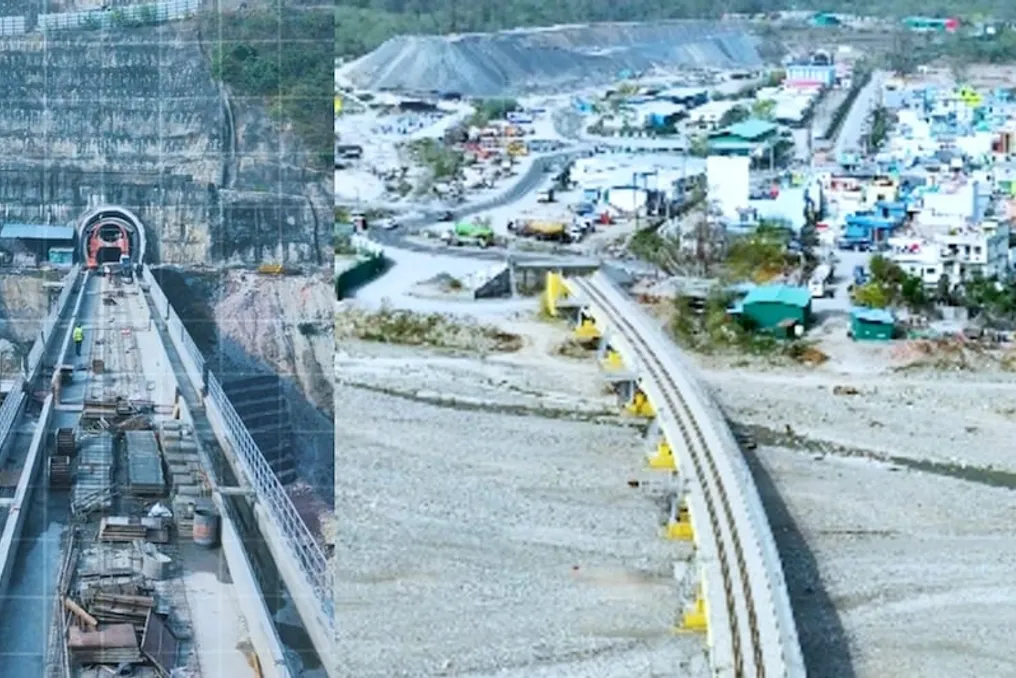
Work is underway in the state of Uttarakhand on the Rishikesh-Carnaprayag railway line project, aimed at improving rail accessibility in mountainous regions. This route, approximately 125 kilometers long, will facilitate movement in the Gadwal region and support pilgrims traveling to important shrines such as Kedarnath and Badrinath. Furthermore, the project is significant for strengthening access to strategically important areas near the Chinese border.
The Rishikesh-Carnaprayag railway line will connect Rishikesh with Carnaprayag via 12 stations, thereby expanding the railway network into the mountainous areas. The implementation of this project is expected to promote religious tourism, job creation, and a positive impact on the local economy.
Carnaprayag is the proposed terminus of this line. According to project data, it is located approximately 123 kilometers from the Chinese border, although the railway itself does not directly reach the international border. The main goal of the project is to strengthen the transport network in the Himalayan region.
Building railways in the Himalayas presents a complex challenge due to potentially weak rock formations and the risk of ground changes. In many places, tunnel construction is complicated by water-saturated geological layers. This is why a large proportion of tunnels is provided for in this project. It is planned that about 83 percent of the railway track will pass through tunnels, along with 28 main and emergency tunnels, and 57 major and minor bridges.
During tunnel construction, engineers face issues such as soil strength, rock mass condition, and groundwater. Weak soil can change its shape during excavation work, putting pressure on the tunnel walls. In such cases, special methods are required to reinforce the tunnel and stabilize the soil. Considering these difficulties, railway engineers conducted a geological survey before installing Tunnel Boring Machines (TBMs). It was also necessary to select a tunnel construction method appropriate for different types of rock and soil.
The Himalayan region between India and China is a sensitive border. High mountains, adverse weather conditions, and limited transport infrastructure can hinder movement here. Under these conditions, strengthening road, bridge, and railway networks is crucial. Access to the interior areas of the Gadwal Himalayas may improve thanks to the railway network stretching from Rishikesh to Carnaprayag. This will provide passengers with an alternative to rail transport for trips from plains to mountains.
The strategic importance of this project lies in enhancing transport infrastructure in the region. Improved connectivity will aid the movement of ordinary people, workers, goods, and essential supplies. Moreover, reaching remote areas will become easier through road and rail networks. Thus, the Rishikesh-Carnaprayag railway line is an important project that strengthens the transport network in the Himalayan regions alongside the development of religious tourism and regional growth.