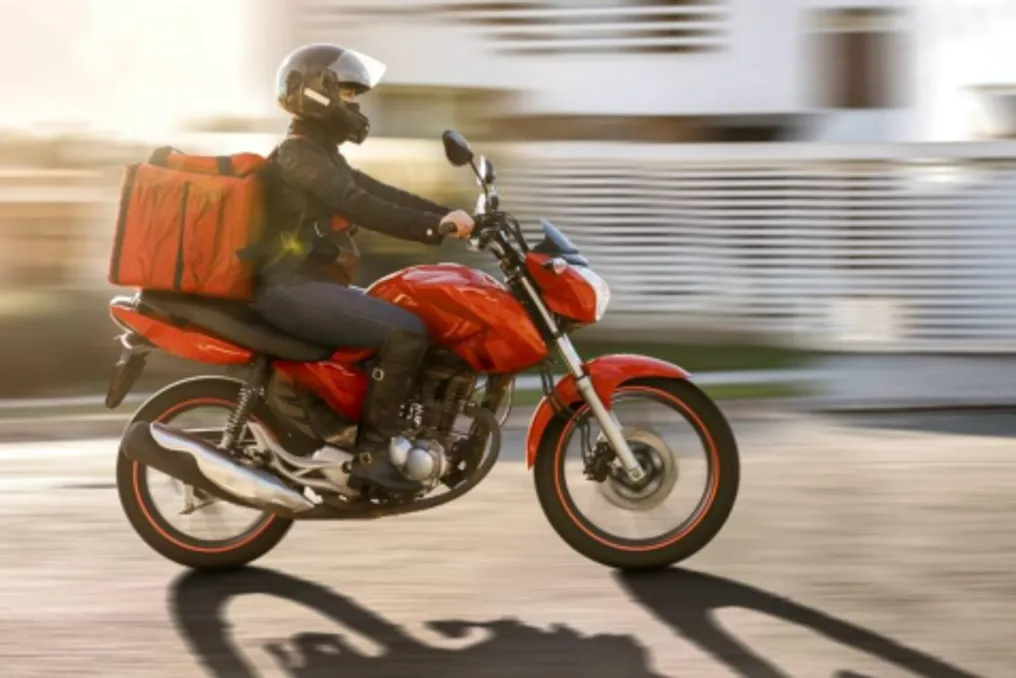
The Move Brasil program has been offering credit for about three months to gig workers to purchase brand new vehicles with interest rates below 1% per month. Like car drivers, delivery people, mototaxis, and motorcycle couriers who wish to change their bikes, they must register through the official Federal Government portal, accessible at gov.br/movebrasil.
Without this registration and subsequent eligibility confirmation, none of the four partner banks will approve the financing under the program's conditions. In addition to reduced interest, the benefit includes 100% coverage of the financed amount, without the need for a down payment, and a repayment term of 48 months.
Details about Move Brasil
Move Brasil is a line of credit offered by the federal government with the aim of allowing transport sector professionals to replace their work vehicles with newer models, taking advantage of lower interest rates than those practiced in the market. The program has two distinct modalities, and the registration procedure varies depending on the choice.
The first modality is intended for taxi drivers and ride-hailing drivers and focuses on motorized vehicles. The second, called Deliverers and Motoapp, is aimed at those who work on two wheels, financing motorcycles, scooters, mopeds, and electric bicycles.
Steps to access the program
The process to access the program is structured in three phases. Submitting proof of income, trip reports, or employment contracts is unnecessary, as activity validation is carried out by the digital platforms themselves, which provide the government and banks with a list of those meeting the time and travel requirements.
Additionally, the approved amount is not deposited into the worker's account; it is paid directly to the vehicle seller. The modality accepts two types of professionals, and both must prove six months of activity. It is important to note that the time and trips from different applications cannot be combined; the six months and 100 deliveries must have occurred on the same platform, and the registration on that platform must be active and regular at the time of verification.
Passenger transport is also covered, allowing ride-hailing mototaxis to participate, provided they meet the same criteria. To finance a motorcycle, possessing a Category A driver's license is mandatory, and the established limit is one vehicle per beneficiary, whether a motorcycle or a bicycle per CPF.
The interested motorcyclist must check if the platform where they work is accredited in the program, as this platform notifies the government about compliance with the time and trip requirements. If the application is not listed on the registration page, activity validation is impossible.
Financial and operational conditions
Interest rates were defined by the National Monetary Council: they reach up to 0.99% per month for men and 0.91% per month for women, equivalent to 12.5% and 11.5% annually, respectively. The financing can cover the full value of the vehicle, without requiring a down payment, with a term of 48 months for individuals and a grace period of two months before the first installment payment.
This credit package includes the borrower's insurance, whose cost is incorporated into the financing and consequently appears in the monthly installment. Behind the lower interest rates is the Guarantee Fund for Operations (FGO), which assumes part of the default, covering 50% of the portfolio and 100% of the operation. This mechanism reduces banking risk and enables the reduced rate.
Regarding the maximum motorcycle value, the official page does not establish a defined ceiling, although the government mentioned a limit of up to R$ 20 thousand per worker in an initial announcement. In practice, the released amount depends on the credit assessment performed by each bank.
To illustrate the impact of the installment, the government presented a simulation at the launch of the program using a R$ 21 thousand motorcycle, indicating installments close to R$ 552 monthly. The final amount varies according to the price of the selected vehicle and the profile of the credit applicant.
The program is restricted to new and domestically manufactured vehicles, excluding used motorcycles. It covers new motorcycles, scooters, mopeds, and electric bicycles produced in Brazil from 2024 and duly approved by the government. This rule is stricter than that applied to cars; in July, Provisional Measure No. 1,376 expanded the Taxi and Ride-Hailing modality to include semi-new electric or hybrid flex vehicles produced from 2024, within a ceiling of R$ 150 thousand, but nothing similar was extended to the two-wheeled line, keeping used ones out.
Technical specifications limit the market: flex motorcycles up to 160 cm³ manufactured in the country are accepted; electric models up to 7,500 W produced in Brazil or with an investment plan for national production; and electric bicycles and self-propelled vehicles up to 1,000 W. This excludes motorcycles powered only by gasoline, even those very popular in professional use, as well as imported vehicles.
The list of financeable goods started with 14 models and versions from brands such as Honda, Yamaha, and Vammo, and currently exceeds 50 items, covering motorcycles, mopeds, bicycles, and electric self-propelled vehicles. The government keeps this list updated periodically, with the most recent version being from August.
Types of financeable vehicles
Vehicle types include: Flex motorcycles and scooters; Electric motorcycles and mopeds; Electric bicycles; and Electric self-propelled vehicles.
Being considered eligible simply means that the worker meets the program's prerequisites. The granting of credit depends on the individual analysis of each bank, based on the client's financial history and repayment capacity. Although the FGO reduces the risk of the operation, it does not force anyone to lend, and individuals with negative credit histories may be rejected.
Procedures in case of denial
Four banking institutions are authorized to operate Move Brasil. If the worker is deemed ineligible but believes they meet the requirements, they should request the trip report from the application. If this document confirms compliance with the rules, they must require the application to resend the corrected information to the government.
If the analysis exceeds ten business days, the applicant should check the status of the request again on the Move Brasil platform and wait for the update. For those who work via apps, the delay may be related to data transfer by the platform. It is crucial not to cancel the request or start a new registration while the request is under review.
If the bank denies the financing, the problem lies in the credit analysis, not the initial registration. In these cases, it is recommended to seek another authorized institution, as each adopts its own risk policy.
The entire process occurs through the gov.br account, through which the worker authorizes the checking of their data and receives the eligibility response in the account's mailbox. Anyone with a CPF can create an account for free.
To create the account via mobile, simply download the gov.br app, select 'Log in with gov.br', enter the CPF, and follow the on-screen instructions. The procedure is identical on the gov.br website, using a computer. The account is initially created at the bronze level, but to reach silver or gold levels, additional validation is required, such as facial recognition via the app, validation through the internet banking of an accredited bank, reading the QR Code of the National Identity Card (CIN), or a digital certificate.
Although the Move Brasil page does not define a minimum account level, silver and gold levels guarantee access to all application functionalities and minimize the possibility of interruptions at any stage of the process. An important warning is that the gov.br account is free; one should be wary of anyone who charges for registration, requests remote access to the phone, or asks for photos of documents outside the official channels of the app and website.