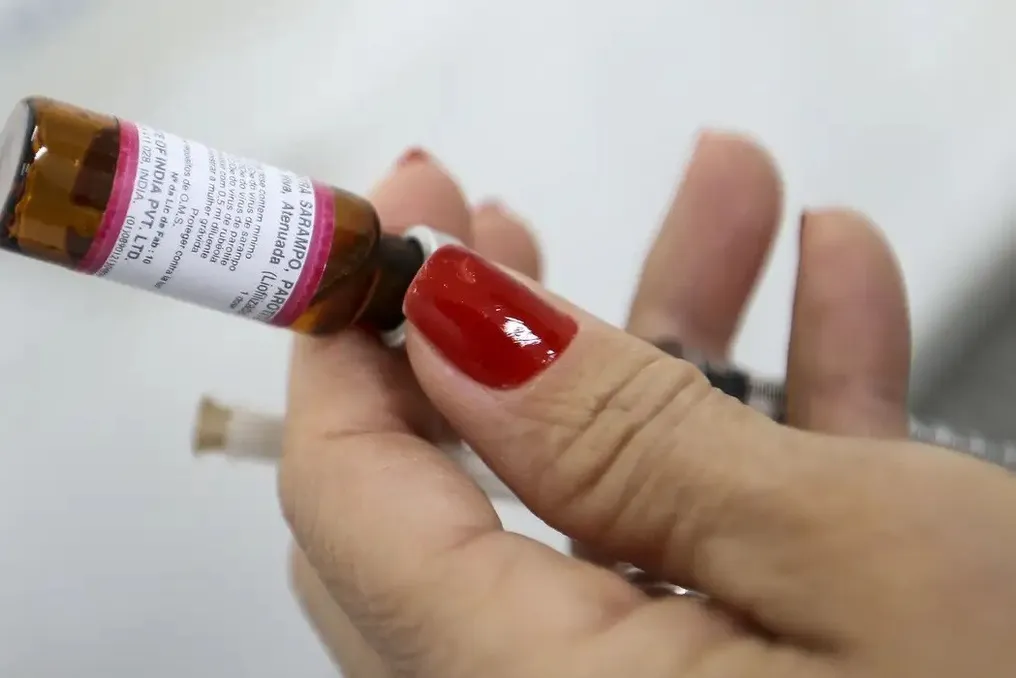
The Health Secretariat of the Federal District is promoting a vaccination campaign this Saturday, the 24th, in observance of World Polio Day. Polio, also known as 'infantile paralysis,' is an infectious and contagious disease caused by a virus, characterized by a condition of flaccid paralysis with no known treatment.
To participate in the vaccination, it is mandatory to present a valid identification document, and children must always be accompanied by their parents or guardians. The Health Secretariat informed that those who have lost their vaccination card can go to any vaccination room and will not be prevented from receiving immunization.
Who should be vaccinated
The established vaccination schedule consists of five doses: the first are administered at 2, 4, and 6 months of age, followed by a first booster at 15 months and a second booster at 4 years old. Parents and guardians of four-year-old children who have not yet received the second booster must attend a vaccination room. It is important to note that there is no need to repeat this dose if the child has already completed the three initial doses along with the two boosters, whether using the injectable or oral vaccine.
Since 2024, Brazil has adopted the inactivated polio vaccine (IPV), which is administered by injection. The oral vaccine, popularly known as 'drops,' has been discontinued.
What is polio?
According to Fiocruz, the disease is caused by poliovirus, which can affect both children and adults through direct contact with feces or secretions expelled from the mouth of sick individuals, potentially resulting in or not resulting in paralysis. This virus spreads from person to person or through the contamination of sewage and water systems.
Symptoms appear suddenly, and the progression of motor deficit generally occurs within a period of up to three days. The condition tends to affect, predominantly, the lower limbs asymmetrically, presenting the main characteristic of muscle flaccidity. In most cases, the infection does not cause serious health consequences. However, some affected individuals, especially children under five years old, develop very severe manifestations.
In these severe scenarios, the virus affects the nervous system, which can cause muscle weakness, leading to the popular name 'infantile paralysis.' In the most critical cases, where muscle paralysis occurs, the lower limbs are the most affected. The Ministry of Health states that Brazil has been free of polio since 1990. In 1994, the country obtained the Certification of Area Free of Wild Poliovirus Circulation granted by the Pan American Health Organization (PAHO).