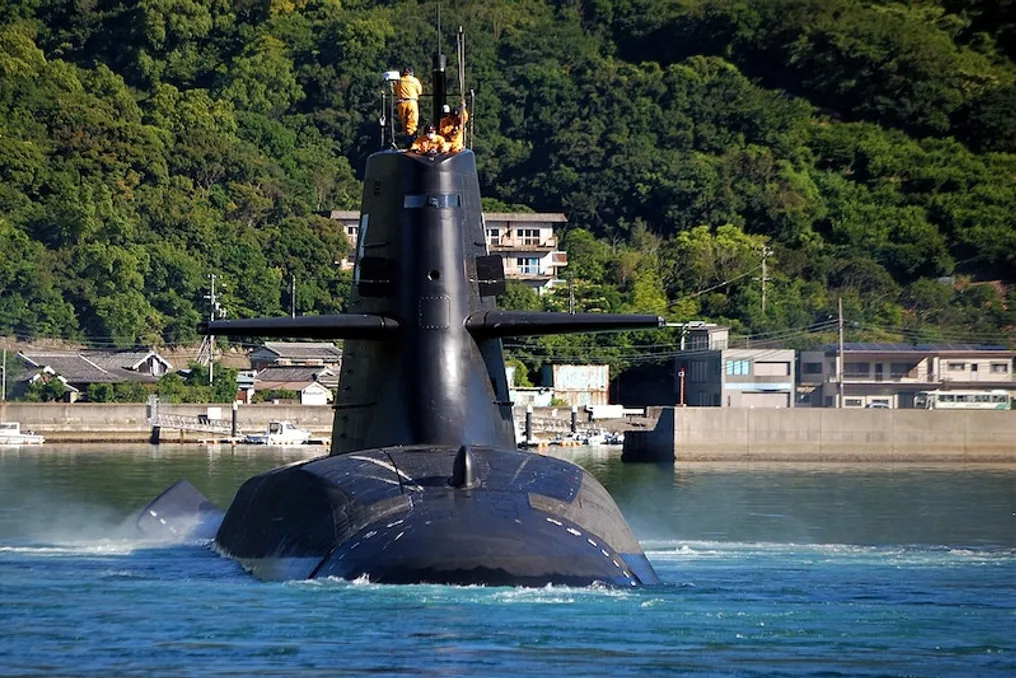
The 'Setting to Work Phase-2' of the Autonomous Underwater Vehicle (AUV) energy module for diesel-electric submarines has been launched to enhance the capabilities of the Indian Navy. This system was developed by the Naval Materials Research Laboratory (NMRL) and DRDO.
The AIP system allows a submarine to increase its time spent underwater by reducing dependence on atmospheric oxygen. The inauguration ceremony took place on October 24, 2026, at the AM Nic Heavy Engineering Complex of Larsen & Toubro in Hajira, Gujarat state.
The main guests at the event were Defence Minister and Chairman of DRDO Rajesh Kumar Singh, who joined virtually. Present were the Chief of Staff of the Indian Navy, Vice Admiral B. Shivakumar, and DRDO Director General Dr. A. Balamurikrishnan.
Traditional diesel-electric submarines cannot remain submerged for long because they must surface to replenish air oxygen supplies for battery charging, which increases the risk of detection by the enemy. The AIP system solves this problem by utilizing fuel cell and hydrogen technology, minimizing the need for oxygen.
As a result, the submarine is capable of conducting patrols underwater for a longer period, carrying out stealth attacks, and increasing its safety. This is a significant step towards India's self-reliance, as similar technologies previously depended on foreign sources. It is planned to install this system on Kalvari-class submarines based on the Scorpene design.
At the ceremony, the DRDO Chairman highly praised the cooperation between scientists, industry partners, and the Navy. He emphasized that the Navy's contribution to testing and validation at every stage was critically important. He stressed the need to meet the operational deployment deadlines for the Navy while maintaining a strict safety culture regarding hydrogen and fuel cell systems.
In the next phase, the AIP energy module will be launched for power generation and undergo rigorous testing according to Indian Navy protocols. Following this, it will be handed over to Mazagon Dock Shipbuilders Limited for integration into the Kalvari-class submarine in early 2027. Collaboration with partners like Larsen & Toubro strengthens the 'Make in India' concept.
This achievement will elevate the naval power of the Indian Navy to a new level. In the context of security threats in the Indian Ocean, submarines with extended autonomy will provide a strategic advantage. The use of indigenous technologies will lead to reduced costs and simplified maintenance, decreasing reliance on external supplies. Further application of this system on other submarines and exploration of export opportunities are planned.
The main objective remains ensuring timely commissioning while adhering to safety standards. This step demonstrates both the research and industrial potential of India in the defense sector.