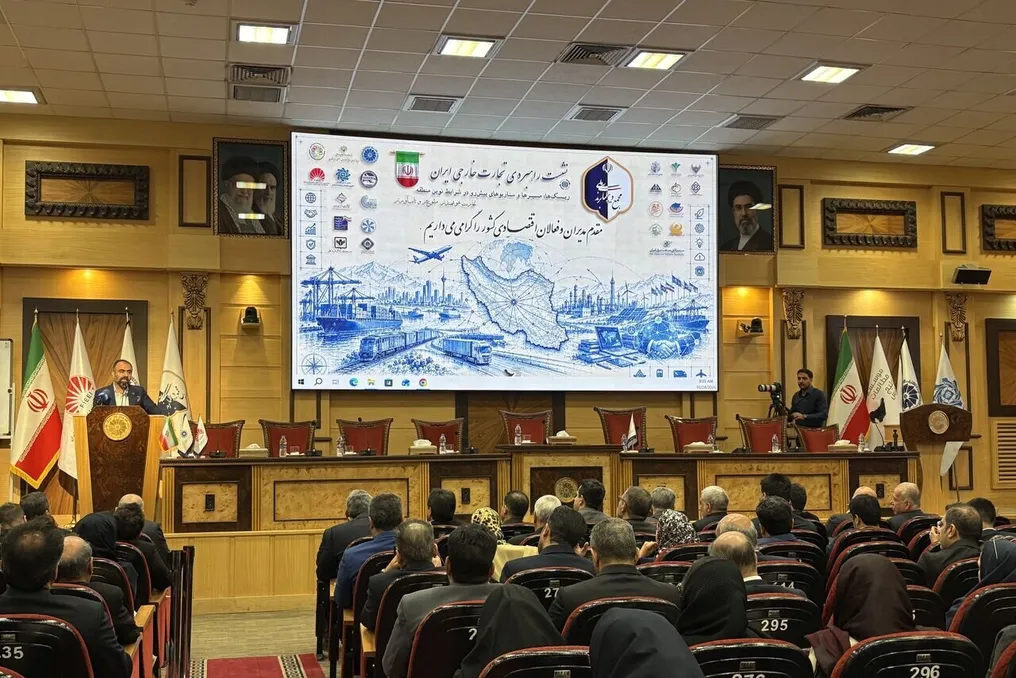
The head of the Iranian Association of Digital Technology and Intelligent Systems Employers stated that Iran requires stable economic policy, reduction of bureaucratic hurdles, more active private sector participation, and competent use of technology to enhance international trade.
Seifollah Niknami made these remarks at a strategic meeting dedicated to Iran's foreign trade. He emphasized the importance of aligning national potentials in the fields of energy, industry, logistics, technology, and the private sector to increase production and trade levels.
Niknami noted that technology must serve to solve real economic problems. He added that the country's internal capabilities can only become a competitive advantage if they are interconnected and integrated with global markets.
According to the speaker, producers cannot plan for the long term if the rules governing their activities can suddenly change due to new directives. Furthermore, maintaining exporter confidence in international arenas requires simplifying complex procedures, improving the coordination of digital systems, and avoiding unpredictable policy decisions.
Although Niknami acknowledged the serious difficulties created by sanctions and external restrictions, he stressed that regulatory instability and unnecessary procedures should not create additional risks for producers and exporters.
He called regulatory stability an intangible asset for export and production, pointing out that cargo delays while awaiting official requests or approvals can negatively affect not only delivery times but also the company's working capital, contractual obligations, and market opportunities.
Niknami outlined four priorities for improving the business climate and enhancing the resilience of Iran's foreign trade: stable and predictable norms; elimination of superfluous procedures and improved interaction between government agencies; risk-based intelligent supervision; and effective involvement of professional and industry associations in the decision-making process.
He emphasized that the impact of decisions affecting production and export must be assessed before implementation, providing businesses with a reasonable period to adapt if necessary. Coordinated information exchange between authorized bodies is also necessary, adhering to confidentiality requirements and legal access frameworks, so that enterprises do not incur costs related to discrepancies between digital platforms and state structures.
Niknami stated that developing sustainable policy is impossible without considering the opinions of producers, exporters, and specialized industry associations. Such organizations must participate in consultations from the earliest stages, rather than receiving information only after decisions have been made.
He clarified that private sector participation does not replace the government's responsibilities but serves as an expert basis for the more accurate, realistic, and effective formulation of state policy.
Digital transformation must start with process reform
Niknami believes that reforming existing procedures is a prerequisite for achieving digital transformation. He explained that intelligent systems begin not with purchasing technology, but with identifying problems and optimizing processes. Digitizing an inefficient or excessive procedure does not necessarily mean progress, as it may simply move the existing obstacle onto a computer screen.
Instead, technology, data, and innovation should contribute to strengthening various aspects of foreign trade by reducing costs, accelerating processes, increasing transparency, and improving decision-making.
Five priorities for trade sustainability
Five specialized panels were organized at the meeting, examining the sustainability of Iran's foreign trade logistics; sustainable trade management, market diversification, and value chains; expanding trade through the Eurasian region; energy, infrastructure, and technical and engineering services; and the application of technology, data, and innovation to enhance foreign trade efficiency.
Niknami noted that the meeting should go beyond merely discussing existing problems. It is expected that the specialized sessions will allow for the identification of priority obstacles, practical solutions, actionable proposals, and measurable progress indicators.
In Niknami's view, if international conditions have complicated trade, Iran should not further complicate production and exports through unstable decisions and cumbersome procedures. He concluded that responding to complex circumstances requires well-founded policy, coordination, and joint action.
Niknami expressed hope that this meeting will help connect the country's disparate opportunities, simplify procedures, increase business confidence, and boost private sector participation in policy formation. These efforts, he said, are capable of improving Iran's economic competitiveness, advancing smart trade, supporting production and employment, and strengthening the reputation of Iranian brands in global markets.