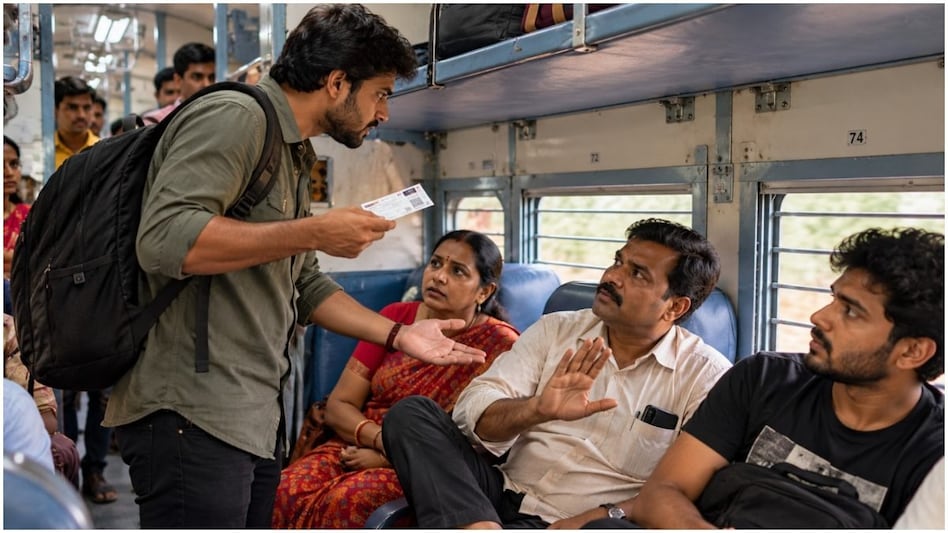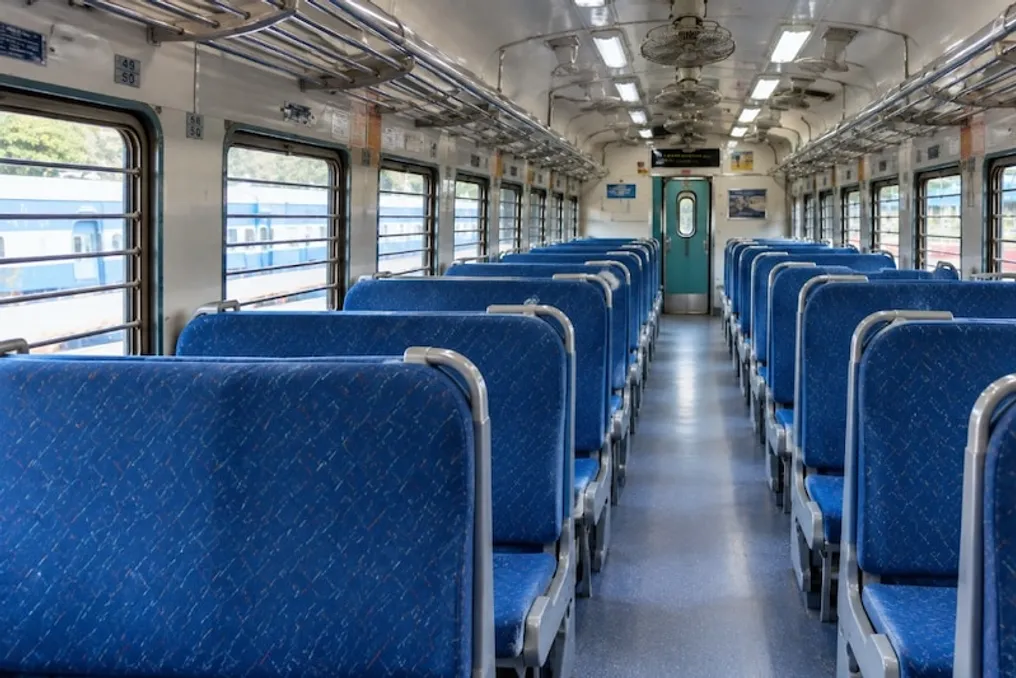
Unlike car or airplane rides, where seatbelt use is mandatory and failure to use them results in fines, they are often absent on trains. This issue frequently arises with passengers, especially considering that seatbelts are not installed even on high-speed trains.
Car seats are equipped with belts that protect the passenger from impact forces (crash force) during an accident or sudden braking. The impact force depends on the speed of the vehicle's stop.
According to a Reader Digest report, experts explain that when a car collides with a brick wall, it stops almost instantly, generating a very strong crash force. In the case of trains, the situation is different: they are very massive and heavy structures, and when colliding with light objects, their crash force is significantly lower than in a car accident. Therefore, they do not require a similar restraint system.
Thus, there is no need for seatbelts in trains similar to those used in passenger cars. However, there are exceptions, such as in a head-on collision between two trains or when a train derails, where a very large crash force is generated, although such incidents occur extremely rarely.
Trains are considered a more controlled mode of transport compared to other methods of travel, which leads to a lower number of accidents. Therefore, the main safety objective is preventing serious collisions and derailments. Furthermore, traveling by train is considered 17 times safer than by car. When compared to air travel, the train is safer on every journey, but when comparing per unit of distance, airplanes are considered safer, although both modes of transport are statistically safer than cars and buses.
The question of whether seatbelts should be installed on trains is a matter of risk assessment. Currently, regulators do not consider the risk high enough to mandate seatbelts. Nevertheless, there are other reasons why belts are not installed.
The current design of train seats is not intended for the effective operation of seatbelts suitable for rail transport. Implementing such belts would require an expensive redesign. Given the low frequency of incidents, the potential benefit likely would not justify the costs. Moreover, even if passengers used belts, they might not use them, especially on trains with frequent stops. Constantly buckling and unbuckling belts could slow down service and cause other operational issues. Since railway accidents happen rarely, a change that could significantly affect operations is not a sensible step.