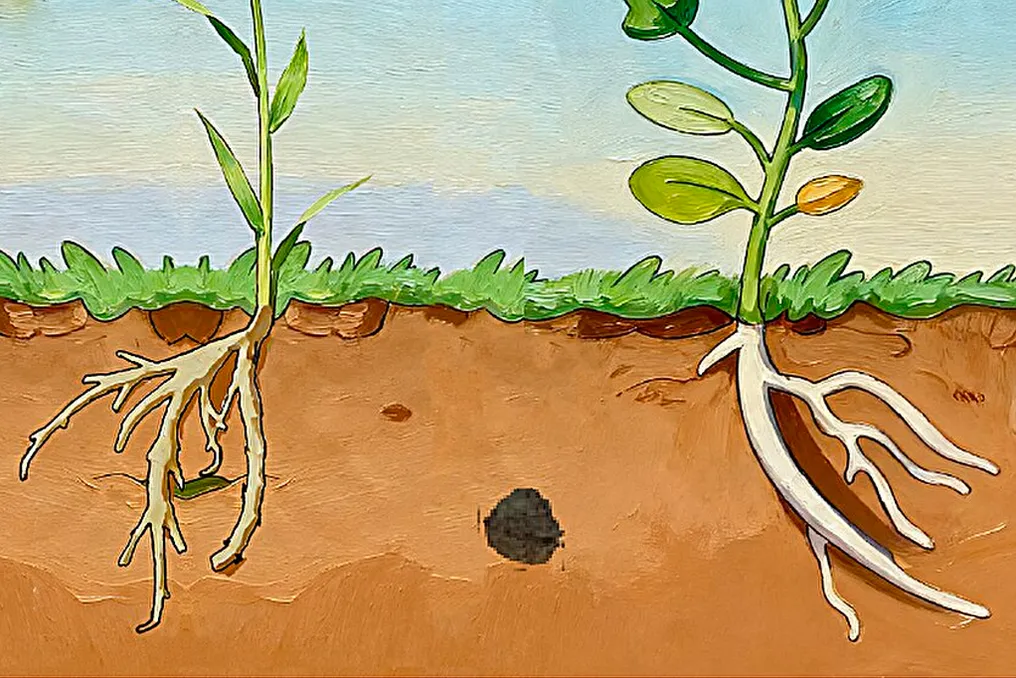
Plants demonstrate that they are not entirely inactive; they grow and adjust the direction of this development in response to various stimuli, a process known as tropism. Some species direct their shoots towards the sun (heliotropism), while others follow or resist the force of gravity (gravitropism), and many tend to lead their roots to areas of soil with greater water availability (hydrotropism).
Furthermore, plants use this restricted movement to protect themselves from harmful substances. In a recent study published in the journal Science, Chinese and Austrian scientists discovered a new type of tropism: plants curve their roots away from dead or decaying matter. This phenomenon has been named 'saprotropism', using the prefix sapro, derived from Greek for 'rotted' or 'decayed.'
This movement allows plants to avoid absorbing toxins released by microbes during decomposition in contaminated parts of the soil. Biologist Yuzhou Zhang, co-author and originator of the study, commented that 'animals instinctively avoid spoiled food because it often harbors harmful microorganisms,' questioning whether plants, despite lacking mobility, could have developed a similar tactic underground.
The investigation originated from an unsuccessful experiment conducted by Zhang in a laboratory in Austria. While trying to understand the reaction of plants to gravity, he noticed that an agar plate had been contaminated by airborne microbes. This chance observation led to the finding that all the roots of the samples curved away from the contaminated areas, prompting a more detailed analysis.
In the tests, researchers planted seedlings of the species Arabidopsis thaliana in containers containing various decomposing organic materials, such as wood sawdust, leaves, or apple slices. As predicted, the roots diverted from the 'decomposition zones' where the putrefying material contaminated the surrounding soil. Notably, the roots exhibited different behavior when the organic material was of animal origin, such as pieces of chicken meat.
The same effect was observed in other crops, including wheat, tomato, and canola, suggesting that this reaction may be a common characteristic in the plant kingdom. A key factor distinguishing this phenomenon from other tropisms is that, while most previous tropisms were linked to non-biological (abiotic) stimuli—such as light, water, or gravity—in the case of saprotropism, growth is influenced by living soil microorganisms.
The mechanism behind this reaction also differs from other tropisms. While in phototropism the plant uses auxin redistribution, a growth hormone, to orient itself towards light, in saprotropism, the direction is determined by abscisic acid (ABA), a plant hormone sensitive to soil pH. Fungi act as signalers: by decomposing dead plant tissues, they release acidic metabolites (such as organic and phenolic acids) into the soil, creating zones of higher acidity. Plants detect this increase in acidity and concentrate abscisic acid on the side of the root closest to the decomposing material, forcing growth in the opposite direction and thus diverting from the contaminated area.
The experiments demonstrated that when the organic matter completes its decomposition and integrates into the soil, the plant returns to its normal growth. Zhang stated that 'when the plant material had almost completely decomposed, the acidic warning signal disappeared, and the roots stopped curving away.'