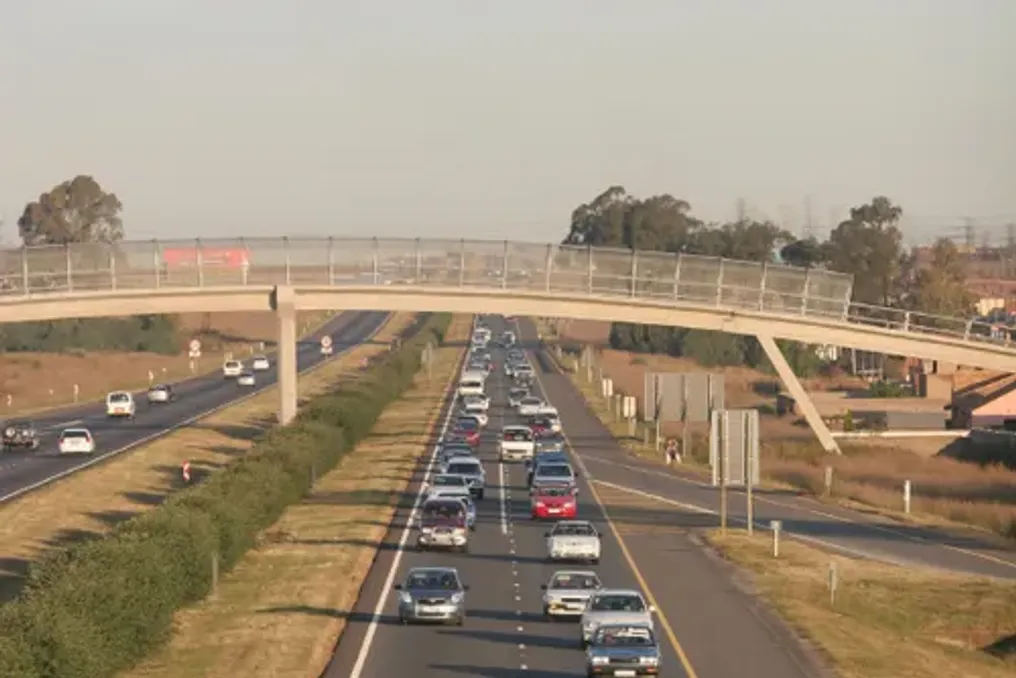
Nearly a quarter of South African workers leave their homes before six in the morning, and this is not because work starts at that time, but because of the commute itself.
The average travel time by train is 107 minutes one way, by bus is 84 minutes, by taxi is 63 minutes, and by car is 44 minutes. These figures are averages, and many people spend significantly more time traveling, with the duration of their journeys constantly increasing.
The time spent commuting means the loss of numerous opportunities: homework is glanced at instead of being done for an hour, meals may be eaten standing up or skipped entirely, and conversations are postponed until the weekend, joining a host of other deferred tasks.
Researchers from the Harvard Growth Lab assessed this problem. The cost of travel and fuel amounts to about 17% of net income. They then assessed the travel time itself, assigning the value of the employee's hourly wage to each hour spent in transit. Thus, a person who spends three hours a day commuting during an eight-hour workday has effectively worked eleven hours for eight hours of pay. Combined, this accounts for 57% of their salary.
Money constitutes a smaller part of this burden, while hours constitute a more significant one, and no one bills them for it.
These hours do not disappear without a trace. The difference between the average train passenger and the average car driver is just over two hours per day, which equates to more than 500 hours over approximately 250 working days a year. This is enough time to gain qualifications, start a side business, or for a parent to participate in their child's upbringing. One person can invest this time, while another spends it sitting idly, and this gap widens every year without measures to eliminate it.
The situation closes into a vicious cycle: finding a job requires time and money, which become increasingly scarce the further a person lives from the city center. As a result, people take the jobs they can reach, rather than the ones they could perform, keeping their income low and preventing them from changing their location.
The International Monetary Fund found in March that in areas where the usual commute takes more than an hour, the unemployment rate is higher than in areas where it lasts less than 15 minutes, by more than 20 percentage points.
Distance does not just complicate the journey to work; it complicates the very possibility of getting a job.
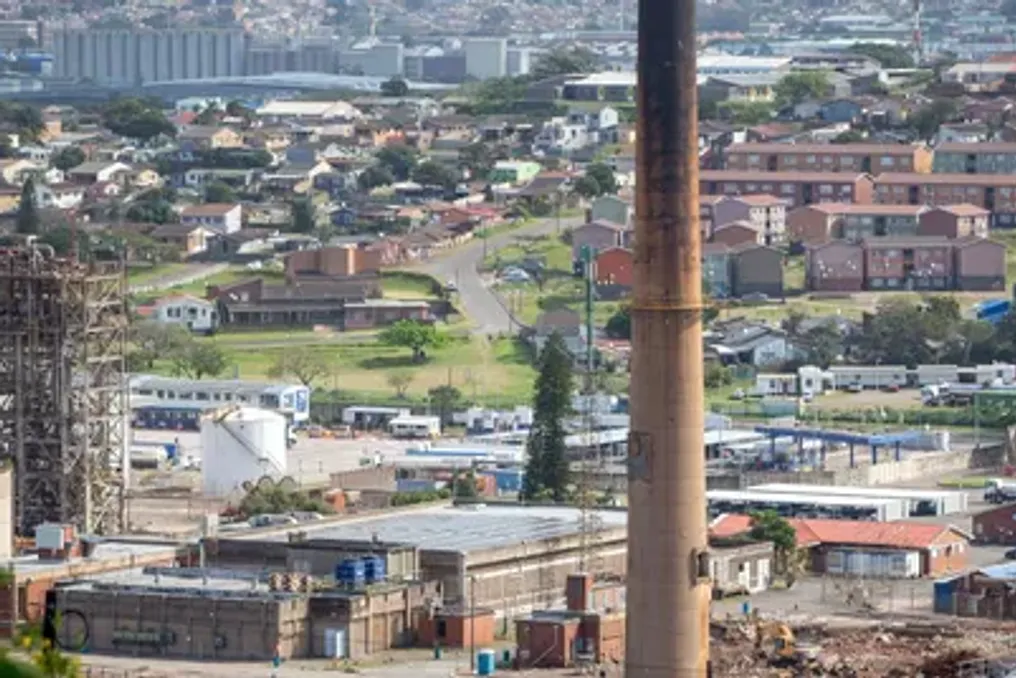
None of this is a natural phenomenon; distances were designed. According to the Group Areas Act of 1950, people were evicted from parts of the city where workplaces were located and relocated to settlements on the distant outskirts, leaving strips of industry and open land between them to segregate groups. Distance was not a byproduct of this plan, but its tool.
Less discussed is what happened afterward.
Since 1994, the state has built about two million houses, mainly where land was cheap, and cheap land is located on the periphery of cities, far from workplaces. This time, the motive was not ideological but budgetary, supported by goals based on the number of units built rather than the distance to work. However, a house is not just a structure; it is also a location, and the location determines the cost of living. Thus, a program intended to correct spatial injustice reproduced its geography for reasons that looked rational in a data table.
It must be acknowledged that no one intended to repeat past mistakes, and policy has changed conscientiously multiple times. What has not changed is the price of land. It is high near the city and cheap on the outskirts, and a budget evaluated by the number of houses built will always lean towards the cheaper option.
By placing people far away, we pay annually for their round trips. Next year, nearly 10 billion rand will go to subsidizing suburban rail transport, and over 8 billion rand to bus contracts, while the housing settlement budget, which could reduce distance, shrinks for the third consecutive year.
Meanwhile, the cheapest form of transport has quietly disappeared. In 2013, the railway served about 49 million passenger journeys in one month, and by 2022, this figure had dropped to about one million, with those who used it switching to taxis, which cost almost twice as much.
No one pays double willingly. Where trains run, people use them. Our trains stopped running. Lines were closed, carriages were dismantled, and the schedule became a recommendation, and what remained seemed unsafe. Nearly two-thirds of train users reported dissatisfaction with safety on board to the South African Statistics Agency, and more than seven out of ten reported dissatisfaction with safety on the way to the station. A service that is unreliable and unsafe is never cheap.
This shows what choices exist. The cheap option does not work; the one that works costs more than many people earn, and reliability here is what needs to be bought. The further you live, the more you need it and the less you can afford.
People did not wait. Informal settlements and backyard rooms, which were unplanned, are often better situated than state-built homes, as those who built them preferred proximity to ownership, giving up title deeds for an hour a day. It took until the mid-2000s for policy to begin viewing this as a rational trade-off and to start improving these settlements in situ.
In July, the Constitutional Court stated something similar. The ruling states: 'Spatial inequality has condemned many South Africans to extremely long commutes, requiring multi-hour journeys every day, often before dawn.' The court ruled that the housing system, which is built only on the city outskirts, is unconstitutional. The court noted that the location of a home is not just one of many factors, but a necessary factor.
Now every government in the country is bound by this, and it is not leading to the construction of a single new home.
It only determines whether all of this was inevitable. For more than seventy years, we viewed distance as a feature of the landscape, and the commute as the cost of living away from the center, when someone deliberately created this distance and then, over three decades, restored it by mistake.
Whether this changes will be seen not in a court ruling. It will be seen in where the next houses are built, and whether the person leaving home tomorrow before six in the morning does so because of a map drawn by someone, or because of a map that no one could redraw.