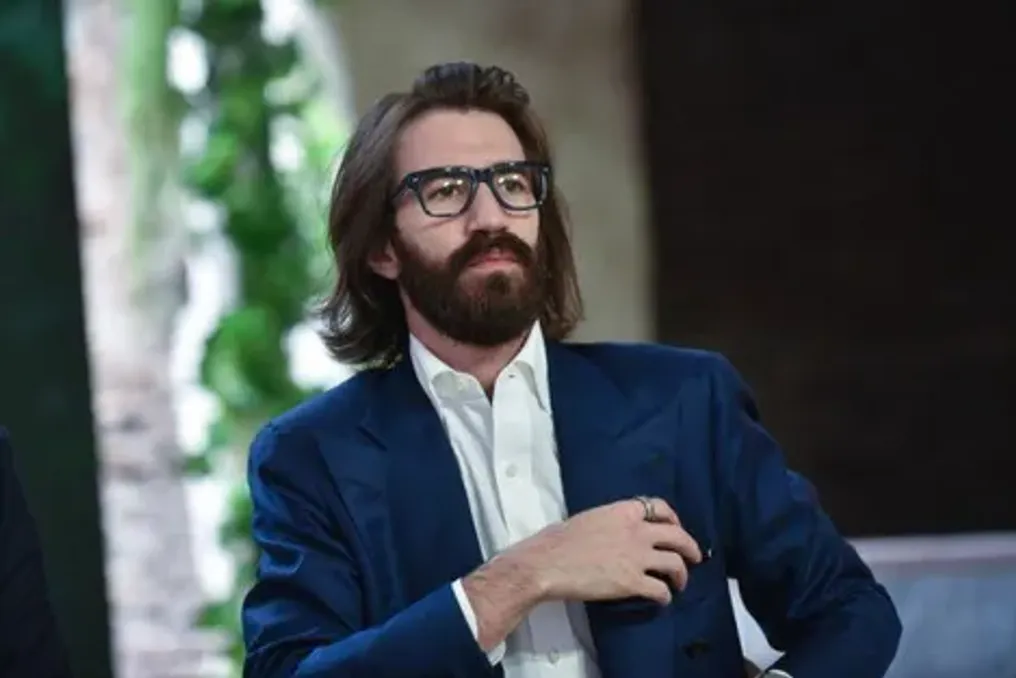
Leonardo Maria Del Vecchio's recent appearance on a podcast hosted by a popular rapper has become another episode in the ongoing corporate drama at the Franco-Italian company EssilorLuxottica SA. The young man, 31-year-old son of EssilorLuxottica SA founder Leonardo Del Vecchio and one of eight heirs to the fortune, shared personal issues on the Pulp Podcast, including struggles with drug addiction and a very active sex life.
EssilorLuxottica owns Ray-Ban and is a partner of Meta Platforms Inc. in developing AI-based smart glasses. The corporate drama within the company has led to an almost fivefold decrease in its market value over the past year. Young Del Vecchio has effectively become an activist shareholder in the family firm, criticizing management and striving to become its most influential investor.
He hoped that participating in the podcast would showcase his human side, separate from his name and wealth. Instead, however, he amplified concerns regarding his sanity and well-being. This unusual spectacle damaged his campaign, despite denials from his representatives.
EssilorLuxottica was originally a legend of Italian capitalism. Its founder, Leonardo, was placed in an orphanage by his wife due to financial difficulties. He subsequently built the world's largest eyewear group, effectively shaping the modern optical industry.
In the years leading up to his death in 2022 at the age of 87, he established a structure within the family holding company Delfin. This structure was intended to pay substantial dividends to his heirs while simultaneously hindering their sale. Delfin holds approximately one-third stake in EssilorLuxottica, as well as significant stakes in Italian banks and insurance companies.
Ownership of the holding company is divided among eight heirs: six children from three mothers, Leonardo's widow Nicoletta Zampillo, and her son Rocco Basileco from another marriage. Any major decisions concerning ownership or strategy require unanimous consent. The patriarch found it difficult to achieve such consensus, as he wished for EssilorLuxottica to continue operating unchanged under the guidance of his close advisor, Francesco Miller, who also heads Delfin.
The situation changed this year when tension among the beneficiaries finally flared up. Some are dissatisfied with the inability to make changes that would allow them to monetize their assets or gain more influence over management. Leonardo Maria proposed buying out the shares of two of his brothers to become the dominant shareholder. His plan, valued at 10 billion euros ($11.2 billion), was approved by a family vote in April, but financing became complicated by the fall in EssilorLuxottica's stock price.
Following this, Delfin decided not to support the deal. Meanwhile, Leonardo Maria's half-brother, Basileco, put forward a competing proposal: to separate the core share in eyewear production from Delfin's other financial and insurance assets, which would allow the latter to be sold to raise funds for the family members or to reorganize Delfin.
Against this backdrop, it is hard to understand how this week's interview helped Leonardo Maria. He stepped down from his roles as Group Chief Strategy Officer and President of Ray-Ban in August, beginning open criticism of Miller and other top EssilorLuxottica managers. He intensified his complaints on the podcast, stating that being removed from daily management strengthened his ability to challenge the current regime of the company. He emphasized: 'I am a shareholder. I have taken a step forward; let it be perfectly clear, I have not taken a step back.' He stated that EssilorLuxottica 'has the name Del Vecchio, and I cannot put my face behind it when salaries are frozen and stocks are falling by 50%.'
Alongside remarks about his father 'giving us everything except love' and that 'I filled the gaps I felt with drugs,' he revealed that he has a debt of 1 billion euros and is selling one of his two yachts. EssilorLuxottica representatives declined to comment on this column. Leonardo Maria's representatives stated that the interview was intended to show 'a side of him that is usually not visible in the financial and corporate context in which he is typically portrayed. We do not believe that this has affected his confidence as a shareholder. His positions, investment decisions, and actions in this role should be judged on their own merits and substance.'
Nevertheless, his outburst might strengthen Miller, whose contract expires in April. Perhaps other Delfin shareholders will decide that stable hands are needed rather than further turmoil. Last month, the board of directors expressed 'full confidence' in Miller as CEO and Chairman of EssilorLuxottica. If he remains, he should use the new mandate to overcome the Delfin deadlock.
A sensible option would be to reduce holdings in Banca Monte dei Paschi di Siena SpA, UniCredit SpA, and Assicurazioni Generali SpA, using the proceeds to buy out family members wishing to exit Delfin. This is not significantly different from Basileco's proposal. One difficulty is that Delfin may not want to act as a forced seller of financial assets that are strategically important to Italy and which are not easy to liquidate. This is particularly relevant as the country attempts to reform its financial sector. But if a restructuring occurs, it could open doors for the holding company to change its structure and allow some clan members to profit. According to Corriere della Sera, Delfin is already studying a plan to purchase part of the shares of two heirs using bank financing.
Regardless of the final outcome, a period of stability is necessary to try to find a solution, especially for the fading jewel in the crown, EssilorLuxottica. Leonardo Maria reported that he was advised not to appear on the podcast. He may regret ignoring this wise advice.