The 'Contemporary Now' arts festival, recently held in Chennai, demonstrated the benefits of intercity collaboration. This third edition of the festival covered ten locations across the city and included exhibitions, panel discussions, and tours of several galleries.
The diversity of artworks presented was a testament to the joint efforts involving galleries from other Indian cities. Galleries from Mumbai, New Delhi, Ahmedabad, and Kolkata shared their works at the Chennai festival.
Participants included galleries such as Experimenter, Archer, Vadehra Art Gallery, Ojas Art, Art Alive, TARQ, Chatterjee & Lal, Chemould Prescott Road, and Project 88. These institutions represent various facets of India's artistic landscape, including the preservation of traditional practices, historically significant contemporary art programs, and experimental modern directions.
Experimenter, founded in 2009 by Prateek and Priyanka Raja, is a contemporary art gallery with branches in Kolkata and Mumbai. It is known for its intellectually ambitious and experimental approach, addressing themes of identity, politics, history, memory, and social change. In addition to exhibitions, Experimenter fosters critical dialogue through masterclasses, artist talks, and publications, and its annual Curators’ Hub supports the development of young curators.
Archer Art Gallery, established in Ahmedabad in 1978, originated from a studio founded by artist Anil Relie. This gallery is particularly valued for its work with limited edition prints, including screenprints by renowned Indian artists.
Vadehra Art Gallery, founded in New Delhi in 1987, is a leading center for contemporary and modern South Asian art. It has played a vital role in supporting recognized Indian modernists such as M.F. Husain, S.H. Raza, and Tyeb Mehta, as well as in art historical research through its publishing program.
Ojas Art was created in New Delhi in 2006 by Poonam and Rajiv Sethi and focuses on indigenous, folk, and tribal artistic practices of India. The gallery aims to connect traditional art forms with a contemporary audience.
Art Alive Gallery, founded in New Delhi in 2001 by Sunaina Anand, promotes contemporary and modern Indian art. It has also organized exhibitions of Indian art in foreign cities, helping to introduce Indian artists to an international audience.
TARQ was established in Mumbai in 2014 as a contemporary gallery focused on a research and experimental approach to art. Its name derives from the Urdu word 'tark,' meaning logic or reasoning, reflecting an interest in encouraging critical contemplation of art and ideas.
Chatterjee & Lal, founded in Mumbai in 2003 by Mortimer Chatterjee and Tara Lal, covers contemporary art and design. The gallery combines solo exhibitions with research-based group projects, placing artworks within a broader historical, cultural, and artistic context.
Chemould Prescott Road, established in 1963 by Keki and Khorshed Gandhi, is one of India's pioneering galleries for modern and contemporary art. It supports experimental and interdisciplinary artistic practices, showcasing works ranging from painting and sculpture to photography and new media.
Project 88, established in Mumbai in 2006 by Sri Goswami, showcases experimental and conceptually driven works by Indian and international artists. It often addresses complex themes such as globalization, political structures, social inequality, identity, and the relationship between art and public life.
The photo essay features works by artists from these galleries and other institutions in Chennai, including Gitisha Kallat, Atul Dodiya, Shakuntala Kulkarni, Mitu Sen, Mohita Shelare, Rina Saini Kallat, Desmond Lazaro, and N.S. Harsha.
Thus, a festival rooted in one city can become much more than just a local cultural event thanks to such collaboration. It transforms the festival into a convergence point for diverse artistic practices, regional identities, new perspectives, and creative communities.
Art does not exist in isolation, and the platforms that display it should not either. When galleries from different cities unite, they open up opportunities for artistic discovery and strengthen a more connected art ecosystem. Viewers gain access to works they might otherwise never encounter, making the festival richer and more engaging. For emerging artists, these connections, in particular, provide the possibility of wider exposure, which can be transformative.
When a city embraces artistic voices from elsewhere, it strengthens its status as an open, dynamic, and culturally significant hub. Gallery networks can continue to thrive even after the festival ends, creating ongoing opportunities for cultural exchange and professional growth.
When art travels, perspectives expand, and when galleries collaborate, possibilities multiply. Intercity interaction strengthens the entire nation's art ecosystem, beyond just supporting local artists.
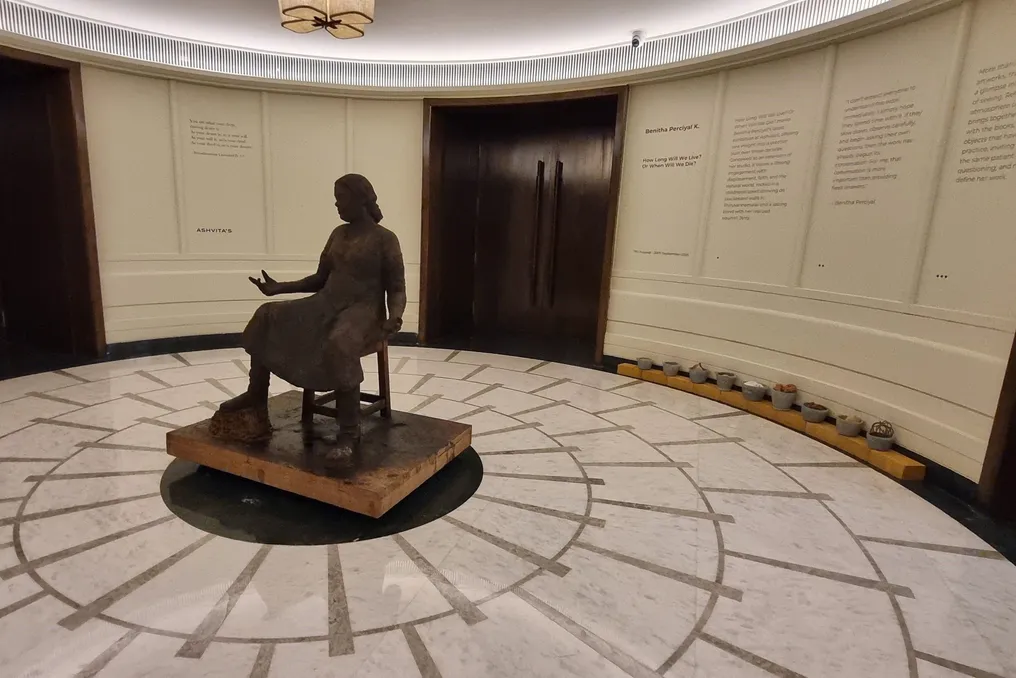
One notable exhibition at 'Contemporary Now' was the show titled 'How Long Will We Live? Or When Will We Die?', which featured works by Benita Percial, offering a comprehensive view of her creative practice developed over three decades. She explained: 'I don't expect everyone to understand the work immediately. I just hope they spend time with it. If they slow down, observe carefully, and start asking their questions, then the work will begin its conversation.' She added: 'For me, this conversation is more important than providing fixed answers.' As an artist working with various media, she actively uses wood. She also advised emerging creators: 'Artists must listen to the world and listen to themselves too.'