Scientists develop method to predict El Niño up to one year in advance
Read more
Olhar Digital
olhardigital.com.br

Scientists develop method to predict El Niño up to one year in advance

Scientists have identified a method capable of determining the reliability of El Niño and La Niña forecasts with a horizon of up to one year. This new discovery has the potential to improve warnings about extreme weather events, granting more time for communities and authorities to prepare against droughts, floods, and other environmental consequences.

The study, published in the scientific journal Science Advances this Friday (23), analyzed a set of over 7,500 historical forecasts generated by climate models from nine countries. The researchers concluded that the conditions observed in the Pacific Ocean at the time a forecast begins significantly affect its accuracy in subsequent months.

The most relevant finding demonstrated that forecasts initiated under La Niña conditions maintained a good level of performance, even when attempting to anticipate the behavior of the climate system for an entire year. In contrast, those forecasts that began under neutral conditions proved considerably less reliable.

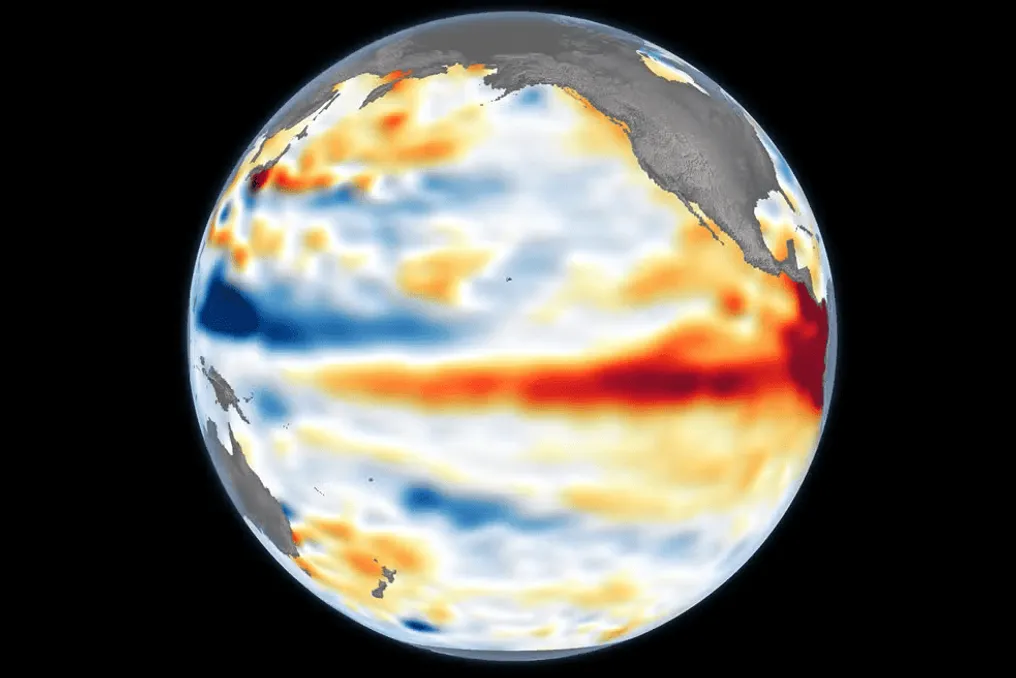
El Niño and La Niña represent opposite phases of the phenomenon known as the El Niño-Southern Oscillation (ENSO), a natural climate pattern linked to variations in the sea surface temperatures of the tropical Pacific. These changes impact atmospheric circulation, potentially altering rainfall and temperature patterns in various parts of the globe.

Although these events generally peak around December and can be predicted with certainty about six months in advance, projecting them over longer periods remains a scientific challenge.

The research indicates that monitoring the initial state of the ocean helps distinguish between forecasts with a higher chance of being correct and those that require greater caution. According to Mandy Freund, a co-author of the study and a researcher at the University of Melbourne (Australia), the stable performance of forecasts initiated during La Niña suggests that these circumstances make the tropical Pacific system more predictable over the following year.

The ability to anticipate these phenomena with greater certainty can assist governments, emergency services, and populations in planning preventive actions, organizing resources, and mitigating risks. However, scientists emphasize that there are still steps to complete before this discovery can be directly implemented in daily forecasts, although the study already offers a path to refine alert systems and increase preparation time for seasonal climate changes.


Similar stories

Propak Cape 2026 Seminar Program to Present Packaging Industry Analytics in Cape Town
Read more
iol.co.za

Propak Cape 2026 Seminar Program to Present Packaging Industry Analytics in Cape Town

Packaging industry specialists will share knowledge on topics such as sustainable development, recyclability, packaging design, food safety, and production efficiency at the Propak Cape 2026 event. The Institute of Packaging South Africa (IPSA) is organizing a free seminar program running parallel to the exhibition.

The program will focus on studying trends, developments, and challenges shaping the packaging industry, including sessions dedicated to the circular economy, Extended Producer Responsibility (EPR), recycling, plastics, and packaging innovations.

The Propak Cape event will take place at the Cape Town International Convention Centre (CTICC) from October 27 to 29, 2026.

The program will begin with a presentation by IPSA National Secretary, Bill Marshall, who will share key insights on the latest packaging design trends identified through the Gold Pack 2026 Awards and the Student Gold Pack Awards.

Special attention will be given to sustainability and the circular economy. Edwin Botha, an employee of Fibre Circle responsible for life cycle assessment and recyclability, will examine the gap between sustainability and recyclability in packaging design.

Masale Manoko, Head of Sustainable Development for Sub-Saharan Africa at Tetra Pak, will explore how collaboration, technology, infrastructure investment, community empowerment, and consumer education can contribute to the growth of the cardboard collection and recycling economy in South Africa.

New recycling solutions will also be presented: Manuel Cortizo from Bobst will demonstrate the company's One Barrier program, and Sasha Skora, Senior Sales Director at Reifenhäuser Blown Film GmbH, will present EVO GEN3 films for the circular economy.

The topic of Extended Producer Responsibility (EPR) and the circular economy will be covered throughout the program, with sessions addressing governance, regulation, compliance, and the future of the South African packaging industry.

Speakers include Dr. Kishan Singh, Janine Osborne, Keith Anderson, McGabo van Niekerk, and Telli Chauke.

The program will also address practical industry issues, such as food safety and the FSSC 22000 Version 7 standard updates, with participation from Antoinette Maak. Managing ethylene in fresh produce will be discussed with Lianne Jones, glass recycling with Shabir Jetham, and the state of the plastics industry with Annabe Pretorius.

Additional sessions will cover static management on packaging production lines and technologies that can help protect profits and accelerate growth.

Propak Cape 2026: Dates and Registration

Propak Cape 2026 will take place from October 27 to 29, 2026, at the Cape Town International Convention Centre (CTICC). Visitors will have the opportunity to explore solutions in packaging, food processing, plastics, printing, and labeling, as well as network with technical specialists and industry experts.

Cuba will extend summer time until 2027 due to energy crisis
Read more
noticiasaominuto.com

Cuba will extend summer time until 2027 due to energy crisis

The Cuban Government has decided to maintain summer time until November 2027. This decision was made in response to the energy crisis the country has faced for two years, resulting in daily power outages exceeding 20 hours.

A joint official note, issued on Saturday by the Ministry of Energy and Mines and the Ministry of Labor and Social Security, established that summer time will remain active until November 7, 2027, the date scheduled for the change next year.

According to this statement, the measure is directly related to the worsening blockade and specifically to the energy siege imposed by the United States government, which causes a shortage of fuel necessary for electricity production.

With this extension, it is expected to prevent an increase in power failures, which was projected at 126 megawatts (MW) during the afternoon, the peak period of electricity consumption. The document clarifies that 76 MW of this total come from savings generated by not using artificial lighting, and 50 MW originate from photovoltaic solar energy generation during the same period.

Additionally, the official note emphasizes that, aiming not to compromise social activities in the early hours of the day, the start of classes and work will be postponed by 30 minutes, covering the period from November 1, 2026, to March 14, 2027. Entities that operate continuously can also adjust their entry and exit times according to the characteristics of their operations.

In another development, Cuba announced on October 12 a reform in the oil and gas sector, allowing concessions to foreign investors and opening space for local private actors, as part of the country's economic liberalization.

The United States implemented an oil embargo against the communist island since January, which intensified the economic and energy crisis affecting the nation, which has 9.4 million inhabitants. Several state-owned companies and leaders of the oil sector have also suffered sanctions from Washington.

Cuba manages to produce 40% of the oil it consumes, and this production is fundamental for the operation of seven old power plants that sustain its grid. Washington restricts the supply of US fuel only to the new Cuban private sector. However, these acquisitions, authorized since February, represent only 3% of national needs, according to authorities.

Officially, there are more than 15 thousand small and medium-sized enterprises operating in Cuba, employing more than a third of the workforce. U.S. President Donald Trump considers the communist island, located 150 kilometers off the coast of Florida, an 'extraordinary threat' to U.S. national security, having repeatedly warned about the possibility of 'taking control' of the country.

River Dolphin Conservation: Uneven Progress Worldwide
Read more
cgtn.com

River Dolphin Conservation: Uneven Progress Worldwide

October 24th marks International Freshwater Dolphin Day. This date is not officially recognized by the United Nations; it was proposed at a seminar on establishing protected areas for freshwater cetaceans held in East Kalimantan, Indonesia, in October 2009, according to data from the IUCN SSC Cetacean Specialist Group.

The purpose of this day is to raise awareness about freshwater dolphins and their habitats, including the Ganges dolphin, Irrawaddy dolphin, Amazon river dolphin, and the Yangtze finless porpoise.

Freshwater cetaceans worldwide face pressure from habitat degradation, accidental bycatch in fisheries, and other human activities.

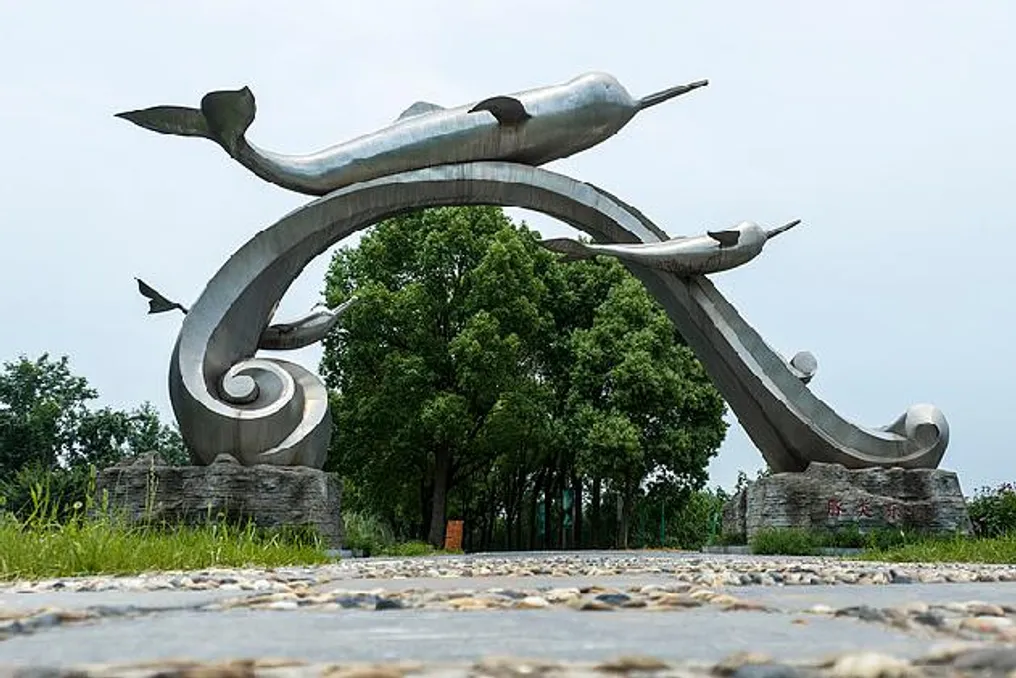
In China, the population of the Yangtze finless porpoise is showing signs of recovery. According to an official statement at a press conference by the State Council Information Department on January 30, 2026, a special survey in 2025 recorded 1,426 individuals, which is 177 more than the 2022 survey.

This recovery is attributed to a ten-year fishing ban in key Yangtze waterways, which began in 2021, as well as the expansion of protected areas and targeted rescue programs, as indicated by the Ministry of Agriculture and Rural Affairs during a briefing.

This positive experience contrasts with the vulnerable status of other river dolphin populations in South and Southeast Asia. The Ganges dolphin, found in India and Bangladesh, is listed as endangered on the IUCN Red List.

The main threats to it are dams and water releases that fragment river habitats, water abstraction, industrial and agricultural pollution, and accidental entanglement in fishing nets, according to IUCN and WWF estimates.

The freshwater populations of the Irrawaddy dolphin in the Mahakam River of Indonesia and the Ayeyarwady River of Myanmar are classified by the IUCN SSC Cetacean Specialist Group as critically endangered. These small, isolated groups are extremely susceptible to accidental trawl bycatch, vessel collisions, and habitat loss.

Local authorities and conservation groups have established protected zones and implemented fishing monitoring regulations, but persistent risks are slowing down population recovery.

Conservation experts from WWF note that river dolphins serve as important biological indicators of river ecosystem health. While the Yangtze case demonstrates that targeted regulation can reverse decline, many transboundary river systems still lack coordinated cross-border action to protect remaining freshwater dolphin habitats in Asia and South America.

Popular