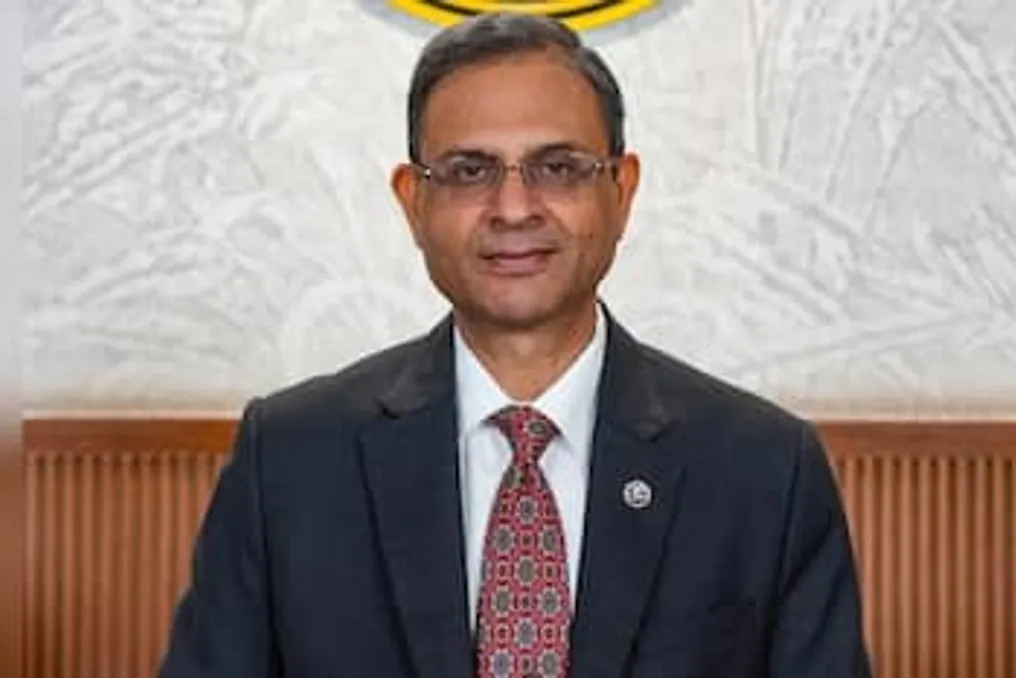
Reserve Bank of India (RBI) Governor Sanjay Malhotra announced on Friday that companies classified as Central Investment Companies (CIC) which access public funds, directly or indirectly, are required to register with the central bank. Furthermore, top-tier Non-Banking Financial Companies (NBFCs) must be included in the stock exchange listings.
These statements came amid discussions regarding whether a public offering is required for Tata Sons, the holding company of India's largest conglomerate, the Tata Group.
Malhotra noted at the NDTV World summit in New Delhi: 'We do not answer questions concerning any specific regulated entity.' However, he added that NBFCs and CICs, such as Tata Sons, are required to register with the RBI due to systemic risks. This is because they are at the top of group companies where they can raise funds by using the balance sheets of these companies for repayment.
When separately asked about the rules governing top-tier NBFCs, Malhotra clarified: 'As long as it is an NBFC within our definition, it is a CIC, it has access to funds, directly or indirectly, it is obligated to be registered, and if it is at the top tier, then it is obligated to be listed.' He also emphasized that registration is only not required if the CIC does not have direct or indirect access to public funds.
The central bank classified Tata Sons as a top-tier NBFC in 2022, granting the company three years until 2025 to go public. Instead, the company repaid its outstanding debts and requested the cancellation of its CIC registration. Nevertheless, last month, the RBI rejected this request and demanded that Tata Sons comply with the requirements applicable to top-tier NBFCs.
For its part, Tata Trusts, which controls Tata Sons, proposed merging Tata Electronics Systems Solutions (TESS) and Tata Consulting Engineers (TCE) into a holding company. The goal of this proposal is to avoid an Initial Public Offering by restructuring Tata Sons in a way that, according to the Trusts, would cause it to cease meeting the criteria for an NBFC or CIC. This plan requires approval from the Tata Sons board of directors and consent from the RBI.
Turning to monetary policy, Malhotra stated that the RBI generally does not use interest rates to solve financial stability issues, relying instead on macroprudential measures. However, he did not rule out the possibility of applying monetary policy in certain situations, noting that the decision remains with the Monetary Policy Committee (MPC). He added that the effectiveness of such intervention would depend on the circumstances and would be reviewed by the MPC.
In its latest meeting this month, the MPC raised the key repo rate by 25 basis points to 5.50 percent and changed its stance from neutral to 'calibrated tightening.' The Governor also acknowledged growing cybersecurity risks to the financial system, as banks report data breaches in the dark web. Separately, he expressed concern over the impact of Artificial Intelligence (AI) on financial stability, stating: 'These risks are real. They cannot be ignored, so I will not downplay these risks.'
Malhotra highlighted two main areas of concern: data security and cyberattacks capable of disrupting or disabling systems. He noted that the RBI has a robust regulatory and supervisory system to address both issues, but the rapid pace of software development means vulnerabilities may continue to emerge.