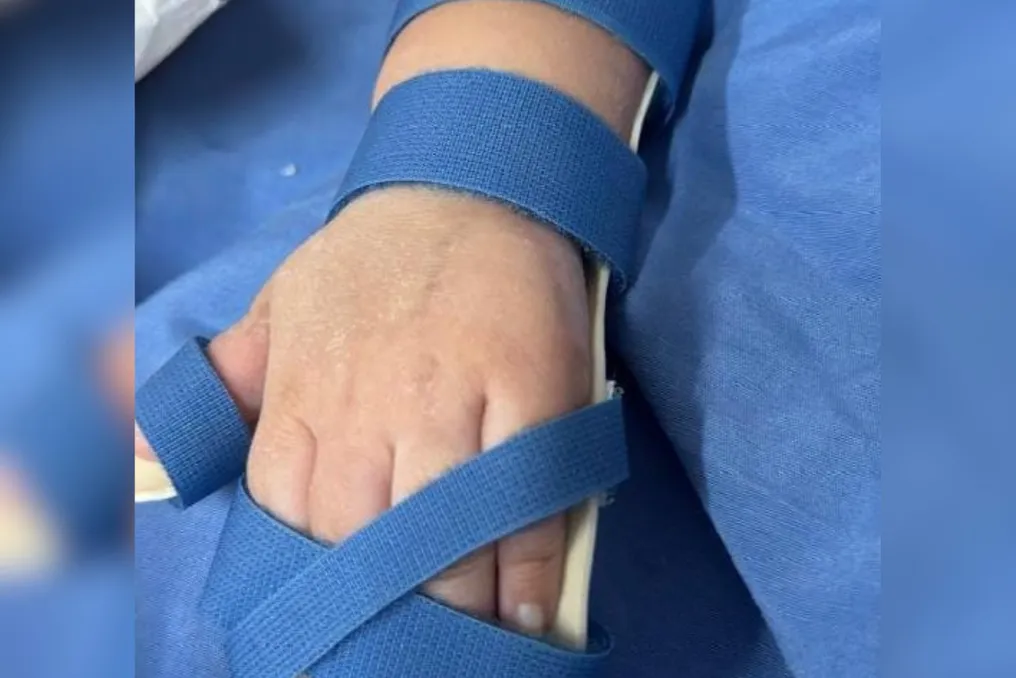
Physiotherapy students developed a custom pediatric orthosis with the aim of improving the quality of life of a child under one year old. The boy, who suffers from peripheral neuropathy, is hospitalized at the Municipal Hospital of Araguaína, located in the north of the state of Tocantins.
João Pedro Sousa Costa, a 21-year-old university student, reported that the group, composed of eight students, is completing an internship at the hospital unit. During this period, they identified the need to create a specific device that would fit the patient's anatomy.
The students proposed using an orthosis for wrists and fingers to correct the limb's anatomy. Due to the long hospitalization period, the patient's arm muscles showed marked stiffness, causing the hand to tend to close and contract with great force. The students warned that if this condition was not prevented, it could lead to permanent muscle hardening, resulting in pain and limiting future movements.
This orthosis functions as a preventive measure against bone deformities, muscle contractions, and chronic motor dysfunctions. According to the students, it serves to gently stretch and relax these muscles, preventing finger stiffness, relieving discomfort, and ensuring the limb remains healthy and aligned for motor recovery.
Alicia Chagas Mitt, the physiotherapist responsible for guiding the students, explained that the initiative provided the future professionals with the opportunity to apply their theoretical knowledge in a practical context to benefit a patient. She stated that after about three weeks of monitoring, she suggested to the students that they consider building an orthosis to prevent deformities in the patient. In just one week, the students managed to finish manufacturing the orthosis, which was very well made.
The manufacturing process began with the detailed collection of the patient's hand anatomy, using manual drawings on paper and photographic records to capture all necessary details. After completing the initial modeling, the mold was transferred to production in PVC material.