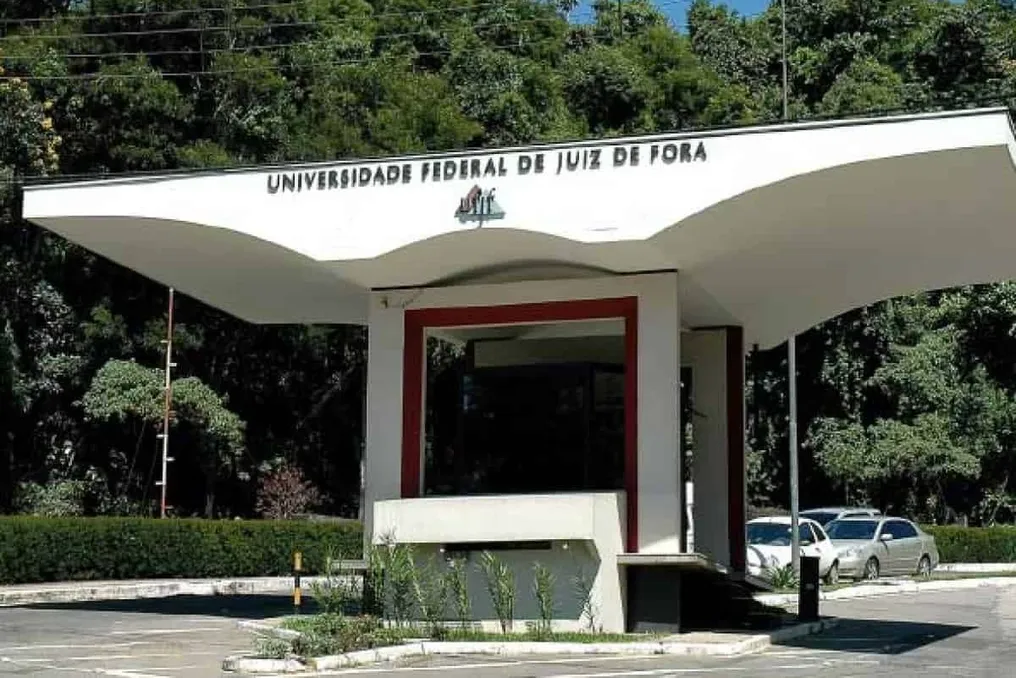
The Federal University of Juiz de Fora (UFJF) has received approval to implement three new undergraduate programs: Bachelor's degrees in Libras Languages, International Relations, and Data Science and Artificial Intelligence.
These courses will be offered in person, during the evening shift, with a capacity of 30 annual spots for each. Enrollment in the programs is scheduled for 2027, using the Unified Selection System (Sisu).
The introduction of these degrees is part of the Transforming Universities program, promoted by the Ministry of Education (MEC). The new courses are aligned with specific axes: Inclusive Universities (for Libras Languages), Strategic Universities (for International Relations), and Innovative Universities (for Data Science and Artificial Intelligence). The proposals were duly debated and sanctioned by the Superior Council.
Details of the Libras Languages Course
This bachelor's degree, which will be linked to the Faculty of Letters, aims to train professionals to work in the translation and interpretation of both Libras and Portuguese Language. The training will include the creation of Libras interpreters, differentiating it from the existing teaching degree at the institution, which focuses primarily on teacher training.
Structure of the International Relations Course
The International Relations course will be affiliated with the Institute of Human Sciences (ICH), but will feature collaboration from various university sectors, including the Faculties of Law, Economics, and Letters, as well as the Directorate of International Relations and the Sérgio Vieira de Mello Chair. With a total workload of 2,700 hours, the course focuses on preparing professionals to deal with global peripheries and interactions between nations of the Global South, covering studies on Latin America, Africa, and Asia. Furthermore, crucial topics such as human rights, environmental issues, migration, and international cooperation will be addressed.
Training in Data Science and Artificial Intelligence
The training in Data Science and Artificial Intelligence has a workload of 3,000 hours and an estimated duration of eight semesters. This course will integrate the Faculties of Letters and Law, along with the Institutes of Exact Sciences (ICE) and Human Sciences (ICH). The main purpose is to train specialists capable of using data and artificial intelligence to solve problems, aiming for careers in the job market, the public sector, and civil society entities. The curriculum plan also includes discussions on the ethical, legal, and social aspects of these technologies, specifically mentioning the General Data Protection Law (LGPD) and the regulation of artificial intelligence.