
Professor Charles Jennings explains heat propagation concepts in the Network 2026 'Aulão na Rede' project
Read more
Grupo Globo
g1.globo.com

Professor Charles Jennings explains heat propagation concepts in the Network 2026 'Aulão na Rede' project

The Amazon Network's television news programs have been providing daily video lessons as part of the 'Aulão na Rede' project. On Thursday, the 22nd, Professor Charles Jennings addressed the topic of heat propagation. This material is already available to students preparing for the National High School Exam (Enem), university entrance exams, and other assessments.

This initiative consists of gathering video classes broadcast daily by the Amazon Network's television news programs, offering guidance from teachers in various fields of knowledge to support participants during the final study phase.

Charles Jennings clarified that heat is defined as thermal energy in motion, which naturally migrates from a hotter object to a colder one. He illustrated this with the example of two bodies with different temperatures: one at 80°C and another at 30°C. This thermal disparity causes energy to pass from the hotter body to the colder one until both reach thermal equilibrium, at which point the temperatures equalize and heat exchange ceases.

Based on this understanding, the professor emphasized that heat propagation refers to the modes by which this energy is transferred between bodies. According to the lesson, there are three primary methods of thermal transmission: conduction, convection, and radiation. Before detailing each of these mechanisms, Jennings stressed the importance of assimilating the concept of temperature as the level of agitation of a substance's molecules, an essential principle for understanding the movement of heat and its influence on physical phenomena covered in exams like the Enem.

Similar stories

«Break the Walls» Project Brings Astronomy Education from Schools to Public Squares
Read more
olhardigital.com.br

«Break the Walls» Project Brings Astronomy Education from Schools to Public Squares

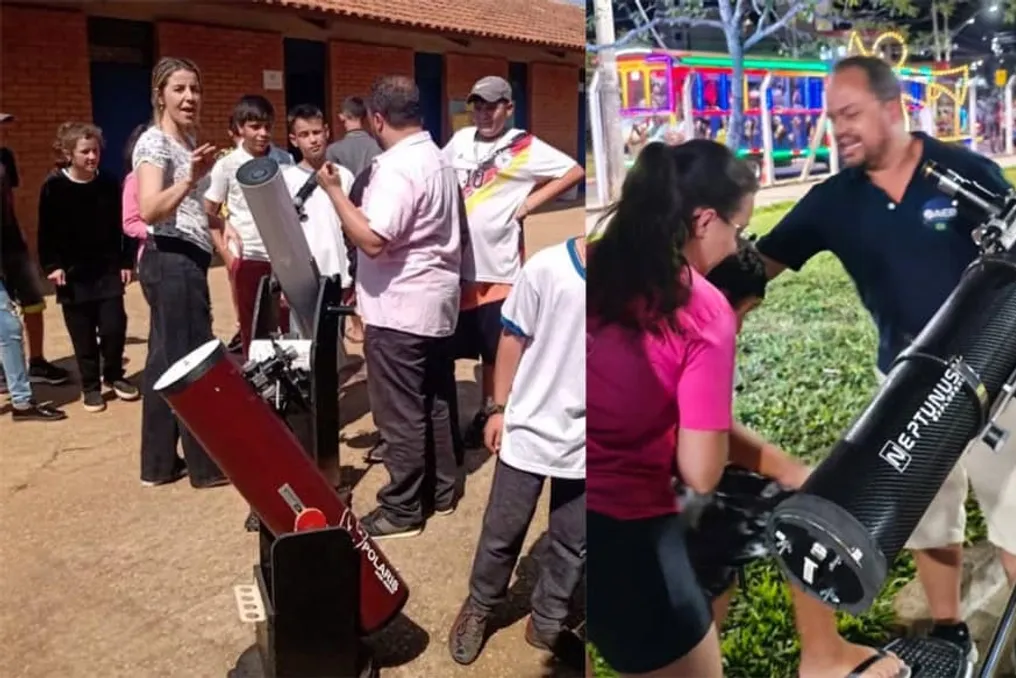
In celebration of Teachers' Day, held on Thursday, October 15th, the importance of educators in fostering curiosity and knowledge was highlighted. It was emphasized that education is not limited to school environments but can occur in public spaces, such as squares, through astronomical observation, bringing science closer to the public.

The 'Olhar Espacial' program, broadcast on Friday the 16th, addressed the potential of astronomy outreach as a means of scientific inclusion and inspiration, honoring teachers who extend teaching beyond the school walls. The special guest for the evening was Professor Rodrigo Fernandes.

Fernandes is responsible for the conception of the 'Astronomy – Science on the Street' project, an initiative that uses telescopes and practical activities both in schools and in public squares. This project aims to democratize access to cosmic observation, stimulating critical thinking and awakening scientific interest in new generations.

With extensive experience in scientific outreach, Fernandes coordinates activities in collaboration with various research institutions and public universities. He holds a doctorate in Chinese medicine from Shanghai University, China, and studied at the Oswaldo Cruz Foundation (Fiocruz).

Besides his current work with 'Astronomy-Science on the Street,' which also offers free courses on YouTube, Fernandes was the creator and coordinator of groups such as Polaris and Tapirapé. Currently, he maintains partnerships with the Federal University of Itajubá (UNIFEI), National Astrophysics Laboratory (LNA), National Observatory (ON), and National Institute for Space Research (INPE). He is also a specialist in the construction and restoration of reflector telescopes.

The program, presented by Marcelo Zurita, president of the Paraíba Astronomical Association – APA, and a member of the Brazilian Astronomical Society (SAB), is broadcast weekly at 9 PM (Brasília time) on the official channels of the outlet on platforms such as YouTube, Facebook, Instagram, X, LinkedIn, and TikTok.

Popular