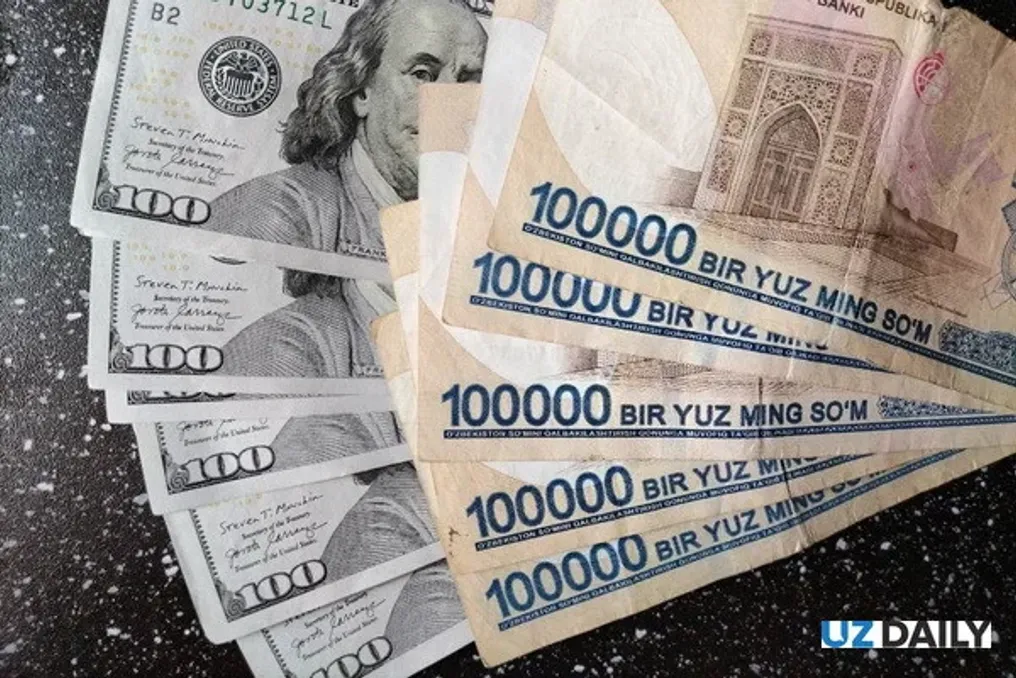
USD/UZS exchange rate forecast depends on decisions by the Federal Reserve and the Central Bank of Uzbekistan on interest rates
Read more
UzDaily
uzdaily.uz

USD/UZS exchange rate forecast depends on decisions by the Federal Reserve and the Central Bank of Uzbekistan on interest rates

The USD/UZS exchange rate exceeded the 12,000 sum mark per US dollar in October, followed by partial stabilization. At the time of this report, the pair was trading below 11,900, remaining approximately 1% below the start-of-year level.

Economic growth is not the main factor pressuring the national currency. The International Monetary Fund (IMF) raised its economic growth forecast for Uzbekistan in 2026 from 6.8% to 7.8%, and for 2027—from 6% to 6.5%. The World Bank expects growth at 7.9% this year. In the first half of the year, the economy demonstrated an expansion of 8.5%.

The primary source of pressure on the sum remains the situation with trade and the balance of payments. According to the revised IMF assessment, Uzbekistan's current account deficit in 2026 will reach 5.1% of GDP, compared to 3.9% the previous year. Earlier in June, the fund predicted that the deficit would narrow to 3.2% of GDP. The updated forecast indicates that the country continues to spend more abroad on imports and other payments than it earns, which supports demand for foreign currency.

Inflation increased to 6.4% in September compared to 6.2% in August, marking the first acceleration in three months. This figure remains above the target level set by the Central Bank of Uzbekistan at 5%. Gasoline prices rose by 20% year-on-year, while propane gas prices increased by nearly 49%.

Uzbekistan's key rate is set at 14%, and the next monetary policy decision is scheduled for October 28. Given the acceleration in inflation, a rate cut appears unlikely. High real interest rates continue to play one of the main roles in supporting the Uzbek sum.

Over 90% of the Central Bank of Uzbekistan's international reserves consist of gold reserves. Consequently, falling gold prices reduce the value of these reserves, even if there is no actual sale of gold. Gold prices continued to fall this week. On Friday, they dropped below $4,000 per troy ounce and briefly fell below $3,990, reaching the lowest level since mid-July. This followed a drop of almost 3% in the previous session.

The decline in gold prices was linked to weakening investor interest in artificial intelligence-related assets. Market participants increased gold sales to cover losses on other investments. Although the probability of the US Federal Reserve raising rates at its next meeting is estimated to be less than 10%, this has not yet supported the precious metal.

Gold is also under pressure from high oil prices, which support inflationary risks. Since the end of February, when the conflict between the United States and Iran began, gold prices have fallen by more than 20%, increasing the risk of further decline in the value of Uzbekistan's gold and currency reserves.

The oil market, conversely, shows growth. Brent crude oil traded around $114 per barrel, increasing by almost 4% in a week and approaching the third consecutive weekly rise. Despite oil flows through the Strait of Hormuz almost returning to pre-crisis levels, reports of possible new attacks on Iran following US midterm elections maintain a geopolitical risk premium in prices. This factor may keep oil prices above $100 per barrel until the end of 2026 and maintain upward pressure on fuel prices in Uzbekistan.

Key events next week will be the interest rate decisions by the US Federal Reserve and the Central Bank of Uzbekistan, both scheduled for October 28. Analysts predict that USD/UZS will trade in the range of 11,800–12,100 during the coming week. Maintaining the policy rate unchanged will help preserve high real interest rates and limit the rise of the dollar. However, further acceleration of inflation, additional reserve drawdowns, or another surge in oil prices could increase the likelihood of the exchange rate moving towards 12,100 sums per US dollar.
Similar stories

Uzbekistani Sum weakened in October amid the dollar approaching the 12,000 sum mark
Read more
uzdaily.uz

Uzbekistani Sum weakened in October amid the dollar approaching the 12,000 sum mark

Since the beginning of October, the Uzbekistani sum has been showing weakness against the US dollar, bringing the USD/UZS exchange rate closer to the psychologically significant level of 12,000 sums per dollar. Over the month, the pair has risen by more than 1%, following a nearly 5% drop observed in the third quarter.

Recent economic events include the International Monetary Fund's (IMF) increase in its GDP growth forecast for Uzbekistan in 2026 to 7.8% (up from 6.8% projected in June). The IMF also raised the growth forecast for 2027 to 6.5%, increasing the previous estimate of 6%.

Despite the recent weakening of the national currency, favorable sentiment and improving economic prospects may support the sum.

Diplomatic Influence and Domestic Demand

In the diplomatic sphere, it is expected that Marco Rubio will lead a delegation of over 200 business representatives to Samarkand from October 17 to 22 to hold a C5+1 ministerial meeting. This visit could potentially improve the perception of Uzbekistan's economy and provide support to the sum.

Domestic demand continues to grow due to increased household incomes. Real wages rose by 10.9% in the first half of the year, and remittances increased by 13.1% in the second quarter, reaching 5.5 billion US dollars. Total remittances for the first half of the year amounted to 9.3 billion US dollars.

During the same period, banks acquired 12.3 billion US dollars in foreign currency from private individuals and sold back only 6.8 billion US dollars. This ensured a steady inflow of dollars into the domestic market, which contributed to supporting the sum.

Inflation and Foreign Exchange Reserves

Inflation remains a serious problem. Annual inflation accelerated to 6.4% in September compared to 6.2% in August, remaining above the Central Bank of Uzbekistan's target of 5%. The Central Bank maintained its key rate at 14%, with the next monetary policy decision scheduled for October 28.

Continued strong growth in household incomes may stimulate further consumption and imports, intensifying inflationary pressure. The Central Bank, which is the sole buyer of products from the country's two largest state gold mining enterprises, sold gold on international markets only in April and July of this year and has not conducted further sales since.

Gold accounts for about 90% of Uzbekistan's international reserves, making the total value of these reserves highly dependent on fluctuations in precious metal prices. In September, the country's reserves decreased by 5.5 billion US dollars, totaling 66.6 billion US dollars. Of this decrease, 4.8 billion US dollars were due to the revaluation of gold assets. Liquid foreign currency reserves amounted to only 5.92 billion US dollars, which is 10.6% less than the previous level.

Although the central bank can sell gold to obtain necessary foreign currency liquidity, its strategy for 2026–2030 involves maintaining a floating exchange rate regime and gradually reducing currency interventions.

Next week, the USD/UZS exchange rate is expected to trade in the range of 11,850 to 12,000 sums per dollar. The main factors likely to influence the market will be Marco Rubio's visit to Samarkand and the central bank's interest rate decision, which is due to be announced on October 28.

Popular