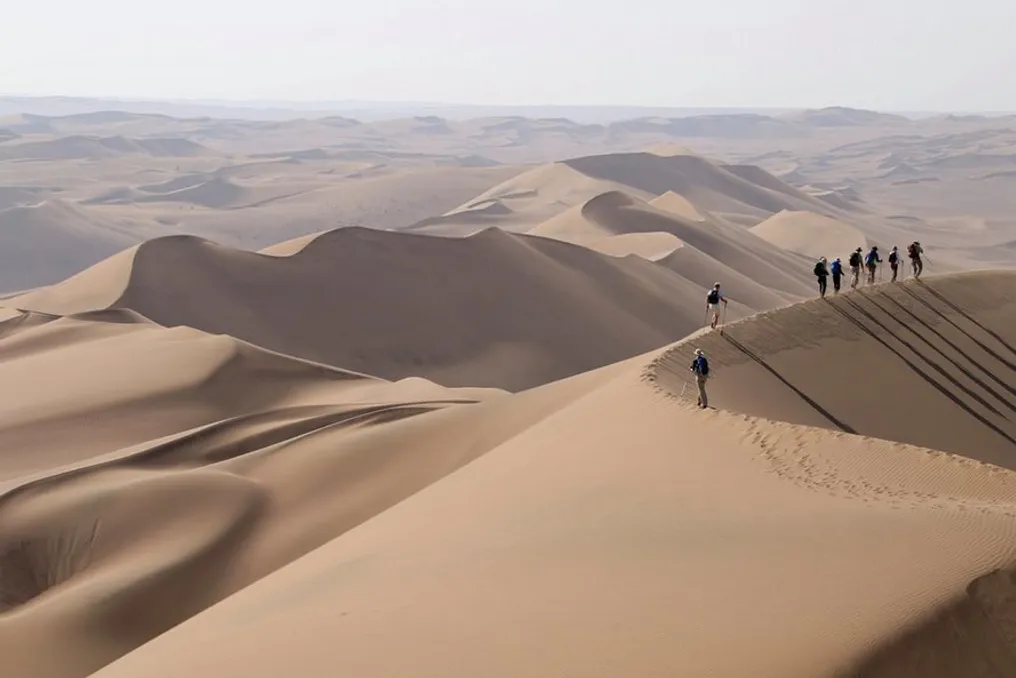
Experts highlighted the potential benefits of establishing a UNESCO Global Geopark in the Lut Desert, asserting that this initiative can stimulate sustainable tourism, create local jobs, and strengthen the protection of the region's unique geological heritage.
The issue was discussed at a specialized meeting dedicated to the Lut Desert, which was part of a series of seminars on Kermanshah held at Shahid Bahonar University in Kermanshah.
At the meeting on Thursday, Ebrahim Mohammadi, a lecturer at the Graduate University of Advanced Technologies (GUAT) in Kermanshah, presented information on the province's tourism potential, focusing particularly on Kaluts-e Shahdad, an impressive landscape of eroded earth formations in the Lut Desert.
Mohammadi noted that Kermanshah province includes 10 UNESCO World Heritage sites and covers an area exceeding the combined size of 115 countries. However, he did not mention that some of these UNESCO sites are shared with neighboring provinces.
He also pointed out that despite its vast size and exceptional diversity of natural, geological, historical, cultural, religious, and spiritual attractions, the province attracts only about 0.7% of tourists from Iran, even though it constitutes approximately 11% of the country's territory.
Mohammadi, who holds a Ph.D. in paleontology, described several potential advantages of granting the Lut Deserts Global Geopark status. He stated that such designation could enhance the desert's international standing and integrate its important geological features into a more structured management system.
Furthermore, this could promote sustainable geotourism, support the development of scientific and natural routes, and encourage visitors to spend more time in the region by offering a wider range of experiences.
According to Mohammadi, this initiative could contribute to job creation and strengthening the local economy through opportunities for guides, traditional accommodation providers, transport services, handicraft producers, and other local businesses.
He also emphasized the need to expand scientific research and education, especially in geology and geomorphology, while increasing the participation of local communities in protecting the region's natural heritage and benefiting from tourism.
During his presentation, Mohammadi suggested that the geopark could improve nature conservation in the Lut Desert by establishing stronger management links between its outstanding geological sites and reducing damage caused by uncontrolled tourism and misuse of natural resources.
He added that forming a unified tourist destination would help promote Kaluts-e Shahdad alongside other geological attractions through complementary routes and visitor experiences.
The initiative could also boost Kermanshah's international tourism brand, raise awareness of its natural and geological assets, and expand scientific and international cooperation.
Mohammadi also stressed that sustainable development in the region would depend on directing tourism towards environmental protection, distributing economic benefits among local communities, and implementing scientific and participatory management methods.
He also pointed to the need for a comprehensive conservation and tourism plan, systematic documentation of geological sites, public education, and collaboration between responsible institutions and local residents.
The meeting also addressed the historical significance of traditional water management systems in Shahdad, a settlement on the outskirts of the Lut Desert. Mohammad Barshan, Director of the Kermanshah Province Qanat Center, spoke about the origin and age of the Shahdad qanats and their role in providing water for agriculture and sustaining human settlement in the arid region.
Qanats are traditional underground water channels that bring groundwater to the surface, allowing communities to access water where rainfall is scarce.
Drawing on years of research and practical work with qanats, Barshan emphasized their importance for the development of settlements and civilizations. He stated that 'digging a qanat is an epic, great epic replacing death with life,' describing ancient water supply systems as closely linked to the development of civilization among communities across Iran.
Barshan also discussed the Shahdad qanats, highlighting the central role of water in the rise and fall of civilizations. He concluded: 'Civilizations are formed with water and disappear with water.'
The discussions demonstrated the potential of combining geological preservation, scientific research, and the preservation of traditional water management heritage to support sustainable tourism and local development in Kermanshah province.