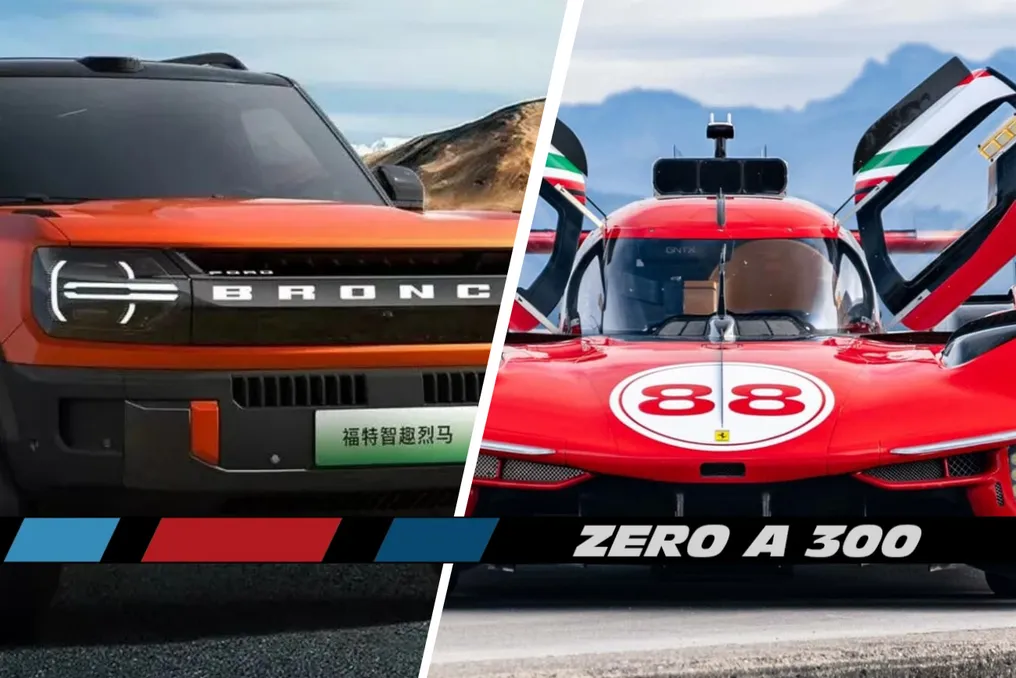
Analysis of the Ford Bronco hybrid launch in Brazil in 2027 and auction of modified Ferrari 499P
Read more
FlatOut
flatout.com.br

Analysis of the Ford Bronco hybrid launch in Brazil in 2027 and auction of modified Ferrari 499P

The Ford Bronco EREV, a Chinese-origin plug-in hybrid SUV, is scheduled to be launched in the Brazilian market in 2027. According to Autos Segredos, the manufacturer had already been evaluating the introduction of the vehicle to the country before making the final decision.

It is important to note that the Bronco EREV has distinct characteristics from the current Bronco models (which use the Ranger pickup chassis) and the Bronco Sport (which shares a base with the Maverick pickup). This new model was developed separately in collaboration with the Chinese company JMC, being designed from the outset to incorporate electrified propulsion systems.

Its mechanical system combines a four-cylinder turbo engine producing 150 hp and 24.5 kgfm, along with two electric motors (one on each axle). The combustion engine functions only as a generator for the 43.7 kWh battery, while traction is provided by the electric motors, which generate 422 hp and 60 kgfm of torque. This configuration allows it to reach 100 km/h in 5.8 seconds, and the combined range can reach 1,220 km under the Chinese CLTC standard.

With dimensions of 5.03 meters in length and a wheelbase close to three meters, the Bronco EREV is larger than the Bronco Sport. Although values have not yet been disclosed, its cost is expected to exceed the R$ 250,000 requested for the smaller model, given its unprecedented hybrid technology in the local market.

Modified Ferrari 499P goes to auction and could exceed R$ 40 million

A notable opportunity has arisen for Le Mans prototype enthusiasts: the auction house Christie will sell a Modified Ferrari 499P at its next event in Geneva, Switzerland. The required value to acquire this vehicle is around R$ 40 million.

The connection to Le Mans is substantial, as the Modified 499P is a variation of the prototype that won Ferrari at the 2023 24 Hours of Le Mans, marking the tenth Italian victory in the race and the first since 1965. In addition to maintaining a very similar look to the racing car, it shares the same mechanical package: a three-liter twin-turbo V6 plus a 272 hp electric motor.

Unlike the Hypercar prototype, which reached 680 hp, this Modificata achieves 706 hp, without being subject to FIA restrictions. It also features a 'push to pass' button that temporarily boosts power to 767 hp. The Christie example is practically new, having only been used in shakedown tests after leaving the factory. Whoever buys it will gain access to Ferrari's Sport Prototipi Clienti program, which offers specialized technical support.

Model Updates and Industry Criticisms

Volkswagen launched the 2027 line of the Polo, with the main change concentrated in the Track version, which now includes standard rear parking sensors. Additionally, the entry-level version received a new optional package for R$ 2,660, which includes touch-activated electric windows on all four doors and electric mirrors that fold down when reversing.

There were no significant aesthetic or mechanical changes in other versions. The Track and Robust variants continue to use the 1.0 naturally aspirated three-cylinder, 12-valve engine, producing 77 hp and 9.6 kgfm of torque with gasoline, or 84 hp and 10.3 kgfm with ethanol, always coupled with a five-speed manual transmission. The Sense and Highline versions use the 1.0 turbo flex TSI engine, which delivers 109 hp with gasoline and 116 hp with ethanol, maintaining 16.8 kgfm of torque, and uses a six-speed automatic transmission.

The prices of all versions have been readjusted, with increases ranging between R$ 300 and R$ 2,000. Specifically, Track and Sense went from R$ 96,690 to R$ 97,990; Polo Robust rose from R$ 112,990 to R$ 114,990; and the Polo Highline increased from R$ 138,690 to R$ 138,990.

Meanwhile, Nissan expressed concern over the growing volume of vehicle production in Brazil originating from imported kits from China. Ricardo Gondo, President of Nissan Brazil, pointed out that a large part of the growth in national production in 2026 comes from CKD and SKD operations, which use partially or fully disassembled vehicles with little local manufacturing.

Gondo detailed that although Brazilian production grew by 8.7% between January and September 2026, this number drops to just 2.5% if vehicles assembled from imported kits are excluded. Anfavea data corroborates this, indicating that about 123,000 of the 173,000 extra units produced compared to 2025 are the result of CKD and SKD assemblies, representing more than 70% of the production increase. The problem lies in the fact that these operations require fewer national components, reducing the activity of the local auto parts industry, since the complete sets are imported.

Despite the criticism, Gondo mentioned that Nissan is studying production via CKD or SKD, depending on industrial policies and government incentives. He assured that the Kicks and Kait models will continue to be manufactured normally at the Resende, Rio de Janeiro unit. In contrast, the Nissan factory in Resende saw its production increase by 29.5% in the same period, reaching 65,640 vehicles, while exports grew by 145%, with a goal of reaching 90,000 units by the end of the year.

Honda Racing Launches Preparation Parts for Street Cars

Honda Racing Corporation (HRC), Honda's competition arm, will begin marketing preparation parts intended for street cars. After announcing plans in 2024 and displaying a prepared Prelude at the Tokyo Auto Salon earlier this year, Honda confirmed that it will present its first line of components at the SEMA Show in November, with sales starting in March 2027, initially in the United States (facilitating import to Brazil).

The HRC Performance Parts catalog will include parts for the Civic Type R, Acura Integra Type S, and the Passport and Pilot SUVs. For the two sports cars, HRC developed 19-inch forged aluminum wheels in collaboration with the Italian company 2elle-engineering, supplier of the wheels for the Acura ARX-06 endurance. Each wheel weighs only 9.4 kg, representing a reduction of approximately 10 kg of unsprung mass compared to the original, in addition to being half an inch wider and having been tested at the Nürburgring.

At SEMA, Honda will also display prototypes of future items, such as adjustable suspensions, camber plates, Brembo brakes with six-piston calipers, and short shifter levers, although these are still in the development phase. All parts will be sold through Honda and Acura dealerships, and through the online store in the US. Prices and the possibility of expanding the HRC Performance Parts line to other markets have not yet been announced.

Toyota Proposes Recognizing Combustion Vehicles as Zero Emission in Europe

Toyota presented a proposal to the European Union aiming for combustion engine cars to be classified as zero-emission vehicles, provided they are exclusively fueled with renewable fuels. This suggestion was made amid discussions to relax the CO2 emission targets set for 2035.

The idea is to create a new homologation category called VEEF (Vehicles running Exclusively on Eligible Fuels). This classification would allow vehicles using only biofuels and renewable synthetic fuels to be categorized as zero emission. However, this does not imply the absence of exhaust emissions; the proposal focuses on considering emissions throughout the entire fuel life cycle, including its production, and not just what is expelled.

For this to happen, the fuels must meet the sustainability criteria defined by European legislation. Toyota is already testing this viability, participating in a pilot project in Spain with BMW, Bosch, and Repsol, using about 20 Toyota, Lexus, BMW, and Mini vehicles fueled with the renewable gasoline Nexa 95, derived from organic waste. These cars are conventional models, without mechanical modifications.

Bosch developed the Digital Fuel Twin system to monitor the exclusive use of renewable fuel, cross-referencing data from vehicles, gas stations, and refueling transactions. Furthermore, Toyota advocates for reducing the European 2035 target from 100% to 90% cut in average CO2 emissions of new cars, proposing that the remaining 10% be compensated by the use of low-carbon steel and renewable fuels. For 2030, the company suggests that meeting the targets be evaluated over a five-year period (2028 to 2032), allowing for annual compensation.

According to Toyota, electric vehicles should represent about 45% of European sales in 2030, a level lower than the more than 55% estimated to meet current targets. For this reason, the company also requests periodic revisions of the targets if infrastructure and demand do not evolve as planned. Currently, the recognition of VEEF vehicles remains a proposal from Toyota, not a rule approved by the European Union.
Similar stories

Rubinho returns to Interlagos with Williams; BMW reveals unprecedented compact and automotive news
Read more
flatout.com.br

Rubinho returns to Interlagos with Williams; BMW reveals unprecedented compact and automotive news

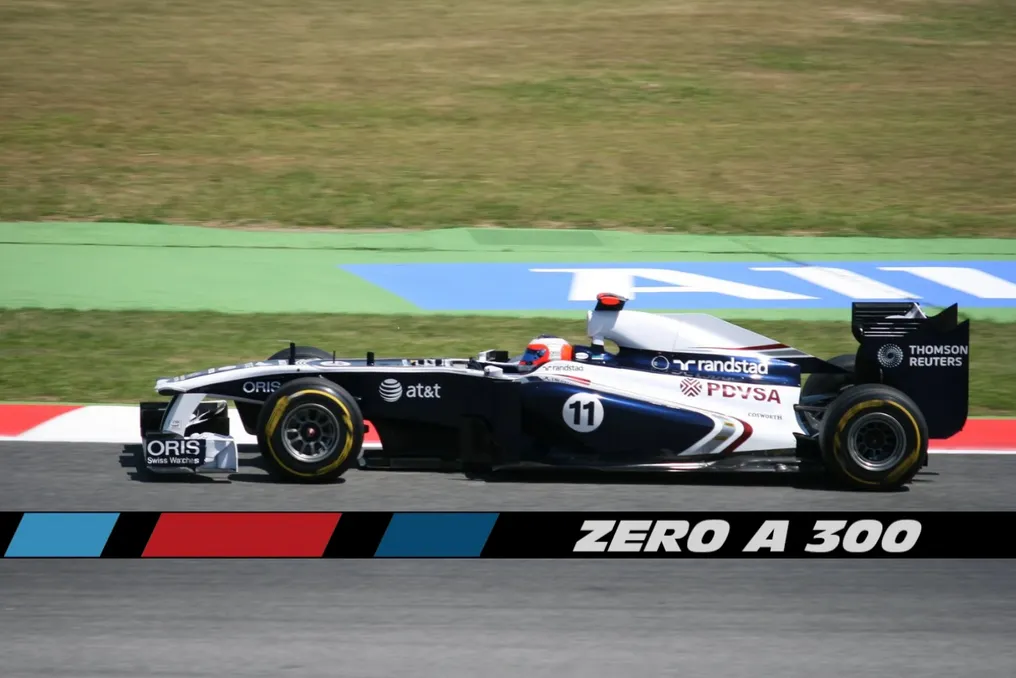
Rubens Barrichello, known as Rubinho, will return to the Williams FW33 cockpit at Interlagos. This car, with which he finished his Formula 1 career in 2011, will be used on November 8th, before the start of the São Paulo GP, under the initiative called Historical Lap.

This event is part of the celebrations of Rubinho's 45-year career and is sponsored by ALE Combustíveis. The driver will have about ten minutes on track with the Williams, which will be equipped with the 2.4-liter naturally aspirated Cosworth V8 engine.

The choice of this vehicle carries a particular significance, as Rubinho competed in his last F1 race at the 2011 Brazilian GP, finishing in 14th place with the FW33. That season, Williams only scored five points in the championship. Although he tried to return to the grid in 2012 and came close to competing in the 2014 Brazilian GP for Caterham, the team's financial problems prevented this return.

When announcing the event, Rubinho expressed that he did not imagine it would be his last farewell in Interlagos in 2011, stating: 'I didn't think it would be the last goodbye when I greeted my audience in Interlagos in 2011. And it's a good thing it wasn't.' He promised to accelerate intensely, saying: 'I want to tear up the Interlagos straight with you.'

BMW reveals never-before-produced four-door Series 3 E36 Compact

A functional prototype of a four-door variant of the BMW Series 3 E36 Compact, which was never put into production, was revealed by BMW Classic. This novelty intrigued because the initial idea was for a two-door hatchback with the style of the E36 sedan and rear-wheel drive.

The exhibited example, of the 316i variant, was the most basic model, equipped with a 1.6-liter four-cylinder engine producing 102 hp. Unlike simply adding two doors to an E36 Compact, this project started from a sedan, whose trunk was shortened and received the hatchback tailgate.

The car's construction featured unusual characteristics, such as the center console having controls for all four windows, while the rear ones used a crank. BMW was apparently testing proportions and shapes, opting to create a functional car rather than a model. Originally, the vehicle was supposed to be 'Boston Green', but ended up receiving the 'Hellrot' red paint.

The main reason the Series 3 E36 Compact was never manufactured was the high production cost. BMW sought to minimize expenses on the hatchback, even using components from the E30 generation, such as the rear suspension with semi-trailing arms and much of the interior.

Alfa Romeo: 'Time to end screens in cars'

Alfa Romeo has joined the movement advocating for the end of touchscreens in vehicles. According to Alejandro Mesonero-Romanos, the brand's head of design since 2021, the industry has exaggerated in this aspect, and it is time to reevaluate this trend.

The designer told Autocar that there was a 'war for screen centimeters,' which made no sense, as the screens had already become excessively large and were dominating the dashboard design. He also raised the issue of durability, predicting that these screens would become obsolete and expensive in a few years.

In response, the Cuorerosso concept, supervised by Mesonero-Romanos, eliminated a conventional multimedia unit. In its place, there is only a small screen on the center console that hides when not in use, sharing space with real physical controls.

Another highlight of the car is the instrument panel, which reinterpreted the traditional Italian concept of two circular dials, the cannochiale. These dials are digital and can reorganize to form a single screen, displaying only essential information without causing distraction. Mesonero-Romanos expressed a desire to drive at night with a single red-lit cannochiale.

Sensor tires may reduce braking distance

Cyber Tyre technology, presented by Pirelli in 2019, consisted of a tire with a sensor capable of communicating with the car's electronic systems. Tests conducted by the British magazine evo on a wet track demonstrated that a car equipped with the Cyber Tyre needed 5.7 meters less to stop from approximately 110 km/h compared to a car with equivalent tires but without the connected system.

The difference of the Cyber Tyre is not just pressure monitoring; each tire contains an internal sensor that collects data such as pressure, temperature, wear, load, and grip level. This information is transmitted in real-time to the vehicle's electronic control unit, which uses Pirelli algorithms to adjust the operation of ABS, stability control, and traction control according to the immediate conditions of the tire.

This overcomes a limitation of current systems, which operate with more generic calibrations. With the electronic sensor, the car precisely identifies the tire used, its condition, and its grip level, allowing for more precise interventions instead of just reacting to loss of traction. According to evo, the improvement was noted in both braking and wet cornering behavior, where the car maintained its trajectory for longer before exhibiting understeer.

Ram 2500 gets new top-of-the-line version

The Ram 2500 has received a new top-tier version in Brazil, the Laramie Night Edition. This version stands out for its darkened aesthetic appeal, replacing chrome elements with more sober finishes, such as grille trim, mirror caps, side steps, 18-inch wheels, and emblems. The bumpers are also painted in the body color.

To give it a more robust look, the hood now includes a central air intake, giving the front of the vehicle a sporty touch. This dark treatment extends to the interior, where seats, dashboard, steering wheel, and doors are upholstered in black leather. The equipment remains identical to the Ram 2500 Laramie, including a 12-inch multimedia center with wireless pairing for Android Auto and Apple CarPlay, a 12.3-inch digital dashboard, 360-degree external cameras, a complete ADAS package, ventilated and heated front seats with electric adjustments, and dual-zone air conditioning.

The mechanical assembly remains unchanged, maintaining the 6.7-liter Cummins turbodiesel, which generates 436 hp and 148.7 kgfm of torque, coupled with the eight-speed ZF TorqueFlite transmission. The drivetrain offers 4x2, 4x4, and 4x4 low options, and the brakes consist of ventilated discs with dual pistons and floating calipers. The load capacity is 1,287 kg, and the maximum towing capacity reaches 8,948 kg.

Since it is essentially an aesthetic package, the Ram 2500 Laramie Night Edition does not present an exorbitant price increase, costing R$ 10,000 more than the standard Laramie, totaling R$ 569,990 against R$ 559,990 for the common version.

Gunther Werks creates 872 hp Porsche 911 in tribute to Martin Brundle

Martin Brundle, known in Brazil as a rival to Ayrton Senna in English Formula 2, accumulated a vast career, competing in 158 Formula 1 GPs, winning the endurance world title, and winning the 24 Hours of Le Mans. He is currently recognized for his interviews on the starting grid of Formula 1.

In his honor, Gunther Werks produced a 872 hp Porsche 911. The special project was designed by Brundle's own daughter, Charlie Brundle, who is an automotive designer and has collaborated with McLaren, Aston Martin, and Jaguar Land Rover.

The vehicle, named Gunther Werks Brundle Edition Turbo, is based on the Porsche 993, but with an increased displacement to 4.0 liters and the addition of two turbos, resulting in 872 hp and 84.4 kgfm. It features a six-speed manual transmission and rear-wheel drive. The 911 Brundle was enhanced with independent suspension using overlapping triangular arms, Brembo carbon-ceramic brakes, modified aerodynamics with an adjustable rear wing, and forged magnesium wheels. Martin Brundle participated in tuning the suspension and the Sport and Track modes.

Charlie handled the aesthetics, creating a two-tone pearlescent paint inspired by her father's helmet. The name Brundle replaces the Porsche logo on the rear, and the initials MB are engraved on the carbon fiber seats. There are also references to the driver's career in the interior finish, including a Bell helmet with the same paint, signed by Brundle. On the dashboard, Charlie included a recurring phrase from her father: 'The most important bit of the car is the nut holding the steering wheel.'

Only five units of the Brundle Edition Turbo will be manufactured. Gunther Werks has not yet disclosed the price, but given that other modified 911s from the company exceed US$ 1,000,000, a high price is expected.

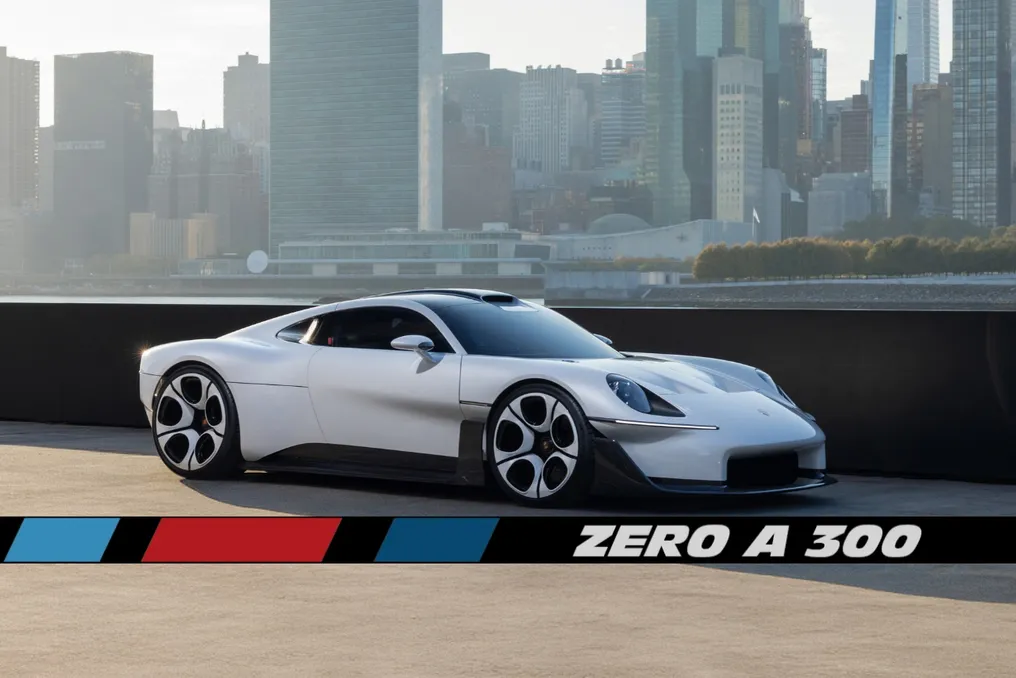
Porsche launches Mission S, its new supercar, while Toyota reveals name for Corolla Cross pickup
Read more
flatout.com.br

Porsche launches Mission S, its new supercar, while Toyota reveals name for Corolla Cross pickup

Porsche has presented the Mission S, its latest supercar, which succeeds the 918 Spyder. Unlike previous concepts that seemed ready for the road, this model is a real production sports car. The Mission S design maintains the Porsche identity at the front, with circular headlights in more elaborate frames, and its overall silhouette resembles the 911, although it is more elongated due to the mid-rear engine layout.

An aesthetic highlight is the fenders, which are prominent at the front and appear to float above the aerodynamic elements of the bumper and side skirts. At the rear, they form a frame that encloses the rear wing, creating what Porsche calls 'floating volumes.' This approach reflects the clean and well-defined lines typical of the manufacturer's modern cars, prioritizing refined proportions and contours over excessively detailed elements.

The conceptual references cited by Porsche for the Mission S include the Porsche 959, the legendary 911 GT1, and the 550 Spyder. Internally, the philosophy follows the tradition of Stuttgart, presenting a contemporary and harmonious cockpit that subtly evokes old 911s, with a horizontal dashboard and instruments concentrated in front of the driver. There is a mix of analog and digital elements, where the tachometer is physical, but the display is a configurable screen depending on the driving mode.

The priority of the Mission S is the driving experience, which led Porsche to opt for a minimalist setup that dispenses with a multimedia center, replaced by a MagSafe phone mount. The center console features physical buttons for essential functions, and the gearshift has adjustable height. Although Porsche has not detailed the mechanical assembly, rumors point to an eight-cylinder boxer engine, possibly with a hybrid system. The absence of a clutch pedal suggests an automatic transmission, and the upward-facing rear fan reinforces the possibility of it being a boxer and not an electric powertrain.

The Mission S integrates Porsche's 'Sportwagenschmiede ’35' strategy, but there is no release forecast. It was only mentioned that it will be positioned above the 911, and Tobias Sühlmann, the manufacturer's design department director, stated that it will serve as inspiration for future models.

Toyota Corolla Cross pickup already has a name and should arrive next year

The monocoque pickup market in Brazil is diversifying, and Toyota will enter this segment using the Corolla Cross as a base. According to reports from Autoesporte, this version has already been named Corolla Deck. Designed to compete with models such as Fiat Toro, Renault Niagara, Ram Rampage, BYD Mako, and Volkswagen Tukan, the Corolla Deck will be offered only with a double cabin and will feature hybrid technology.

The mechanical assembly is reportedly set to use the 2.0L 16-valve naturally aspirated, Atkinson cycle engine found in the Toyota Prius. This engine produces 152 hp and 19.4 kgfm, but combined with an electric motor, it can reach 223 hp, although this value may be adjusted in Brazil to run on ethanol and gasoline, applicable to the more expensive versions. In the most basic configurations, the Corolla Deck should operate only with the 2.0L engine, delivering 175 hp and 20.8 kgfm of torque.

Stylistically, the pickup is expected to incorporate elements from the Toyota Corolla Cross, especially in the doors and A-pillars, but the front will have its own design. Although there is no official debut date in Brazil, production is estimated to begin in Sorocaba (SP) in mid-2027, with a launch scheduled for the second half of the year.

Hyundai i20 sells poorly and HB20 remains in line

The Hyundai i20, with its design blending characteristics of a compact SUV and a hatchback, has not achieved the expected success in its initial months of commercialization. Due to this performance, Hyundai has altered its plans, deciding to keep the HB20 hatchback in production for a longer period than initially planned.

The figures justify this decision: between June and September, the i20 registered approximately 7,700 sales in Brazil, while the HB20 sold about 53,000 units in the same interval. Based on this, Hyundai opted to extend the HB20 as the entry-level model in the country indefinitely. An version with a 1.0L naturally aspirated engine producing 80 hp and 9.6 kgfm of torque, always with a five-speed manual transmission, priced under R$ 100,000, is expected to be revealed in the coming months.

In contrast, the HB20S sedan will end its cycle at the end of this year, without an immediate replacement. The discontinuation of the three smaller volumes reflects the growing preference of the Brazilian market for compact crossovers.

Tesla Roadster can

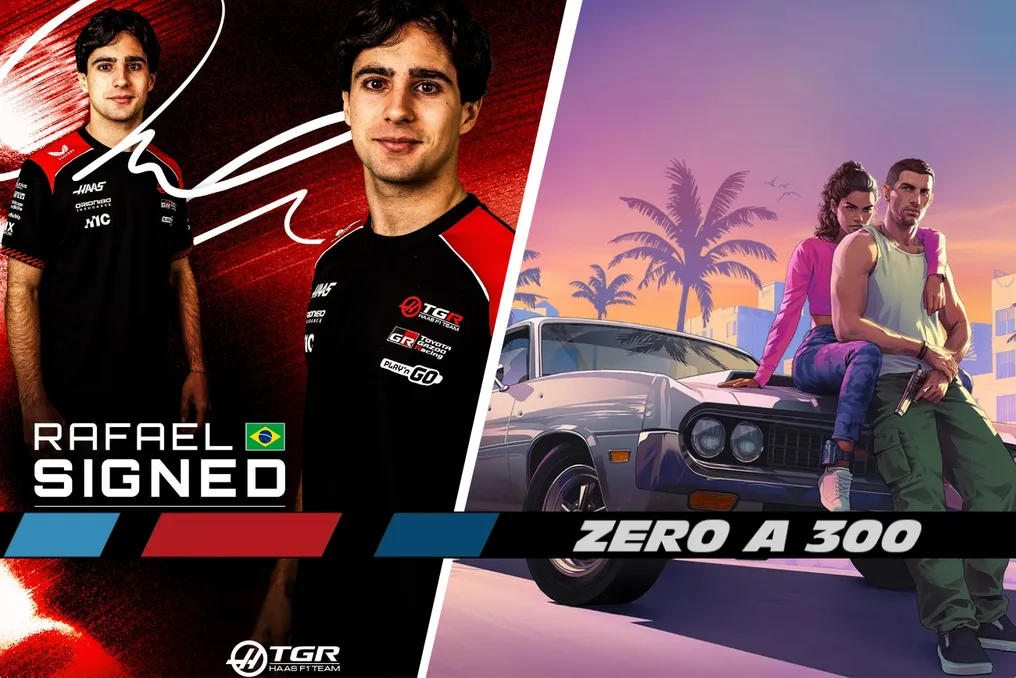
Rafael Câmara confirmed as Haas driver, plus news on GTA VI and automotive launches
Read more
flatout.com.br

Rafael Câmara confirmed as Haas driver, plus news on GTA VI and automotive launches

Haas Team announced the hiring of Rafael Câmara to replace Esteban Ocon. The Brazilian driver joins the team and will be a teammate of Oliver Bearman in the 2027 Formula 1 season.

Câmara expressed great satisfaction with the opportunity, thanking Gene Haas and Ayao Komatsu for the trust placed in his career. He also expressed gratitude to the Scuderia Ferrari Driver Academy for continuous support in his development, as well as to his family.

The rise of the Pernambuco native to Formula 1 is the result of a consolidated career in junior categories, including victories in Formula 3 and outstanding performance in Formula 2, where he scored 207 points and led the championship. His talent caught the attention of Gene Haas during tests held in Portimão, Portugal, where he surpassed the times of Oliver Bearman and other competitors. The technical collaboration between Haas and Scuderia Ferrari, maintained by the Drivers Academy program, was also a relevant factor.

With this confirmation, Rafael Câmara becomes the 34th Brazilian to compete in Formula 1. Considering that Audi has already confirmed Gabriel Bortoleto's permanence in the team in 2027, the category will once again have two Brazilian drivers on the grid, something that had not happened since 2016, when Brazil had Felipe Massa and Felipe Nasr.

Grand Theft Auto VI gets launch trailer

Grand Theft Auto VI received a launch trailer less than a month before its premiere, scheduled for November 19. Although the video does not show many elements to justify the term 'Auto', a short night race scene featuring supercars appears around the 1:00 mark. However, the big attraction lies in the possibility of virtually stealing and driving any vehicle on a vast open map, representing the return of Vice City, the setting of the classic GTA from 2002.

It is speculated that the new iteration will bring more realistic physics, requiring greater caution while driving, and that vehicle damage will be more severe, significantly impacting drivability compared to GTA V. Another notable point is the soundtrack, composed by the French duo Justice. The track 'Flower in a Hurricane' features appearances by SZA, Tame Impala, and King Gizzard and the Lizard Wizard and was created specifically for GTA VI, combining eighties pop rock with synthesizers.

Porsche Mission S spotted with fan inspired by the 917

Porsche's new supercar, the Mission S, was scheduled for a launch on the 15th, but a specific detail leaked online. An aerial photo revealed a fan located at the rear of the vehicle, above the engine compartment, which strongly resembles the part used in the iconic Porsche 917, which competed at Le Mans in the 1960s and 1970s.

This leak occurred during an official photoshoot on the streets of New York, before the formal presentation. The images show a mid-rear engine supercar with robust fenders and an integrated spoiler in the style of the Porsche 959. The silhouette also recalls recent projects, such as the Marc Philipp Gemballa Marsien, and features a roof with dual glass panels and a prominent ridge extending from the windshield to the base of the rear pillar.

The presence of two sets of overlapping exhaust outlets indicates that the prototype uses combustion propulsion, with speculation about the use of an eight-cylinder boxer engine combined with a hybrid system featuring electric motors on the front axle. The model aims to position Porsche in a segment of supercars with higher production volume and better profit margins, unlike ultra-limited hypercars such as the 918 Spyder. More details will be provided by the manufacturer at the official event.

Chevrolet says electric Corvette is inevitable

Four years have passed since Mark Reuss, President of General Motors, disclosed plans for a fully electric version of the Corvette. In 2022, the E-Ray, a hybrid variant of the American mid-rear engine sports car, was also presented.

Although the E-Ray was later discontinued (replaced by the ZR1X and the Grand Sport X, the latter expected next year), the electric Corvette remains a non-negotiable goal, according to Chevrolet, merely postponing its arrival. Tony Roma, chief engineer of the Corvette and high-performance vehicle division at GM, confirmed in an interview with the podcast The Drivecast that a 100% electric Corvette is the brand's ultimate goal, although he avoided defining deadlines or release dates.

Given the maturity of the C8 generation in the market, the most likely prediction is that the project will be reserved for the next generation, the C9. This strategy also reflects the market's caution regarding fully electric supercars, which still face resistance among purist audiences. Thus, it is expected that the battery version will coexist with the combustion versions, facilitating a gradual transition without losing the traditional appeal of the Corvette.

Renault receives R$ 181.8 million from BNDES for new hybrid powertrain

The National Bank for Economic and Social Development (BNDES) will invest R$ 181.8 million in Renault's operation in Brazil. This contribution, granted through the BNDES Mais Inovação program, aims to support the development of a new electrified propulsion system. This amount is part of a total investment of R$ 5.8 billion planned by the automaker between 2025 and 2027, focused on modernizing the industrial complex located in São José dos Pinhais, PR.

The engineering of this project centers on the Hybrid E-Tech 4x4 flex fuel system, which eliminates traditional mechanical connections between the axles. The setup combines a 1.3 turbo flex engine in the front with a 48-volt network and an electric motor dedicated exclusively to driving the rear wheels on demand. Although the final specifications for the national market have not yet been detailed, the arrangement uses references from existing international configurations with a secondary rear drive and high-efficiency batteries.

For BNDES, this initiative fulfills a crucial role in the decarbonization strategy of the Brazilian automotive sector. The institution emphasizes that betting on flexible electrified architectures positions the local industry competitively in the global energy transition, ensuring the development of solutions suitable for the country's energy matrix. Information indicates that the Boreal SUV will be the first national model to integrate the electrified 4x4 system starting in 2027.

Popular