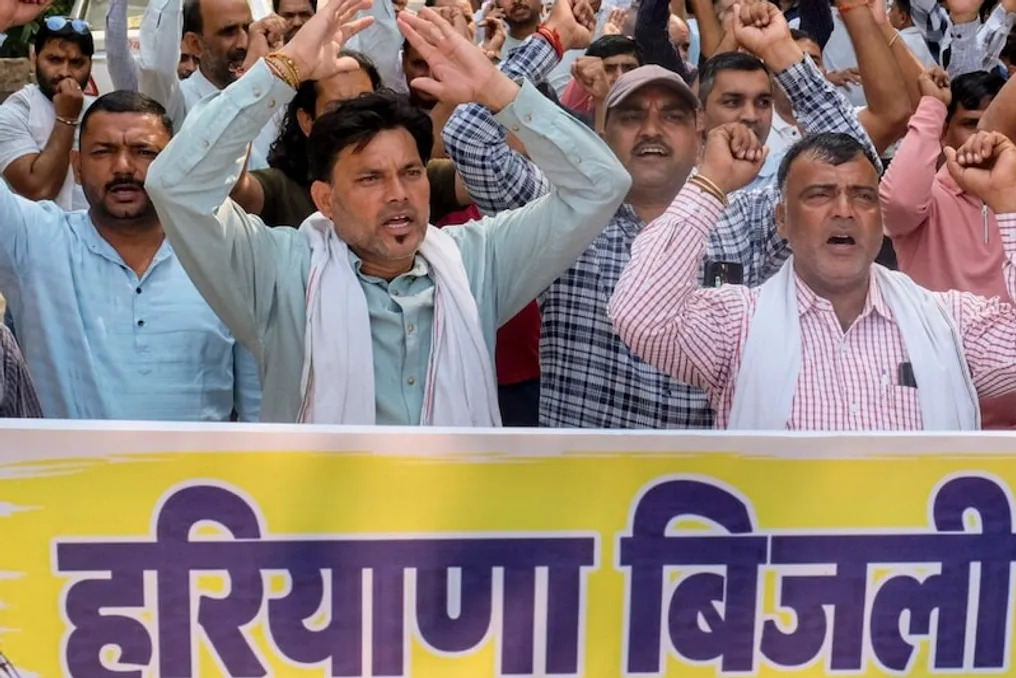
The strike by electricity network workers in Haryana, which had continued for the past few days, was halted after a meeting with Chief Minister Naib Singh Saini. Immediately after the strike ended, employees returned to fieldwork to expedite the restoration of electricity supply.
Devendra Hooda, the leader of the electricity workers' union, announced the end of the strike during a conversation with media representatives. He specified that the protest began due to objections against privatization and the issuance of a parallel license to a private company.
During the meeting with the head of the government, the government assured that it opposes privatization. Devendra Hooda reported that the Chief Minister provided guarantees that no private players or companies would be allowed in the power sector, and the department would function exclusively within the state structure.
Furthermore, a special meeting was scheduled for November 11 to discuss other issues, such as risk allowance and promotion quota. The Chief Minister promised that all departmental demands would be seriously considered.
The union stated that the decision to immediately end the strike was made in the interest of society, considering the festive season and the difficulties faced by the population. Employees announced an immediate return to work to quickly restore the cut electricity supply.
For his part, State Energy Minister Anil Vidh noted that they were initially opposed to issuing a license to a private player by the company HERC. He emphasized that they had never requested any applications, but when the application to the commission became known, they objected. He added that the government could instruct HERC to use Section 108 to revoke the private player's permit, and such an order was signed and sent to the relevant department.
It is reported that workers went on a three-day strike from October 22 to 24 under the auspices of the United Front of Workers and Electrical Engineers of Haryana. The conflict arose after the Haryana Electricity Regulatory Commission (HERC) recently granted Eleven Power Private Limited a 25-year parallel license for electricity distribution in Gurugram and Nuh.
Workers claimed that this decision was an attempt to privatize 'retroactively,' which would lead to the transfer of industrial and commercial sectors generating higher revenue into private hands, causing significant damage to the state-owned South Haryana Vidyut Vitran Nigam (DHBVN). The situation calmed down after reaching an agreement with the government and receiving guarantees against privatization.