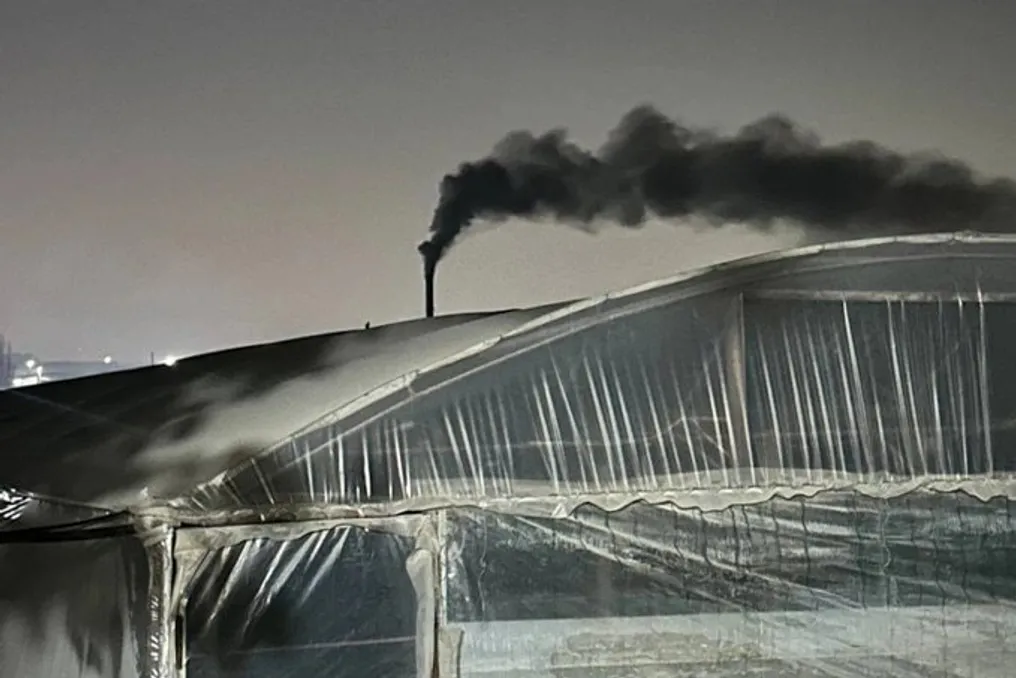
Authorities in Tashkent and five districts of the Tashkent region have introduced new requirements for greenhouse heating. These farms must either abandon the use of coal and other solid fuels or install appropriate systems for emission purification and automated monitoring.
These new standards are enshrined in Cabinet of Ministers Decree No. 586 and are effective in Tashkent, as well as in Yukorichirk, Kibray, Yangiyul, Zangiatin, and Tashkent districts of the region. Farms that use coal, briquettes, or biomass pellets are obliged to switch their heating systems to alternative energy sources by December 1, 2026.
Alternative sources include natural and liquefied gas, electricity, solar and geothermal energy, as well as secondary heat obtained from thermal power plants; however, the latter requires a positive conclusion from the state environmental expertise.
Requirements for Solid Fuel Use
A complete ban on solid fuel has not been introduced, but its use is only possible if a number of strict technical conditions are met. Boilers must be equipped with automatic combustion process control systems, flue gas cleaning devices, and sensors that allow for constant emission monitoring. All collected data must be transmitted in real time to the information system of the Committee for Ecology.
Furthermore, online cameras will be installed at the facilities to monitor boiler operation and emission levels. This equipment is required to have compliance certificates and backup power. All resulting waste, including ash, sludge, and heavy metal-containing substances, must be collected and disposed of according to approved rules.
The decree also strictly prohibits the use of tires, bitumen, fuel oil, plastic, polymer films, rubber, waste oils, as well as household and industrial waste, or materials of similar composition, as fuel.
State Support for Transition to New Technologies
Financial assistance in the form of subsidies and preferential loans is provided to facilitate the transition to modern technologies. Until January 1, 2028, the state will cover half of the costs associated with purchasing emission purification equipment, modernizing boiler units, installing energy-saving screens, and implementing energy-efficient solutions. This support also applies to heating systems running on electricity, solar, geothermal energy, or cogeneration.
The maximum subsidy amount is set at 50 million soms per hectare.
During the 2026–2027 period, greenhouse enterprises can obtain seven-year loans, including a three-year grace period, at an annual interest rate of 14%. The loan can cover up to half the total project cost but cannot exceed three billion soms per hectare.
Financial assistance of up to 350 million soms is available for the purchase of one automatic emission monitoring station, provided with a five-year installment plan without interest. Recipients are obligated to install such stations, connect them to the Committee for Ecology's system, and guarantee continuous data transmission. In case of non-compliance, the equipment may be dismantled and returned, and overdue debt will be collected according to the contract terms.
Changes for Other Enterprises
It is planned that the new environmental standards will also be introduced for boilers in other sectors of the economy that use air-polluting fuel. Enterprises will be classified by environmental safety levels: red, yellow, and green zones. Detailed requirements for each category will be defined in the legislative framework.
Additionally, until January 1, 2030, the import of equipment necessary for the construction and modernization of greenhouse complexes not manufactured in Uzbekistan will be exempt from customs duties. This benefit will cover emission purification systems, energy-efficient boilers, cogeneration units, solar and geothermal energy equipment, and automated monitoring systems.
The decree also regulates the handling of liquid waste from greenhouse production. Filtrates from hydroponic systems and hazardous liquids generated in heating unit filters must be purified and reused as technical water.
By January 1, 2027, the construction of a reservoir for temporary storage of these filtrates is planned in the Akhangaran district's eco-industrial zone. Land for this reservoir must be allocated by November 1, 2026, and an operator for waste processing will be selected through a tender by June 1, 2027. Greenhouse owners will be obliged to transfer filtrates to this operator at established tariffs.
The overall goal of introducing new rules is to reduce emissions from greenhouse farms and improve air quality in Tashkent and neighboring districts, while support measures are intended to help entrepreneurs transition to more environmentally friendly operating methods without halting operations.