In the historic Wildekrans Garden in Elgin Valley, visitors can stroll under ancient trees, walk along streams, and view modern sculptures. Additionally, one can observe phenomena such as a visitor talking on the phone high up in a tree, or 'gainshies' eating seeds intended for a new meadow.
Wildekrans Garden, dating back to 1811, has a long history, but it is not a meticulously preserved artifact; it continues to evolve under the guidance of owners Alison Green and Barry Gould, who adhere to a more natural and water-conserving approach to the grounds.
Visitors can explore the garden during the Elgin Open Gardens events on October 31st and November 1st, as well as November 7th and 8th, 2026. With its mountain backdrop, mature trees, ponds, local plantings, and art pieces scattered throughout the landscape, Wildekrans is best explored on foot to notice everything around the next bend.
Since its founding, Wildekrans belonged to three families. Alison's parents, Eric and Roma Green, acquired the property from the heirs of local doctor Taylor in the early 1980s, after which Roma began restoring the gardens.
When Alison and Barry moved to the property in 1999, they continued this work, preserving historical elements while gradually introducing their own ideas. Alison explains that her mother was a landscape designer, maintaining some historical aspects such as stone fruit trees and 'ha-has.'
'Ha-has' are sunken boundaries that divide the landscape without disrupting the view. Alongside the old stone fruit trees, this remains part of the garden's historical character.
Since then, the couple has reduced Roma's rose garden and converted a poorly-drained area on the eastern side of the property into almond trees. The central flowerbeds have also been transformed, now featuring native plants in the foreground.
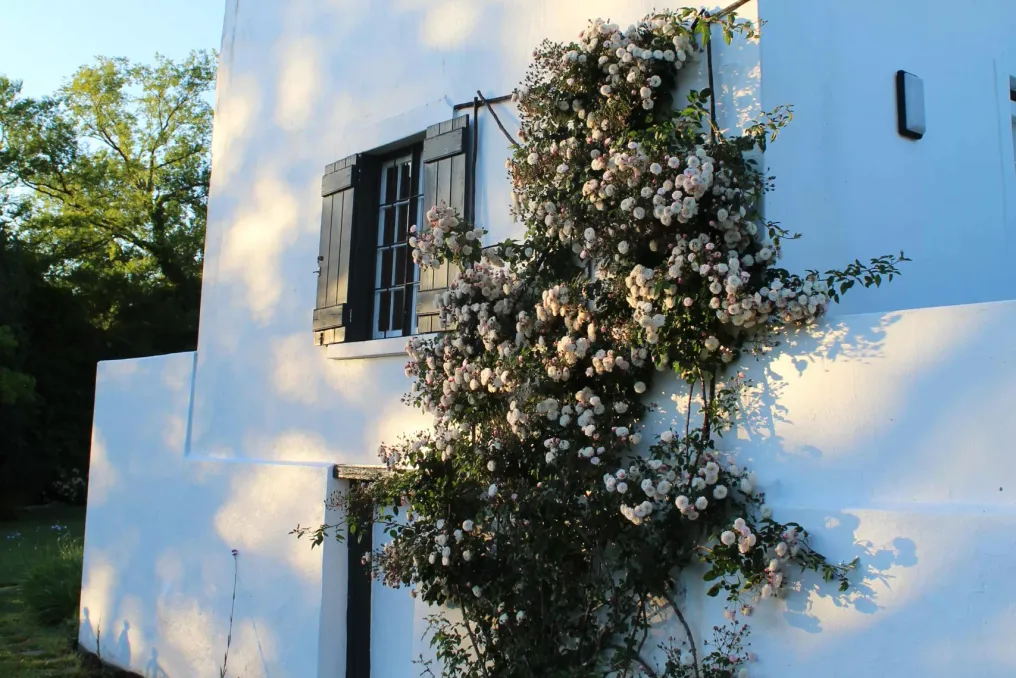
Mature trees remain one of the garden's most prominent features. Oaks, pecans, chestnuts, swamp cypresses, and melaleuca provide shade and structure, while the water features and antique roses hold personal significance for Alison.
Barry sees a reflection of his views and the couple's efforts to shape the garden for the future in the olive groves and native plantings. Although Elgin Valley is known for its green landscapes and rural gardens, Alison and Barry have moved away from the traditional English cottage garden approach that has long influenced the area.
These gardens can be labor- and water-intensive, so the couple has developed a more informal style that harmonizes with the natural environment. Alison notes that they have adopted a 'water-friendly, wild, and informal approach.'
The garden possesses what Alison describes as a 'wild, spacious, and curious character.' Despite its continuous organic development, there is still a clear intention behind the planting and maintenance of the grounds.
The surrounding Howe-Hook mountains and the abundance of water and rich soil in the area allow for a diverse selection of plants. A striking example is the enormous Gunnera, whose dramatic leaves are popular with visitors.
A significant part of the couple's approach is knowing when to step back. Alison explains that 'most of our gardening is about restraint, allowing nature to take its course.'
They avoid aggressive insecticides and herbicides, make their own compost, and experiment with biological pest control methods from Real IPM, especially for their roses and olive trees.
Gardening here also means sharing the landscape with wildlife. Hedgehogs eat arums, deer nibble juicy rosebuds, and wild pigs turn over soft patches of lawn. The attempt to create a meadow has proven particularly challenging, as gainshies continue to eat seeds before they germinate.
The couple continues to work on the meadow, planting sunflowers and grasses at its lower end. This is one of the projects whose development they find very interesting to observe.
For visitors, these small battles are part of what gives Wildekrans the feeling of a living landscape rather than a garden created solely for appearance.
Another reason to linger in Wildekrans is the inclusion of contemporary art forms in the experience. Alison and Barry have collected contemporary art for over 30 years, and sculptures are placed throughout the garden. The Howe-Hook mountains, serving as a dramatic backdrop, demand that the artworks possess their own presence.
Alison highlights the works of Strodoma van der Merwe, Gai du Toit, and Wilma Kruis, whose sculptures can rival the surrounding landscape. During Elgin Open Gardens 2026, visitors will be able to see Wilma Kruis's 'POOR HORACE,' which will be shown for the first time this year.
The combination of art and nature encourages a slower stroll through the grounds. A sculpture might draw attention among the trees, while a change in the landscape reveals a view of the mountains or draws one toward a stream or pond.
It is this blend of established plantings, changing scenery, and unexpected details that gives the garden its unique character.
For Alison and Barry, opening Wildekrans to visitors each year brings its own rewards, particularly the opportunity to see people taking their time exploring the property.
Some encounters were more memorable than others. Once Barry heard a voice but saw no one. When he looked up, he discovered a visitor sitting high in one of the trees, talking on a mobile phone. In another year, an elderly visitor quietly gathered all the harvest of green figs and left with them.
But not every memorable moment is tied to a surprise. Alison particularly enjoys seeing people take off their shoes and walk on the soft green lawn, feeling the grass beneath their feet.
Visitors often spend a lot of time in the garden, and the changing points of interest each year have also helped attract a younger generation of garden enthusiasts. Children are also welcome, and Alison says they like the garden.
A walk through Wildekrans takes approximately 1.5 km, covering various works of art, mature trees, streams, ponds, and plantings. Comfortable walking shoes and enough time for a leisurely exploration are recommended.
This year's program includes a focus on finbos pollination, with 60-minute lectures that must be booked in advance. Visitors can reserve a spot by contacting Alison and Barry directly.
Plants and homemade preserves will also be sold. The barn will serve apple juice, coffee, muesli, pecan muffins, carrot cake, and panini sandwiches, making it a good stop before continuing the walk.
The Gunnera and the garden's established trees are particular favorites, while the native plantings and olive groves offer insight into how the property continues to change.
Wildekrans also serves as a reminder that a historic garden does not necessarily have to remain unchanged to retain its character. Its owners continue to experiment, plant, and adapt the landscape, helping to define what comes next.
There is another special event on the horizon at Wildekrans. Alison and Barry's eldest daughter is getting married in the garden in December, and the couple eagerly awaits the celebration there.
This is a fitting next chapter for a property that has been shaped by generations of families and continues to gather new stories. Alison's advice for those hoping to create a garden with a similar sense of history and maturity is to start planting as early as possible. She says: 'Don't wait to start; future generations will reap the full benefit, and you will be rewarded for starting.' She recommends starting close to home and expanding as time and budget allow. Mature trees can be bought, but they are more expensive, so an early start pays off.
Above all, she urges gardeners to work with the environment. 'Let nature show you the way, and it will seem as if it has always been so.'
In Wildekrans, this philosophy is evident in the winding paths, established trees, native flowerbeds, and the feeling that there is always something new to notice. It is a garden that rewards curiosity, whether you are interested in its history, art, or simply spending a morning outdoors.
Wildekrans Country House will be open to visitors as part of Elgin Open Gardens 2026 on the following dates: