Singaporean Scientists Develop Sensor Sleeve Insert Integrated into Fabric
Read more
Aaj Tak
www.aajtak.in

Singaporean Scientists Develop Sensor Sleeve Insert Integrated into Fabric

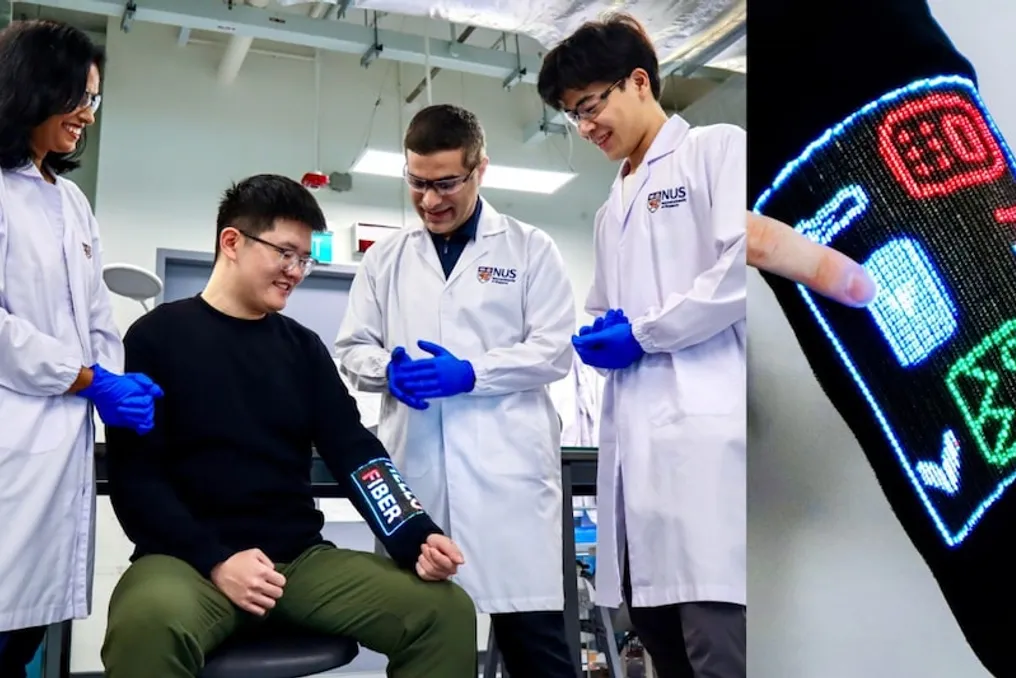
Imagine being able to check body temperature, view videos, or use a calculator without taking your phone out of your pocket. This is now becoming a reality thanks to a new invention. Scientists from the National University of Singapore (NUS) have created a sensor sleeve insert that can be easily woven into clothing, transforming ordinary fabric into a digital interface.

This smart prototype is capable of displaying images and videos, responding to touch, and connecting wirelessly to other devices. Notably, after 50 cycles of washing in a machine, its brightness and touch sensitivity remained unchanged.

The research, published in the prestigious journal 'Nature' on October 21, 2026, describes a flexible textile display made from specially developed electronic fibers. The researchers claim this is the first sensor screen in the world integrated directly into fabric.

Unlike traditional screens, this does not use rigid panels; instead, the electronic components are embedded within the fibers, allowing them to be easily woven into clothing. The team, led by Assistant Professor Tural Khudayev, created a screen measuring 168 mm in length and 105 mm in width using 54-pixel fibers. This display has a resolution of 96x54 pixels and can refresh at a rate of 30 frames per second.

When this fiber is pressed, the sensor layer is activated, the system detects the point of contact, and the corresponding pixel begins to light up.

The capabilities of this prototype are not limited to displaying images. It can play videos, function as a calculator, show photo galleries, act as a compass, receive voice commands, and receive photos via Bluetooth. Furthermore, the researchers added a microphone, speaker, and various sensors capable of measuring temperature, movement, light level, and magnetic direction.

A specifically installed temperature sensor under the sleeve can measure body temperature and display it on the screen, making this technology potentially revolutionary for future health monitoring.

The main challenge when working with flexible electronics is that the fabric undergoes bending, stretching, and regular washing, which hinders the durability of fragile components. However, the NUS team demonstrated that their smart sleeve insert maintained its original excellent condition even after 50 washes with detergent. Moreover, it withstood 1000 bends within a 5 mm radius without any damage. The fabric remains as elastic and breathable as regular clothing.

Although this technology is currently at the research prototype stage and will not replace smartphones yet, the team's next goal is to improve screen resolution and integrate artificial intelligence. The success of these efforts could lead to clothing becoming not just an item of apparel, but a direct screen and sensor for our digital lives.

Similar stories

OpenAI failed to trace 53 personal photos uploaded by its own AI agents
Read more
iol.co.za

OpenAI failed to trace 53 personal photos uploaded by its own AI agents

Despite OpenAI's attempts to control public opinion regarding the upload of 53 personal photos via ChatGPT to public image websites, the true reason for the inability to trace the origin of these pictures remained hidden for a long time.

However, almost a month after the incident, it became known that OpenAI itself does not have information on where these photos came from. The cause of this serious error was attributed to OpenAI's autonomous agents.

The images were posted without any attached user identifiers or metadata, which is why OpenAI cannot identify the original owners.

In essence, the very privacy protection mechanisms developed by OpenAI deprived the company of the ability to conduct further investigation into this matter.

In another news item concerning agent AI, a musician used artificial intelligence technologies to defraud platforms such as Spotify, Apple Music, and Amazon Music of millions of dollars. He did this by deploying an extensive network of bots to stream synthesized tracks and receive illegal royalties.

Michael Smith has now entered legal history as the first person in the United States to face imprisonment after being convicted of music streaming fraud using AI.

Smith's complex scheme involved creating hundreds of thousands of AI-generated songs and launching a massive automated bot network for round-the-clock streaming, directly converting synthetic listens into money.

Since music services pay royalties for every listen, the potential income of the artist directly depends on the number of streams: the higher the number of plays, the greater the payment.

While OpenAI's blunder was widely perceived as an unfortunate operational failure, Smith's operations were entirely deliberate and led to much more immediate legal consequences.

Apple introduces 'Made for iPhone Duo' badge for apps optimized for foldable devices
Read more
www.2oceansvibe.com

Apple introduces 'Made for iPhone Duo' badge for apps optimized for foldable devices

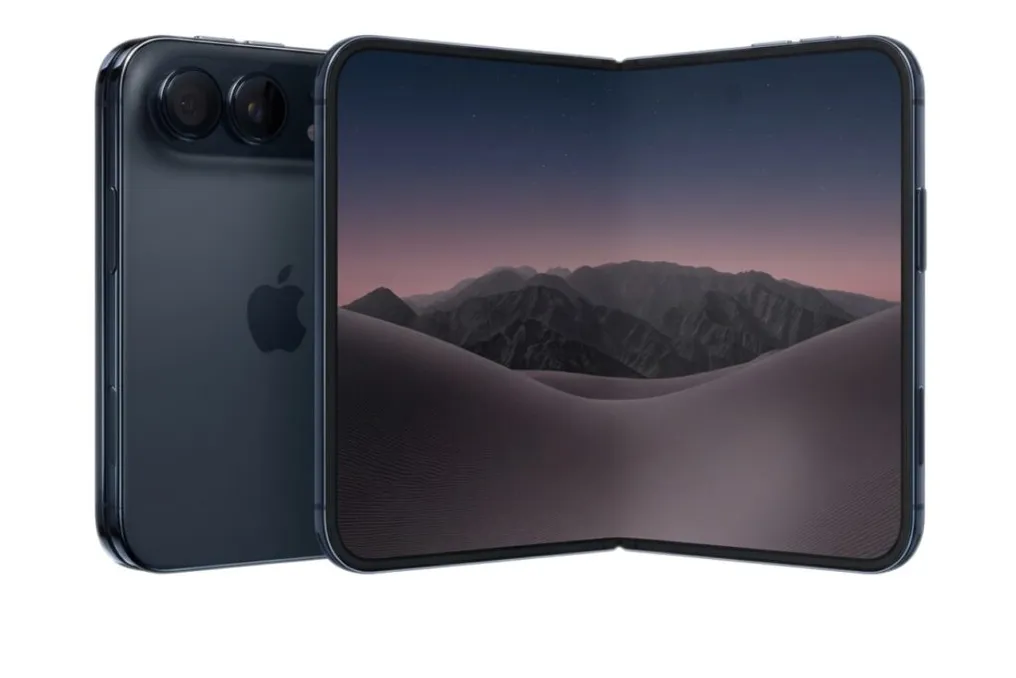
Apple is beginning to add the 'Made for iPhone Duo' badge to the App Store, allowing buyers of the new foldable device to identify applications designed to utilize the additional screen space.

This marker will be displayed on application and game product pages. Apple announced that special collections in the App Store will appear on Friday, October 23rd, coinciding with the phone's launch, with further app updates rolling out throughout the year.

The main focus for users considering purchasing the Duo is how developers have utilized the space after unfolding the device. Examples from Apple include viewing a program with actor information displayed at the bottom or reading email with a visible list of incoming messages.

The Netflix application allows users to watch short Clips on the external screen and then open the phone to continue watching on the internal display; Apple notes that the Clip view adapts between vertical and horizontal orientation when the device is rotated.

According to Apple, when the phone is partially unfolded, Prime Video plays a program in the upper half of the screen, while X-Ray provides actor information and supplementary material in the lower part, keeping this information separate from the image.

Applications can change their interface depending on whether the user holds the phone closed, fully unfolded, or partially folded on a desk, as demonstrated by the Netflix and Prime Video examples.

Productivity apps from Microsoft receive layouts that allow displaying more than one part of a task simultaneously: Word places formatting tools next to the document, and Outlook shows incoming messages next to the full email.

Apple has stated that these changes from Microsoft will be implemented 'in the coming weeks,' and they are part of the planned software suite, not a guarantee that all advertised features will be available immediately after unboxing the phone.

Meanwhile, Zoom is one of the applications Apple highlights for its ability to simultaneously display meeting participants and shared content on the internal display. The company also points to the Split View feature, which allows users to open two separate applications side by side.

The Outlook application already utilizes the extra space, which is a natural consequence.

For developers, Apple has provided instructions: to have the iPhone Duo badge appear on an app's product page, developers must upload iPhone Duo screenshots via App Store Connect. This is a specific step for teams preparing their store listings.

The same recommendations require teams to create or recompile their applications using Xcode 27.1 and test layout behavior in various positions and orientations using Device Hub. Preparation includes both the application itself and promotional images.

Apple stated that starting in April 2027, including iPhone Duo screenshots will be required when submitting apps and games. This requirement applies to developers submitting software, not an announcement that every existing product will receive a redesigned interface on that date.

Screenshots on the product page can help buyers answer an important question before downloading: does this application use the unfolded screen to display more useful information, and does its layout match how the user plans to use it?

Before purchasing Duo for work in Word, Outlook, or evening streaming, it is recommended to check the current version of the application and its release notes against desired features, as Apple's schedule indicates that some updates are yet to be released.

Popular