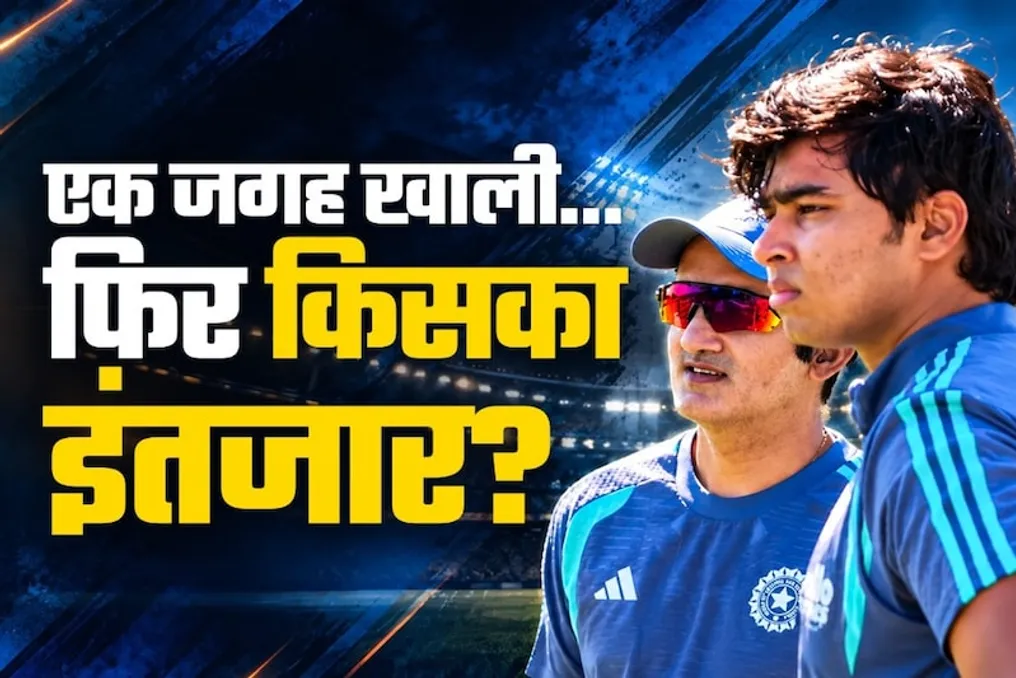
It is not easy for young players in the Indian team to secure a spot, and the lack of chances in the starting lineup, even after making the team, presents a serious challenge. Vaibhav Suryavanshi is currently going through such a period. Attracting attention with his explosive batting, Vaibhav awaits his chance during the tour to New Zealand, but this wait is getting longer.
Whether it is the series against Afghanistan, matches against West India, or the current tour in New Zealand, Vaibhav constantly has to sit on the bench. The question is not whether Vaibhav can replace Sandeep Samson and Abhishek Sharma at the top order. The question is whether there is another way for Vaibhav if the team management does not want to part with this pair.
Before the second match of the five-match T20 series against New Zealand, the Indian team received a blow: wicketkeeper-batsman Ishan Kishan was ruled out due to a hamstring strain. This injury occurred during the first T20 match of the series. Following Ishan's injury, the possibility of Vaibhav playing naturally comes up, as a batsman's spot has opened up. However, there is no convincing reason to believe he will immediately be brought into the starting XI.
The team management could give a chance to another available player instead of Ishan. The pair of Sandeep and Abhishek played a key role in India's victory by four wickets, chasing a target of 226 runs in the first T20. Therefore, the decision to break up this pair will not be easy.
But here arises an important question: is opening batting the only path for Vaibhav? Why shouldn't he play at number three or four?
The team management's strategy regarding Vaibhav can be understood. Sandeep Samson and Abhishek are both in good form and have proven their usefulness in chasing big targets. Thus, changing a successful combination just for one young player could be a risky move.
However, the team composition does not mean that all paths are closed for the young batsman. If Vaibhav is considered part of future plans, then the possibility of testing him at number three or four should be considered.
Undoubtedly, there is a difference between opening and batting in the middle order. Facing a new ball and coming onto the field in the middle of an innings are two different types of tasks. Preparing Vaibhav for this role will also require time. But until he is given a chance, the question of assessing his multi-faceted abilities will not arise.
The team management needs to clarify whether Vaibhav is exclusively a future opener or if the team has plans to use him in various situations.
Vaibhav has another option. Ranji Trophy matches are being held in India. If he does not see a real chance to play in the New Zealand series, the team should consider the benefit of constantly sitting on the bench. Fielding Vaibhav for Bihar in the Ranji Trophy could give him an opportunity to play competitive cricket. First-class cricket, long-form games, and testing technique in different conditions would be beneficial for his development.
Nevertheless, sending him back to India mid-series is not a simple decision. This requires considering the team's needs, selectors' plans, and the schedule of matches in Bihar. But the general question remains: is it better to stay in the team without playing, sitting in the dressing room, or to play?
For a young player like Vaibhav, training is extremely important. Net practice is not enough to unlock talent; the real test happens on the field, where decisions must be made with every delivery and the innings managed under pressure.
Constant lack of opportunities does not automatically prove that the team management is against him. In international cricket, a place is determined by performance, team needs, and squad composition. The good play of Sandeep and Abhishek gives them a solid foundation to retain their spots in the starting XI.
However, the role of the young player in the team and the future plan must be clearly defined. If Vaibhav cannot be given a spot at the top order now, will he be prepared for the middle order? And if there is no chance in the near future, will the possibility of releasing him from the team to participate in competitive matches be considered?
Following Ishan Kishan's injury, all attention is now focused on the team management's decisions. Whether Vaibhav will be given a chance will be known later, but the team must explain when and how his talent will be utilized.