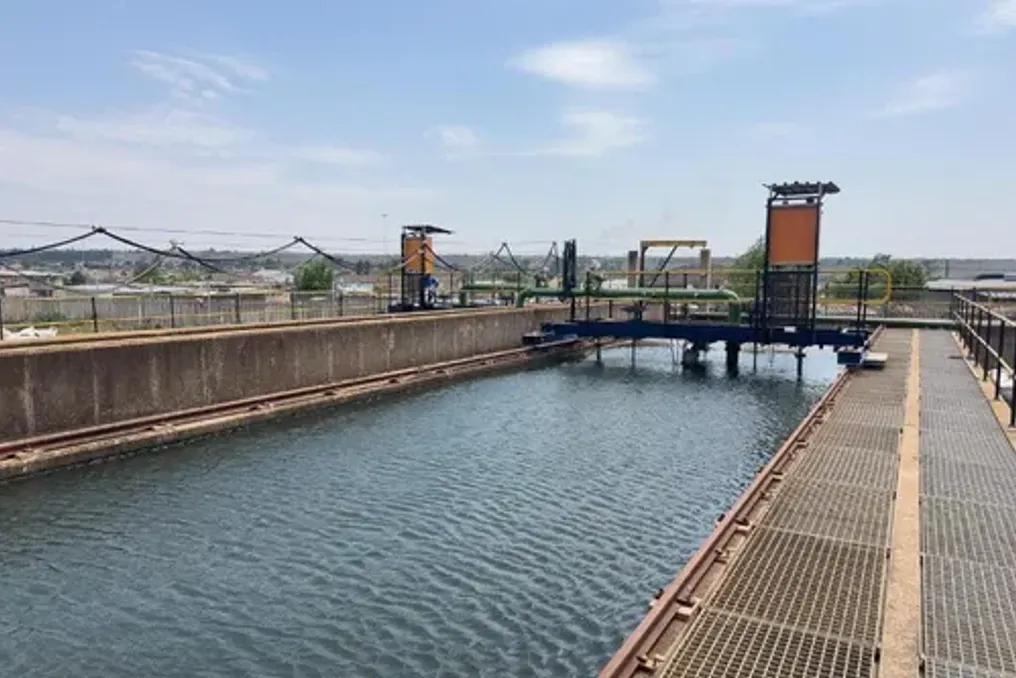
The water crisis that occurred in Bronkhorstspruit became the central theme at the launch ceremony of the Water Rights Tracker (WRT) at the University of Witwatersrand Law School on Wednesday. This incident was presented as a stark example of the violation of the inalienable human right to access water.
This tool is designed to assess progress in realizing the right to water by analyzing data from all 144 water supply authorities across the country. The launch of WRT followed reports published earlier this week that at least 408 people, predominantly children under four years old, received treatment for gastrointestinal illnesses after consuming tap water from the Bronkhorstspruit Water Treatment Works (BWTW), which was operating without chlorination.
The Tshwane municipal administration advised residents to refrain from drinking water supplied by BWTW, using it only for flushing toilets. Experts characterized this step as a violation of the right to physical access to water. Although the number of infections began to decline, Tshwane Mayor Nasifi Moya recommended that anyone experiencing symptoms such as abdominal cramps and diarrhea should consult the nearest clinic.
Moya reported that chlorination at the treatment works had resumed. On Monday, she stated that staff responsible for water supply and sanitation at the station would be held accountable for failing to convey the issue with the supplier, who suddenly quadrupled prices, to management. During her visit to Bronkhorstspruit on Tuesday, she noted: 'So, for chlorine in Gauteng there are two suppliers (and) we have one of the two, so I mean they can just suddenly want to review the contract terms because they understand the desperation.'
Speaking at the WRT launch event, Professor Tracy-Lynn Field, Chair of Claude Leon for Land Justice and Governance, emphasized that the water supply interruption occurred following cases of gastrointestinal illness, indicating microbiological non-compliance and negatively affecting the quality element in the human right to water. She mentioned headlines that appeared after the outbreak, including calls for criminal prosecution of officials responsible for the water treatment works.
Field also noted that one headline reflected political struggle, suggesting the crisis was being used to justify the deployment of water tankers. The EFF party in Gauteng, holding two portfolios in the Tshwane mayoral committee, demanded Moya's resignation. Professor Field questioned whether the current framing of the discussion would help solve systemic water supply problems in the country.
She used Tshwane as an example due to the ongoing situation at the Bronkhorstspruit water treatment works, which is one of the city's 11 stations. Field noted that this situation is unusual for Gauteng, where most municipalities receive bulk water from Rand Water. According to Field, in the 2023 Blue Drop assessment, BWTW scored 43%, which was also atypical for Tshwane's water treatment works; however, this did not lead to regulatory action from the Department of Water and Sanitation.
The Professor added: 'The Department of Water and Sanitation intervenes only at a score of 51% or lower. Thus, we knew this water treatment plant was problematic since 2023. Since 2011, the average Blue Drop rating for the city of Tshwane has steadily declined from about 90% to 83% in the latest assessment, although on average it is still higher than many water supply authorities across our country.'
She reminded that all South African water supply authorities are obliged to comply with the national drinking water standard SANS 241. Field clarified that water supply authorities must conduct regular inspections, including monitoring for E. coli and other harmful bacteria, and for settlements with a population of over 100,000 people, they must maintain 98% microbiological compliance, with any figure below this considered unacceptable.
Dr. Henk Boshoff, Commissioner of the South African Human Rights Commission, commented on the water crisis in Bronkhorstspruit, stating that the recent incident in the area 'highlights that the inability to provide quality water is not just an administrative oversight; it has real consequences.' He stressed: 'The water crisis affects lives and livelihoods, and we cannot turn a blind eye, but we must address the water crisis directly.'
Boshoff stated that WRT was created in June 2023 following a formal partnership between the South African Human Rights Commission and the University of Witwatersrand. He explained that the Commission, as a Chapter 9 institution, has a constitutional mandate to monitor the implementation of human rights, including the right to water, nationwide, while the University of Witwatersrand possesses the academic capacity to conduct complex research.
He concluded that it was appropriate for the South African Human Rights Commission, with its broad mandate to partner with Wits, an institution with extensive research capabilities, to take on the task of assisting water supply authorities in fulfilling their constitutional and legislative obligations. Boshoff noted that WRT is important because it promotes accountability, allowing citizens, civil society, and oversight bodies to demand accountability from water supply authorities regarding the right to water using reliable data.
Furthermore, he stated that WRT allows for self-assessment. Through this tool, water supply authorities can evaluate their progress in fulfilling the right to water. The third advantage is that this tool provides gap analysis and evidence-based solutions. 'Through WRT, systemic barriers hindering effective water supply are identified, allowing for the implementation of evidence-based solutions to combat the water crisis. And finally, the Water Rights Tracker is an important advocacy tool. WRT will help citizens and communities promote improved water governance and administration in the water sector.'