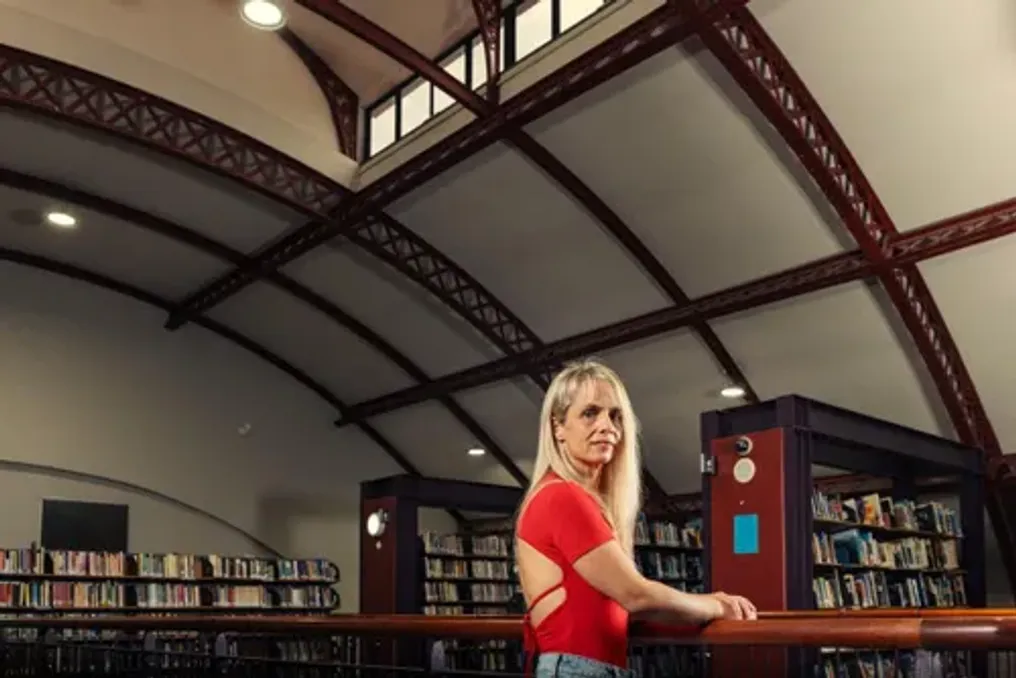
South African writer Coral Hart has published over 370 books created using artificial intelligence since February 2025 and firmly defends this process despite threats and criticism.
On social media, the author, who faces insults including terms like 'fraud' and 'villain,' has become a symbol of the emergence of AI in the publishing industry. Coral Hart, using a pseudonym to protect her real name, told AFP that she has received 'tens of thousands' of hateful messages and several death threats.
In this hostile environment, few authors using AI are willing to speak out publicly and show their faces. Hart stated: 'I decided to be the one to start these conversations,' emphasizing that the technology will not be stopped due to demands from a group of authors.
Before starting work with AI about two years ago, Hart had fourteen years of experience in publishing and had written many works without using this technology. It took her three months to master various AI models and create a system capable of generating a book.
She currently works with tools such as ChatGPT, which she says is 'very good at dialogues but terrible at prose'; Claude, which is 'good at plot structure but terrible at sexual motives'; and Grok, which is 'completely inadequate' but good for 'spicy scenes.' Hart notes that simply asking ChatGPT or Claude to write a book will result in 'flaming garbage fire' because they lack material to work with.
The author herself determines the story concept, style, character details, and chapter plan. Only then does her system begin generating the books. Hart revealed that initially, she had to write one paragraph using two or three prompts, but now she can outline an entire book in one sequence.
Hart noted that in the last year, AI models have 'significantly improved': the prose, syntax, and sentence structure have improved.
The writer explains that a book draft is rarely high quality initially. It goes through AI for 'developmental edits,' and then is checked again to eliminate issues with continuity, plot holes, flat middles, unfinished character arcs, or lost storylines. At the end of this process, a human editor reads the text to correct any 'AI traces that slipped through' and performs additional editing, after which the book is usually ready for publication.
Despite one of her novels entering the Amazon top 100 bestsellers, the vast majority of her 371 titles, many of which are in the romance genre, are created based on thorough marketing research for specific readers. She estimates that she has sold over a million books in digital, print, and audio formats, earning over a million dollars this year.
The South African author is now leading a project that has trained several hundred people in her method and is preparing to launch software for AI-using authors called Authorythm. Regarding her own productivity, she mentions using AI only when required by the sales platform. Hart, who publishes under more than ten other pseudonyms, stated that for the past 16 years, no one had asked her about her creative process, and now she is ready to make it public 'for the right reasons.'
Regularly accused of creating 'AI sludge'—low-quality content generated by AI in text, video, music, or images—Hart cites 'books sell' as her main criterion for success. She added that readers do not return 'garbage books.' The writer monitored the debates surrounding the Haitian-Canadian novel Télisson Orélien, which was excluded from the Goncourt Prize shortlist in France following accusations of using AI, which its publisher confirmed on Wednesday. Critics highly praised this book, and sales were high before the controversy arose, prompting the question: 'If you need an AI label to hate something, do you hate it or do you hate AI?'