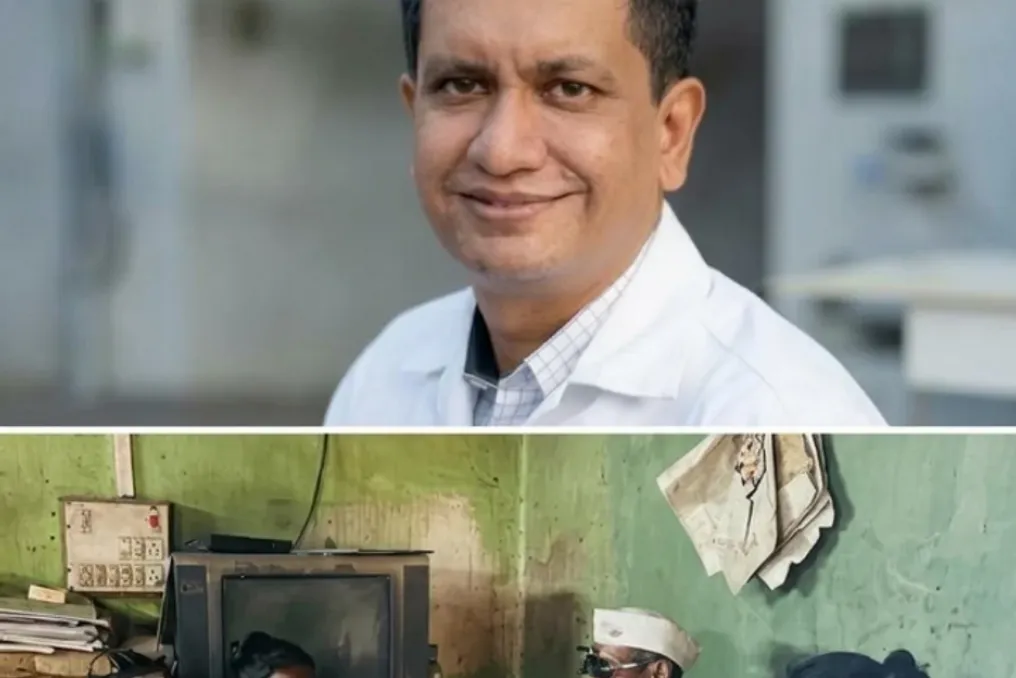
Many patients who seek care at Dr. Bhavin Patel's ophthalmology hospital in Surat arrive late. Symptoms such as blurred vision are ignored for months, cataracts are dismissed as old age, and infections are treated at home for too long.
Dr. Patel, whose family consists of doctors and who trained at Sankara Netralaya, returned to Gujarat in 2008. There were few retinal specialists in Surat, so early treatment was rare, and he witnessed many conditions progressing to an irreversible stage.
According to the national survey on blindness in India from 2015 to 2019, nearly 93% of blindness cases can be prevented, with cataracts causing more than two-thirds of all such cases. Rural areas of Gujarat face increased risk due to late diagnosis and low awareness.
Realizing that waiting would leave many without help, Dr. Patel established the Swami Vivekananda Netra Mandir Hospital in 2008. His charitable foundation, created in 2021, organizes about 40 monthly village camps and has performed over 30,000 free surgeries.
The camps cover villages in South Gujarat in Navsari, Bardoli, Vyara, and Valsad. Temple networks help mobilize residents, and teams of eight to ten people, including optometrists and trained indigenous representatives, conduct on-site screening for cataracts.
Basic cases receive immediate glasses, and patients requiring surgery are transported to Surat via Drishtiratha vehicles. Treatment is free of charge, and patients stay for about four days with food and care. Follow-up observation continues in the villages.
Nathuram Makwana, 62, from Ahmedabad lost sight in both eyes after an injury in 2017. In 2025, Dr. Patel's hospital restored weak vision in one eye, and he referred 10-15 villagers for treatment.
Vihana, born at seven months, was diagnosed with premature retinopathy at six weeks, which threatened severe vision loss. When hospitals refused her treatment or demanded high fees, Dr. Patel operated on both eyes, and she has normal vision.
Since blindness affects entire families, in 2025, Dr. Patel helped establish a training center in Surat where people with visual impairments are taught computer literacy, smartphone use, and mobility. Ten people have completed the training, and another 12 are currently enrolled.
If a one-day camp in a village temple can change a child's ability to see their parents, help a worker return to earning, or preserve a family's dignity, what is needed to reach every village?