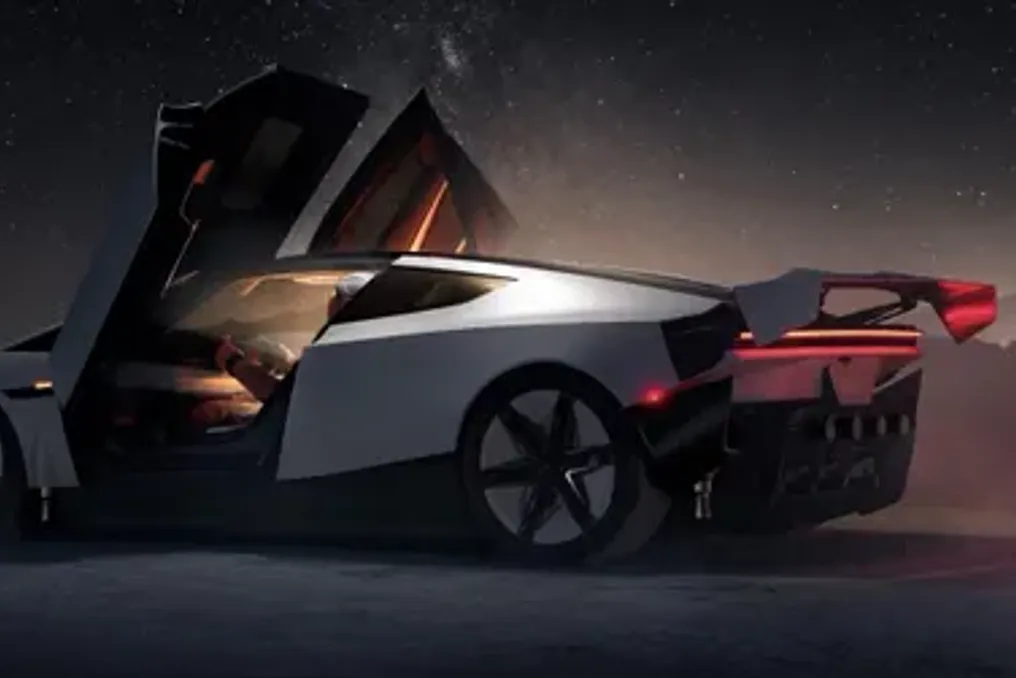
Elon Musk's new flying Tesla Roadster has attracted public attention as the first 'flying car' from the manufacturer, but the reaction of leading technology reviewers has not been as enthusiastic.
During a demonstration on October 16, the Tesla Roadster ascended a vertical ramp, was held by a special 'suction cup' system, and then performed a fall, a rollover, and landed safely. This maneuver was made possible by powerful engines that release compressed air to cushion the impact and prevent contact with the ground.
Visually, the car resembles a vehicle from 1980s or early 1990s science fiction films, possessing a sharp, angular aesthetic that combines features of the DeLorean from 'Back to the Future' and retro-futuristic cruisers from 'Total Recall.'
Even if this apparatus never reaches the consumer market, it successfully dominated global tech news for the past week.
Mark Brownlee, who has over 21 million subscribers on YouTube, noted: 'Tesla conducted one of the wildest product demonstrations of all time. Personally, I don't like this design. I preferred the old model. I actually thought the old car was very beautiful, even though it was never produced. This new one will take me some time to like.'
Meanwhile, creator of technological parody content SAMTIME, who has 657,000 subscribers on YouTube, mocked the launch, stating: 'A brand new flying Tesla car. Looks completely safe. And I'm sure their software won't have any bugs. Although their latest version of Windows literally crashed. If AI doesn't kill us, flying cars will!'
The presentation of the Roadster comes against the backdrop of Tesla reporting a decrease in third-quarter profits, as Musk appears to be increasing investments in artificial intelligence and other technologies. According to reports, research and development costs have more than doubled due to the company actively spending funds on AI, robotics, and autonomous transport.