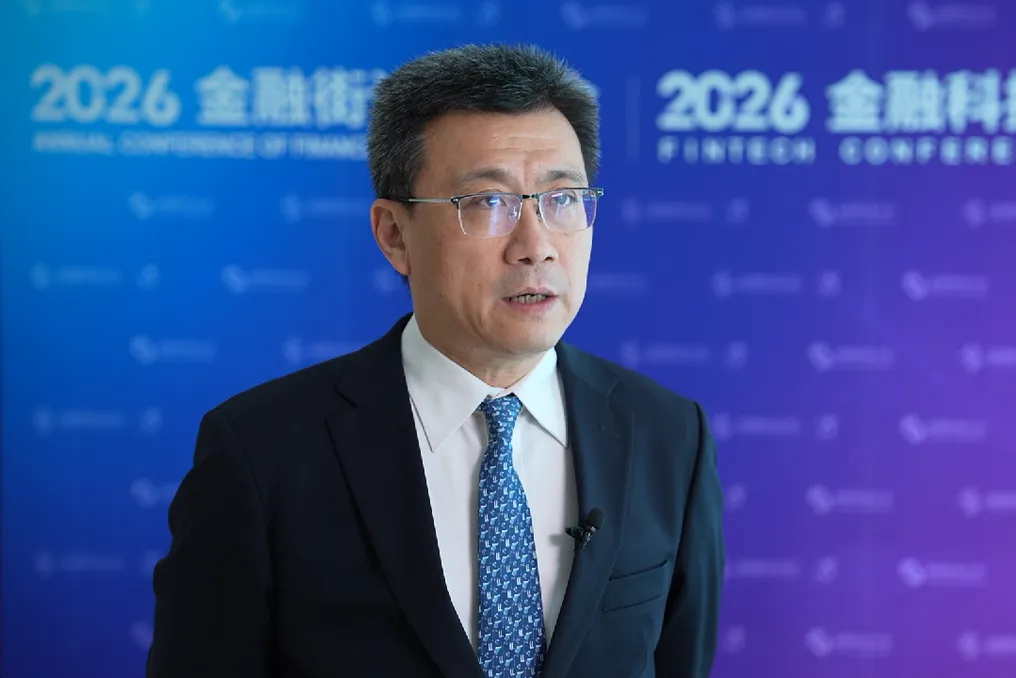
Artificial intelligence (AI) and its integration into the financial sector became a central theme at the Financial Streets Forum 2026. During an interview at this forum, Zhang Ke, Executive Chairman of the Beijing Institute for Frontier Technology Regulation, shared his views with CGTN on the opportunities, risks, and global governance of AI in the financial sector.
Characterizing AI as the driving force of the fifth industrial revolution, Zhang emphasized that the primary value of AI lies in enhancing efficiency. Nevertheless, he warned that fundamental difficulties persist as long as AI models heavily rely on data dependency and adherence to predefined paths.
Addressing the risks of using AI in large-data financial systems, Zhang highlighted two main issues: data privacy and accountability. While data flow is a necessary condition, questions concerning data security, access levels, and public disclosure require the establishment of strict global regulatory frameworks.
Furthermore, despite AI's capability to significantly optimize decision support and research, Zhang cautioned against fully delegating final trading decisions to algorithms. In the event of financial losses, ultimate responsibility must rest with the human decision-makers, not the machine intelligence.
To mitigate these systemic risks, Zhang called for active international cooperation. He compared the need for global AI governance to major international agreements such as the Paris Agreement on climate change and the Stockholm Convention on Intellectual Property. Instead of excessive regulation, governments should collaborate on creating an international 'AI Accord' to standardize disparate rules.
Looking ahead, Zhang noted that AI provides the greatest benefit when used as a strategic consultant for high-level decision-making and group strategy, rather than replacing routine transactional operations. He concluded that human oversight remains indispensable in every critical financial maneuver.