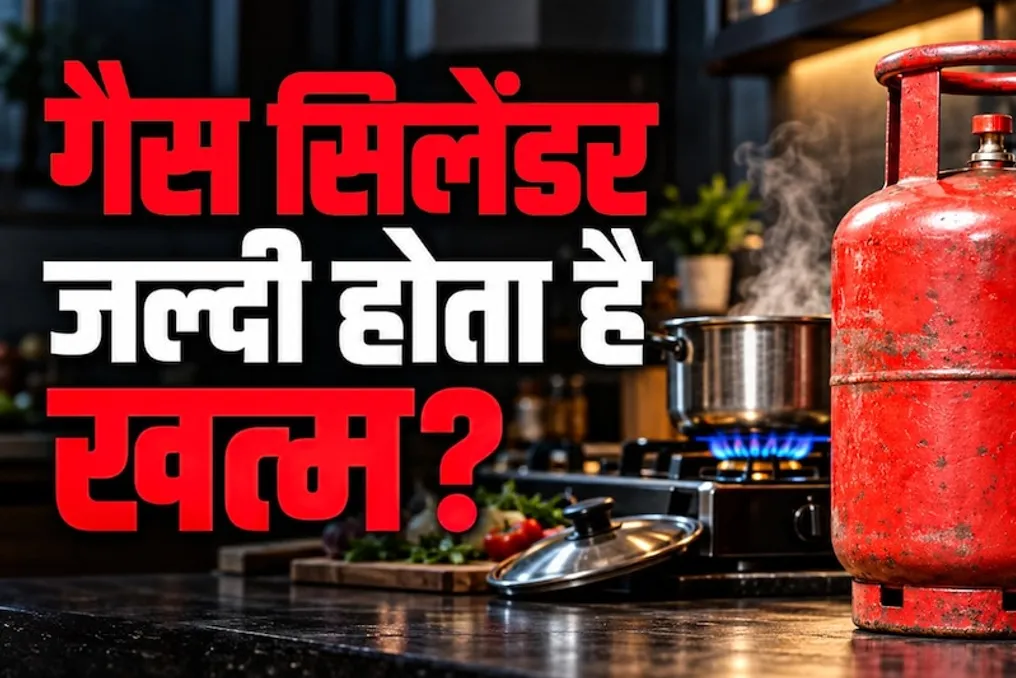
The gas cylinder is used daily in the home, whether for making tea in the morning or dinner in the evening, for boiling beans, vegetables, and bread. When the cylinder runs out prematurely, it leads to additional costs for reordering. Many mistakenly believe that the cause of rapid consumption is an increase in the volume of food being cooked; however, some small cooking habits can significantly increase gas consumption.
To improve the situation, it is not necessary to reduce the number of dishes prepared or change the daily menu. It is enough to pay attention to the methods of using and igniting the gas. If you want your liquefied gas cylinder to last longer and avoid the hassle of frequent ordering, you should change three main kitchen habits.
Firstly, one should not cook everything on high heat. Some people use maximum power to speed up the process, but when the flame extends beyond the bottom of the cookware, heat dissipates unnecessarily, leading to increased gas consumption. It is necessary to maintain the fire according to the shape of the cookware, ensuring the flame does not go beyond the edges, and to reduce the power after the food starts boiling. This will help reduce gas consumption.
Secondly, you must be fully prepared before turning on the gas. Often, people start chopping vegetables and taking out spices while the burner is running, which leads to unnecessary gas burning. To avoid this, vegetables should be chopped in advance and spices and necessary tools placed near the stove. This will simplify the cooking process and prevent extra gas consumption.
Thirdly, always use a lid on the cookware while cooking. If the cookware is left open, heat and steam constantly escape, which can increase cooking time. Therefore, when boiling beans, vegetables, or water, it is recommended to use a lid. This retains heat inside and allows the food to cook faster. At the same time, caution should be exercised when boiling dairy products and they should not be left unattended.
To save gas, it is also important to monitor several other aspects. Regular cleaning of the burner is necessary, as dirt or food particles can interfere with the normal flame output. If the flame color looks unusual or it does not burn properly, a specialist should be called to check the stove.
It is also advisable to choose a suitable burner for the size of the cookware. Placing small cookware on a too large burner can cause the flame to spread to the edges of the cookware, and some heat will be lost. Try to match the burner to the shape of the cookware and place it correctly on the stove.
Another way to save gas is to pre-soak lentils, chickpeas, and some other legumes. Soaking reduces their cooking time, which in turn reduces the need for prolonged gas burning. However, it is crucial to ensure they are thoroughly cooked.
Furthermore, all ingredients, such as vegetables and spices, should be fully prepared before starting to cook. If you need to cook several dishes at once, their preparation must be completed in advance. This minimizes the need for multiple gas ignitions or prolonged burner operation.
Although changing these habits can help reduce gas consumption, there is no guarantee that the cylinder will last 15 days longer. This depends on the number of people in the house, the volume of food prepared, and the overall way gas is used. Nevertheless, by correcting minor mistakes, gas waste can be reduced, and the cylinder can be used more wisely.