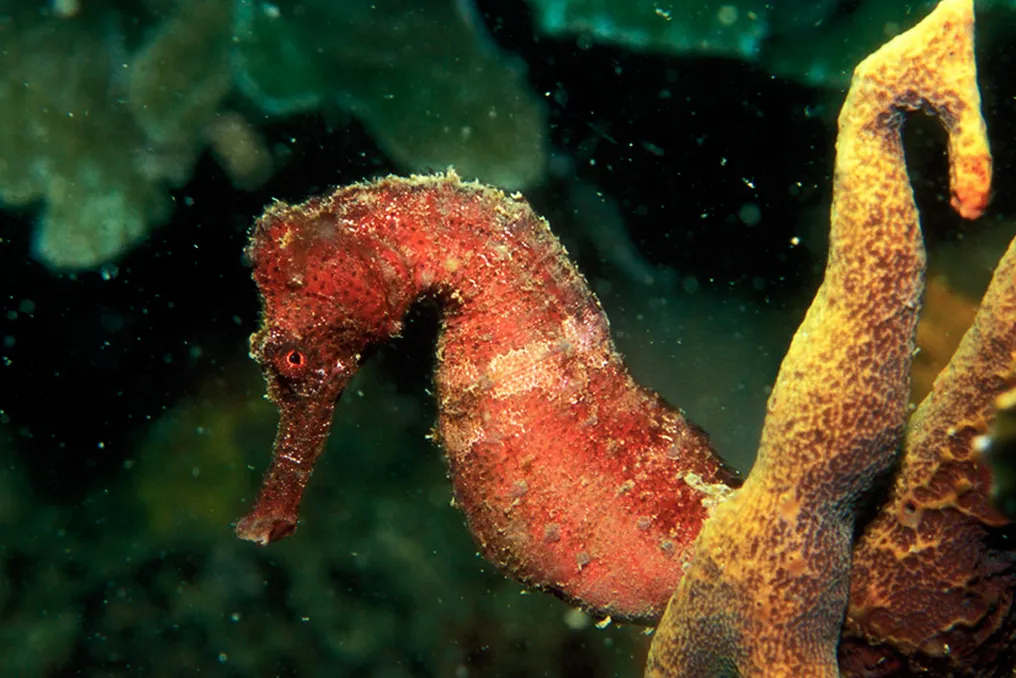
AquaFoz, located in Foz do Iguaçu, Paraná, documented a notable event last Wednesday (21): a seahorse gave birth in its facilities. Although the aquarium has recorded other births, this was the first moment captured on video.
The audiovisual recording shows dozens of fry being released by the seahorse, which had been introduced to the aquarium when it was young, about a year ago. Since its arrival, the animal has received specialized monitoring and care to meet the demands of its species.
The aquarium reported that the birth resulted in an estimated number between 300 and 500 fry from a single pregnancy. It is relevant to note that, among seahorses, the male is the one who undergoes gestation, a phenomenon considered rare in the animal kingdom. Other animals exhibiting this characteristic of being 'gestating fathers' include pipefish and seadragons, all belonging to the family Syngnathidae.
Seahorses have unique physical characteristics, not exceeding 35 centimeters in length. They lack teeth and a stomach, requiring constant feeding to assimilate essential nutrients. Additionally, their eyes function autonomously, allowing them to observe simultaneously in opposite directions. Their tail serves as an anchoring mechanism, capable of being used for fixation on corals.
The reproductive cycle of these creatures is even more complex. Firstly, most seahorse species are monogamous. For fertilization to occur, unlike many fish that release gametes freely into the water, seahorses must develop a robust affective and behavioral bond to enable anatomical encounter.
A crucial aspect of this ritual is called the 'dawn dance,' a term used by biologists to describe the courtship phase. This spectacle can last up to eight hours, during which the male and female display color changes, swim side by side, hold each other's tails, and rotate in sync.
After establishing this environment of affection, the female uses a structure called the ovipositor to initiate the next stage. With this organ, she deposits eggs in designated locations, or in this specific case, inside an incubation pouch located on the male's abdomen. Subsequently, the male releases sperm that promotes the fertilization of the eggs, making the male 'pregnant' with eggs.
This capacity is made possible by the incubation pouch, which acts similarly to a uterus, ensuring the development of the eggs and providing the necessary nutrients and oxygen. However, unlike placental mammals, seahorses have a much shorter gestation period.
Once the eggs are housed in the male's incubation pouch, the gestation period varies between ten days and two months. After this time, the male gives birth to fully developed and autonomous fry, without receiving any parental assistance after birth. Depending on the species, each pregnancy can result in between 300 and over 1,000 fry, although their survival rate is low.
Several elements influence this reproductive process. For example, higher water temperatures accelerate the animal's metabolism, resulting in a reduced gestation period, and vice versa. Furthermore, habitat stability and adequate nutrition impact the incubation period. Since seahorses are found in shallow coastal waters, both tropical and temperate globally, their reproductive process can show great variation.