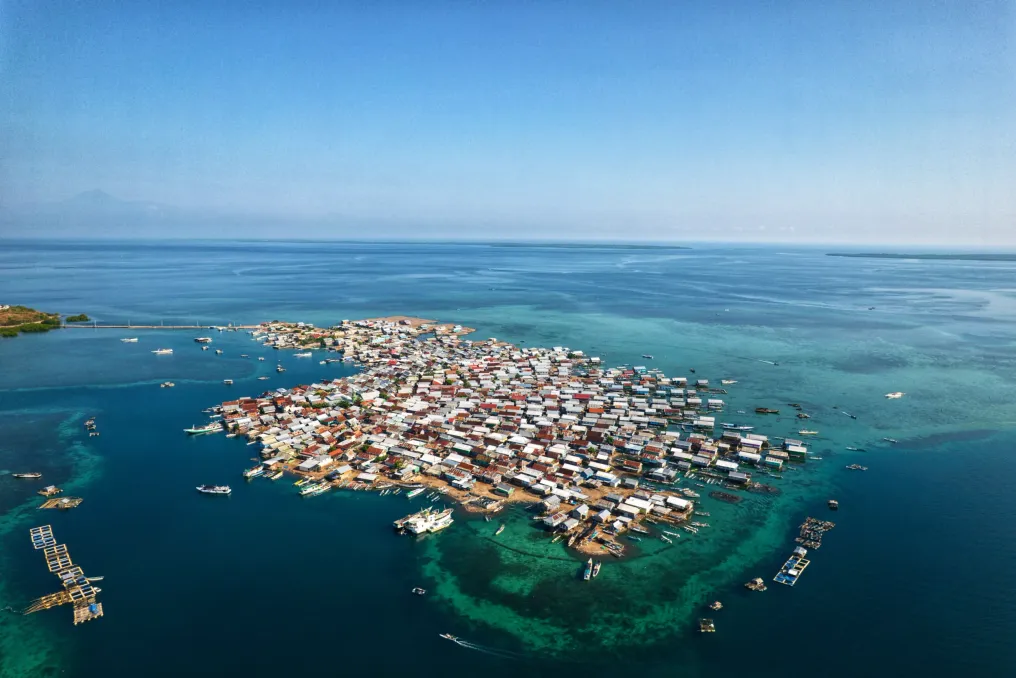
From historical fishing settlements in Southeast Asia to floating reed islands in Peru, these villages illustrate how people have created entire ways of life around bodies of water. In such places, boats are used instead of cars, and markets unfold directly on the water. Some communities build their dwellings on stilts over lakes and rivers, while others create floating islands from reeds.
These settlements are shaped by fishing, trade, and seasonal flooding, offering a glimpse into how people have adapted to their environment over generations.
Ganvié in Benin
Located on Lake Nokoué in southern Benin is Ganvié—a network of stilt houses, schools, and markets connected by waterways. Canoes are the primary means of transport here. This village was founded by the Tofinu people in the 17th and 18th centuries when they sought refuge from wars and slave raids. The lake provided protection from pursuers unfamiliar with its waters. The name Ganvié is often translated as 'we are saved.' Fishing remains a central element of local life, and boat rides allow visitors to see the daily rhythm of the village.
Kampong Ayer in Brunei
Kampong Ayer stretches along the Brunei River opposite the capital, Bandar Seri Begawan. Wooden houses stand on stilts, pedestrian paths connect the quarters, and water taxis transport residents between the settlement and the city. This collection of water villages has centuries of history and once played a key role in Brunei's trade and social life. Today, it functions as a residential area, including houses, schools, mosques, and shops. The contrast between traditional architecture and the modern capital across the river makes this place very interesting to study. Visitors can reach Ganvié by boat from Abomey-Calavi, near Cotonou, where a local guide can tell them about the history and traditions.
Inle Lake in Myanmar
Situated among the hills of Shan State, Inle Lake is known for its stilt villages, floating gardens, and unique fishing traditions. The Intha people grow vegetables in floating beds secured by bamboo stakes, while wooden houses rise above the shallow water. Local fishermen are famous for rowing while standing on one leg, keeping their hands free to work with fishing gear. Nearby villages are also known for traditional crafts, including textiles made from lotus fibers. Visiting Inle Lake is possible by boats that connect villages and markets. It is recommended to check current travel advisories before the trip.
Kampong Phluk and Tonle Sap Lake
Near Tonle Sap Lake is Kampong Phluk, known for its tall wooden houses built on stilts to adapt to seasonal water level fluctuations. During the dry season, the supports remain exposed, but when the rainy season begins, the rising water turns the surrounding forest into a network of flooded canals navigable by boat. Fishing has long sustained the communities around Tonle Sap, one of Southeast Asia's largest freshwater ecosystems. The changing landscape dictates daily life here. Kampong Phluk is accessible from Siem Reap; it is worth visiting during high water to see the flooded forest landscape, or in the dry season to view the full height of the houses.
Titicaca Island and the Uros People
On Lake Titicaca, the Uros people have built floating islands made of totora—a reed that grows in the lake's shallows. Layers of reeds form islands that require constant replenishment as the material decomposes. The same plant is used to build houses, traditional boats, and handicrafts. Fishing and the lake's natural resources have long sustained this community. Currently, some families host visitors and demonstrate the island-building process. Boats depart from Puno. Lake Titicaca is located at an altitude of approximately 3,815 meters above sea level, which can cause altitude sickness, so time should be allocated for acclimatization.
Tai O on Lantau Island
On Lantau Island, far from the skyscrapers of Hong Kong, Tai O is a historic fishing village where stilt houses line tidal creeks and mudflats. Associated with the Tangka people, the village is known for its traditional Pang Uk houses situated over tidal flats and connected by narrow footpaths. Tai O's economy was shaped by fishing, and its heritage remains visible in fish stalls, traditional architecture, and boat trips along the waterways. Preserving this way of life is becoming increasingly important amid changes in traditional livelihoods. Tai O can be visited by public transport on Lantau Island; tourists can explore the village on foot, sample local seafood, and take a boat tour.
Quang Van in Ha Long Bay
Located among the limestone karsts of Ha Long Bay, Quang Van is known for its history as a floating fishing village. Families once lived in houseboats anchored in sheltered bays near their fishing grounds. Subsequently, government-organized resettlement programs moved many families to the shore, altering the traditional settlement. The remaining structures and tourist opportunities offer insight into the lifestyle shaped by the sea. Quang Van is usually visited during a cruise through Ha Long Bay; it is necessary to ensure the itinerary includes a stop at this village.
From Benin to Peru, these communities demonstrate diverse ways of adapting to life on water. Some rely on stilts to compensate for seasonal flooding, others developed around fishing and trade, and the Uros people created floating land from reeds. Their appeal lies not only in their unusual architecture. Each village reflects generations of ingenuity and tradition that continue to evolve. For travelers, the most valuable visits are those that go beyond simple sightseeing, as they allow for a deeper understanding of the people who have made these remarkable places their home.