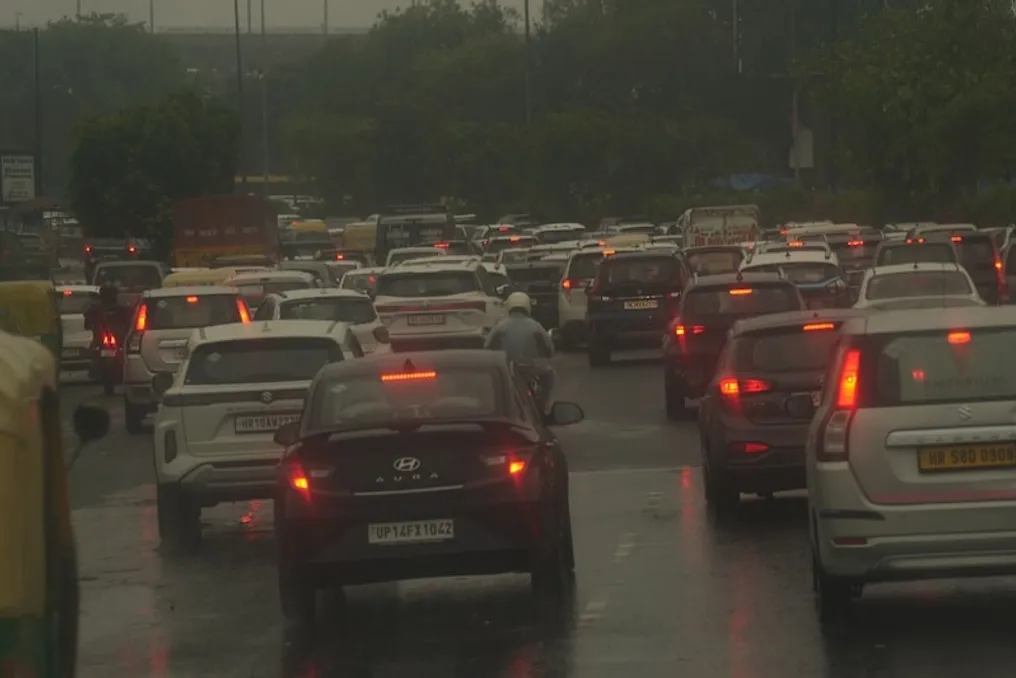
Restrictions on transport in Delhi introduced to combat pollution: Carriers warn of traffic jams and rising prices
Read more
Aaj Tak
www.aajtak.in

Restrictions on transport in Delhi introduced to combat pollution: Carriers warn of traffic jams and rising prices

To control atmospheric pollution in Delhi, a ban on the movement of both private and commercial vehicles is planned for the period from November 1, 2026, to January 31, 2027. In this regard, the Association of All Indian Motor Transport and Goods Carriers (AIMGTA) has demanded that the government first conduct a 15-day pilot project.

The Association's Chairman, Rajendra Kapoor, sent a letter to Chief Minister Rege Gupta and Environment Minister Sardar Manjinder Singh Sirse. The letter requests a scientific assessment of the consequences before implementing long-term restrictions.

The Association emphasizes the critical importance of controlling pollution in Delhi but insists that any major decision must be based on determining a real and measurable improvement in air quality after its implementation. It is proposed to test the proposed restrictions for the first 15 days, starting November 1, while studying air quality data, and then make a final decision based on the results obtained.

According to Rajendra Kapoor, supplying Delhi with necessary goods and raw materials for industry largely depends on freight vehicles arriving from other states. If a ban is imposed on heavy trucks carrying 20 to 25 tons of cargo, goods will have to be reloaded into smaller vehicles. This could lead to increased transportation costs, time spent on loading and unloading, and delivery.

The Association expressed concerns that such a system could worsen the problem of congestion at the borders of Delhi and adjacent roads. Furthermore, disruption in the supply of goods such as fruits, vegetables, and other essential products could create an additional financial burden on consumers in the form of price increases.

The Association stated that rising transportation costs and disruptions in raw material supply could negatively affect the competitiveness of Delhi's enterprises. This, in turn, may impact production processes, business activity, and employment levels. A request was also made to assess the potential decrease in diesel fuel sales and VAT revenue.

The Association suggested monitoring key air quality indicators, including PM2.5 and PM10, during the pilot project. Factors such as weather, wind direction, and regional pollution must be taken into account. In the Association's view, if the restrictions lead to a noticeable improvement in the pollution situation, they can be continued after reviewing the economic and operational consequences. If the expected improvement does not materialize, efforts should be focused on controlling other sources of pollution, such as road dust, construction activities, industrial emissions, and waste burning.

Rajendra Kapoor noted that Delhi must ensure clean air, uninterrupted supply of necessary goods, continuity of industrial operations, and protection of jobs. The Association called upon the government to consider the interests of all stakeholders and available scientific data before making a final decision regarding these restrictions.

Similar stories

Entry of certain vehicles banned in Delhi starting November 1 as part of air pollution control plan
Read more
www.aajtak.in

Entry of certain vehicles banned in Delhi starting November 1 as part of air pollution control plan

The government has adopted decisive measures to combat rising air pollution in Delhi during the winter period. Local authorities will tighten controls on vehicles, construction work, and office working hours.

Delhi's Chief Minister, Reha Gupta, announced that from November 1 to January 31, vehicles registered outside the region that do not meet BS-VI environmental standards will be prohibited from entering the capital. This means cars with emission standards lower than BS-VI (such as BS3 or BS4) will not be allowed into the capital during the specified period.

The Delhi government's action plan will be in effect from November 1 to January 31. Gupta shared this on the social media platform X, noting that last year's experience allowed for more thorough preparation for the fight against pollution. She also called on Delhi residents to assist in implementing these measures.

Rule for vehicles not meeting BS6 standard

Furthermore, steps such as transitioning to 50% remote work, changing office hours, and using artificial intelligence technologies to monitor construction sites will be introduced to limit pollution levels.

No PUC Certificate — No Fuel

To control pollution in Delhi, a 'No valid PUC certificate — no fuel' policy is also being implemented. Vehicles without a valid Pollution Under Control (PUC) certificate will not receive fuel. The government is also urging citizens to switch to more eco-friendly and less polluting modes of transport. To achieve this, the use of electric buses, metro, last-mile services, and carpooling will be incentivized to reduce dependence on private cars and decrease road traffic.

Restrictions will be imposed on construction and demolition work to prevent dust pollution during the winter period. Rules for transporting construction materials such as cement, sand, and gravel will also be established. Monitoring of construction sites will be carried out using AI-equipped cameras directly linked to the government's central command center to ensure compliance with regulations.

50% Remote Work in Offices

The Delhi government will also take steps to reduce road traffic, in addition to combating pollution. The minister announced the introduction of a 50% remote work regime in both the public and private sectors. Additionally, the start and end times of work will be adjusted in various offices to avoid simultaneous traffic congestion on the roads. The government hopes these measures will help reduce the number of vehicles on the streets and control pollution caused by traffic jams.

Reha Gupta emphasized that timely preventive measures are necessary to improve air quality in Delhi. She appealed to the public to participate in this initiative and share the collective responsibility for reducing pollution levels. The government's focus is not only on vehicle emissions but also on dust rising from construction sites and reducing the load from road traffic.

Consider Five Important Points Before Buying an Air Purifier to Avoid Unnecessary Expenses
Read more
www.aajtak.in

Consider Five Important Points Before Buying an Air Purifier to Avoid Unnecessary Expenses

During the winter period, air quality in the Delhi-NCR region significantly deteriorates, leading to breathing problems for many people. When the Air Quality Index (AQI) rises, it can be harmful to health. To protect themselves from this, people install air purifiers in their homes.

However, if you do not check several important aspects before purchasing an air purifier, you might waste money. Below is a guide to five key points to consider when choosing a good air purifier.

The filter is the most important part of an air purifier. Therefore, when buying, you must check for the presence of a HEPA filter. HEPA stands for High Efficiency Particulate Air Filter. It helps remove fine dust particles and pollutants from the air.

A quality True HEPA filter is capable of filtering 99.97% of particles as small as 0.3 microns. Consequently, when choosing a purifier, you must ensure the type of filter installed and should not buy any purifier based solely on a low price.

When buying an air purifier, it is also important to know how quickly it can clean the air. For this, you should check the CADR rating, which stands for Clean Air Delivery Rate. This parameter shows the speed at which the purifier can provide clean air.

If the room is small, a purifier with a low CADR rating will suffice. However, for large spaces, a model with a higher CADR rating is preferable. For example, a model with a CADR of 100-150 may be suitable for a small room, whereas a large room might require a CADR of 200-300 or higher. Nevertheless, the correct rating depends on the room size and the capabilities of the purifier itself.

When buying an air purifier, it is crucial to consider the room size. If you buy a purifier designed for a small room for a large space, it will not be able to properly clean the entire volume of air.

Therefore, before purchasing, you should check the coverage area stated by the manufacturer. You must ensure that the purifier matches the size of your room. If you plan to use it in a large hall or extensive area, choose a model with a larger coverage.

It is not enough to look only at the initial price when choosing an air purifier. You also need to find out how often filters need replacement and what the cost of new filters will be. Some purifiers may have a low initial price, but their replacement filters can be expensive. Over a long period, this can increase the total cost.

Therefore, before buying, be sure to check the cost, replacement frequency, and availability of filters. This will help you assess the overall long-term cost of owning the air purifier.

Since the air purifier may run for many hours during the cold season to combat pollution, it is important to know how much electricity it consumes. Additionally, you should pay attention to the noise level of the purifier. If you plan to place it in a bedroom, it is better to choose a low-noise model so as not to disturb sleep.

Before buying, be sure to study the information on energy consumption, sleep mode, and noise level. If you are also considering buying an air purifier to protect against growing pollution in Delhi-NCR, be sure to take these five points into account. This will allow you to choose a suitable model for your needs and avoid unnecessary expenses.

Popular