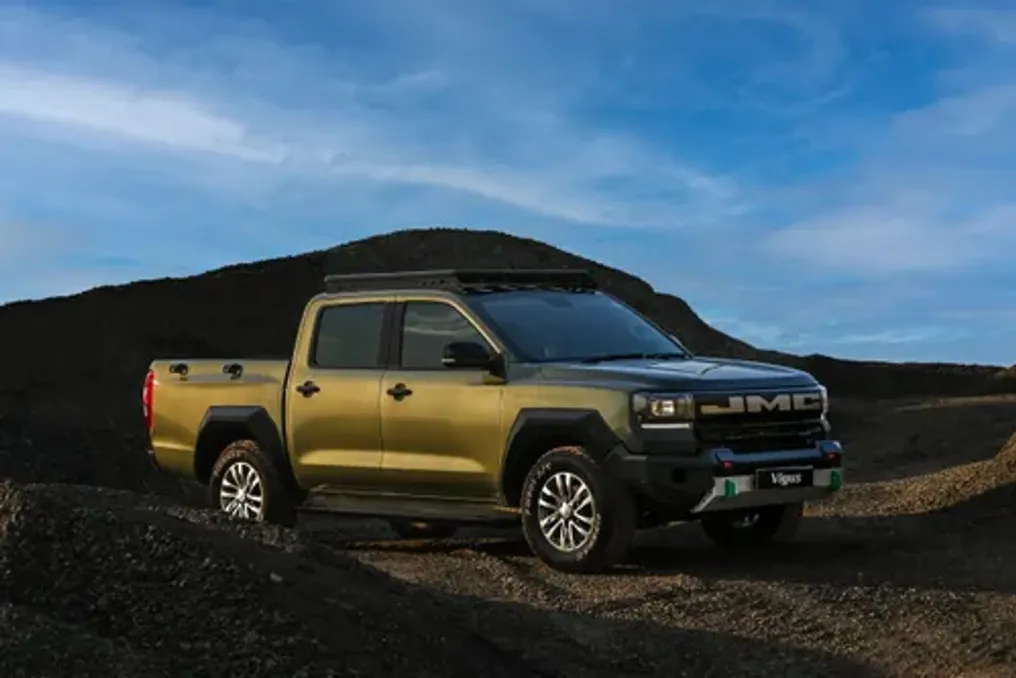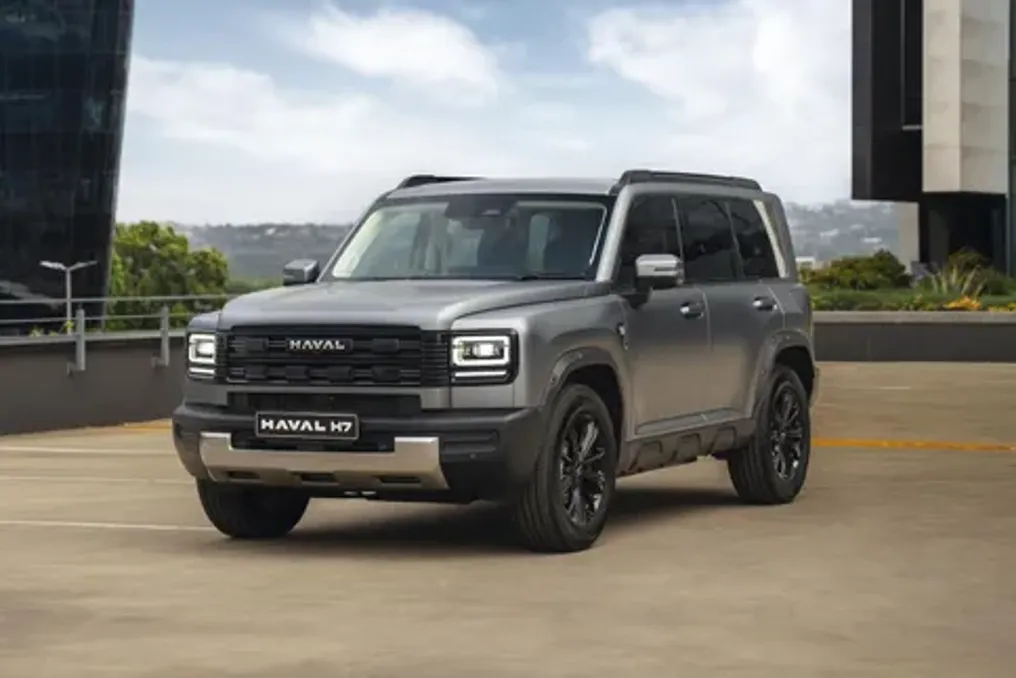
GWM has introduced a brand new Haval H7 model in South Africa. This second generation replaces the previous version, offering a more robust silhouette, a more expressive appearance, and an expanded range of powertrains, including petrol, hybrid, and plug-in hybrid options.
The model line includes six variants: from the budget-friendly 2.0T at R554,900 to the flagship 280 kW Hi4, capable of accelerating from 0 to 100 km/h in 5.8 seconds, priced at R794,900. The previous H7 model, based on the Big Dog platform, only arrived in South Africa in early 2025 and was replaced less than two years later by this updated version, which GWM claims better meets local expectations.
Design and Ride Height
The new H7 features a long bonnet and a vertical stance. Its length is 4,800 mm, and the wheelbase reaches 2,738 mm. The vehicle is equipped with 255/60 R19 tires and a standard full-size spare wheel, unlike temporary space savers. The ground clearance is 210 mm, the approach angle is 25 degrees, the departure angle is 32 degrees, and the wading depth reaches 580 mm, giving it characteristics suitable for rural or coastal travel. Nevertheless, the H7 is a modern monocoque SUV, not an extreme off-roader like its competitors.
Powertrain Options
Three types of powertrains implement a well-thought-out strategy. The 2.0T petrol engine uses a turbocharged 4N20A engine from GWM, producing 170 kW and 380 Nm via a patented transverse nine-speed wet dual clutch. In two-wheel drive, it accelerates in 9.0 seconds, and in four-wheel drive, in 8.6 seconds, with both variants having a top speed of 200 km/h, making it a choice for drivers who value responsiveness and torque.
The 1.5T HEV hybrid system provides 182 kW of power and 540 Nm of torque, consuming 5.3 L/100 km in the NEDC cycle and reaching 100 km/h in 8.6 seconds, without requiring external charging and offering better fuel economy and a stronger low-speed burst. The flagship 1.5T PHEV Hi4 sits at the top of the range. Its two-wheel drive variant produces 240 kW and 540 Nm, accelerating in 8.4 seconds, and has an electric range of 130 km. The most powerful four-wheel drive PHEV Hi4 reaches 280 kW and 670 Nm, accelerating in 5.8 seconds, and offers an electric range of 115 km. Both PHEV models support Vehicle-to-Load functionality up to 6 kW, ideal for running a refrigerator, lighting, or small tools during power outages or camping.
Off-Road Capability
The all-wheel-drive systems are properly configured. For the ICE 4WD, it uses a sixth-generation Haldex from BorgWarner, capable of distributing torque in 200 milliseconds. In the PHEV Hi4, the all-wheel drive is managed by a dedicated 150 kW electric motor that directs weight rearward to improve grip and fast start feel. Both variants are equipped with an electronically controlled rear differential lock, which transfers 100 percent of available torque to both rear wheels and automatically disengages above 40 km/h. The ICE 4WD model additionally features Off-Road Cruise, allowing the driver to set a speed between 7 and 15 km/h and letting the car manage throttle and brakes while the driver focuses on steering. The availability of nine driving modes, including Eco, Normal, Sport, Snow, Mud, Sand, Grass/Gravel, Rough Road, and Auto, makes this system one of the most versatile in its class.
Interior and Daily Use
The interior is designed with real-life situations in mind. Two displays combine a 12.3-inch digital cluster with a large 15.6-inch anti-glare and fingerprint-resistant touchscreen, while a 9-inch head-up display projects speed and navigation into the driver's field of view. Voice control covers 17 functions, allowing hands to remain on the wheel. Standard across the entire lineup are 50W wireless charging, a full 10-speaker premium audio system, and a panoramic roof blocking 90.5 percent of UV radiation. The front seats are equipped with three-level heating and ventilation. The trunk capacity is 586 liters and can expand to a substantial 1,404 liters, sufficient for camping gear, bicycles, or a week's luggage. Furthermore, the trunk includes a 220V, 400W outlet for ICE and HEV models, and up to 2.2 kW for PHEV, which is very convenient for outdoor recreation. Forty-three storage spots help maintain order.
Safety is ensured by six airbags and Level 2 ADAS, which includes automatic emergency braking, adaptive cruise control with lane centering, blind-spot monitoring, rear side collision warning and braking, as well as a 360-degree camera with a transparent chassis view for maneuvering in tight spaces.
Pricing
Prices for the various configurations are as follows:
- 2.0T Super Luxury 4x2 9DCT – R554,900
- 2.0T Ultra Luxury 4x2 9DCT – R594,900
- 2.0T Ultra Luxury 4x4 9DCT – R654,900
- 1.5T HEV Super Luxury 4x2 DHT – R624,900
- 1.5T PHEV Super Luxury 4x2 DHT – R734,900
- 1.5T PHEV Ultra Luxury 4x4 DHT – R794,900
Five colors are available: Hamilton White, Night Black, Cloud Stream Grey, Matte Grey, and Emerald Green, while the interior is presented in a uniform black color.
Operation
Ownership terms include a 7-year warranty on the vehicle for up to 200,000 km, and an 8-year warranty on the high-voltage battery for hybrid models up to 150,000 km. A 7-year roadside assistance plan with no mileage limit and a 7-year service plan for 75,000 km are also provided. Maintenance is recommended every 15,000 km or once a year.