Financial indicators of government procurement in the urban bodies of Madhya Pradesh have caused widespread resonance. Colossal differences in the cost of goods were recorded: for example, one liter of disinfectant (phenal) was accounted for at a price of only ₹5, while an analogous product cost ₹33,500. Similarly, 60W LED lamps were purchased for ₹306, whereas in the city of Bhopal, the same lamp cost ₹11,800. Furthermore, there was a price difference of two to six lakh rupees observed in the purchase of garbage trucks.
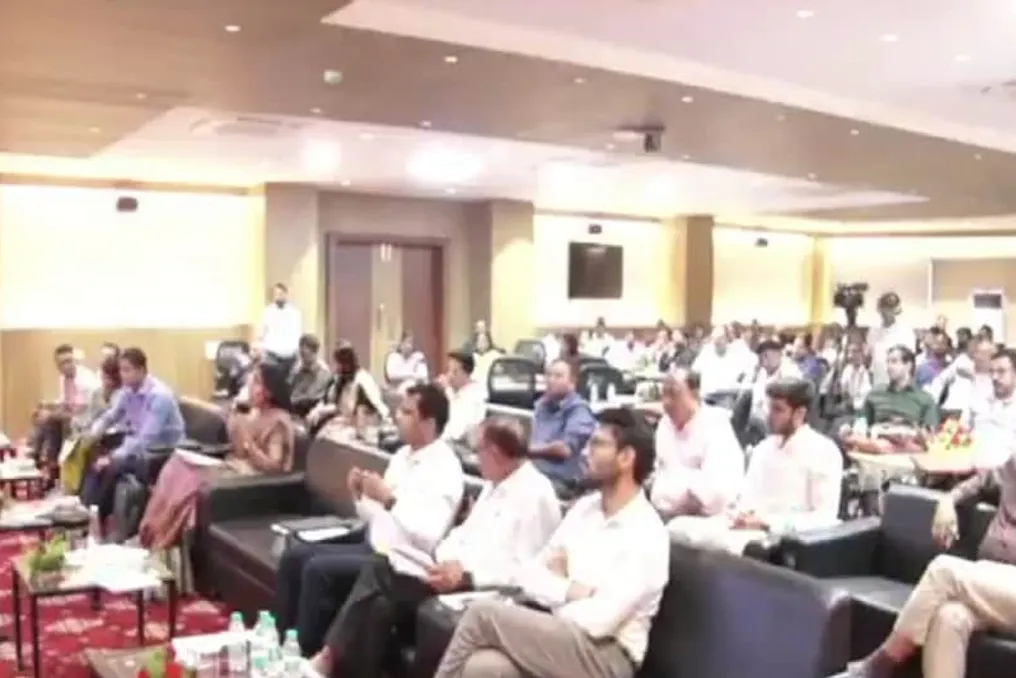
This data raises questions about how thoroughly control and price comparison were conducted when spending public funds. A video recording of an old speech by Additional Minister for Urban Bodies, Sanjay Dubey, went viral on social media, where he warned officials about problems in the urban body procurement process. At a meeting, based on an analysis presented by Additional Director MPSEDC Anshuman Raj, information was provided regarding significant discrepancies in procurement rates. Officials were clearly informed that any anomalous prices and violations in procurement would no longer be ignored.
According to the data presented at the meeting, 374 urban bodies in Madhya Pradesh made purchases worth approximately ₹1,134 crore through the government e-marketplace GeM over the last three years. Analysis of these expenditures showed that by purchasing goods at average market rates, approximately ₹250 crore could have been saved. This figure raises questions about the public procurement procedure, price evaluation, and official accountability. When the same item is purchased at vastly different prices in different bodies, it becomes critically important to ascertain the reason for this discrepancy: whether the quality of the goods, technical specifications, or purchasing conditions differed.
Nevertheless, the calculation of potential savings by purchasing at average rates is not definitive proof of corruption itself. To establish the truth, verification of the specifications, quality, volume, delivery, installation, and payment records of the respective products is necessary. Despite this, the figures obtained undoubtedly call into question the effectiveness of the price comparison system in government procurement.
The example of the purchase of phenolic disinfectant was particularly highlighted in the presentation. According to statistics, in one urban body, the price per liter of the product was ₹5, whereas in another location, the cost for a similar product was recorded at ₹33,500. Such a huge price gap for a product of the same category is shocking. Usually, purchases consider quality, volume, brand, technical standards, and market rates. Therefore, it is necessary to verify whether the goods bought in both places were identical. If their characteristics differed, this should have been clearly reflected in the documentation.
The main question in this case is on what basis the price was set. Was a comparison of various rates conducted before the purchase? Did the relevant officials assess the real cost and utility of the product? Answers to these questions can only be obtained after a thorough examination of the procurement documentation and technical descriptions.
A significant price difference was also evident in the purchase of LED lamps. The presentation showed that a 60-watt LED lamp was purchased for ₹306, while in Bhopal, the same lamp cost ₹11,800. The total cost of this purchase in Bhopal amounted to ₹3.78 lakh. Such a large difference in the price per lamp of the same wattage naturally raises questions about the procurement process. However, wattage alone cannot determine the complete identity of both lamps; their quality, technical standards, additional devices, installation, and other conditions are also important.
But if the product characteristics and purchasing conditions were the same, then such a price difference becomes the subject of a serious investigation. In government procurement, it is not enough just to order goods; it is necessary to ensure that payment is made at a fair rate and that public money is used properly.
Sanjay Dubey also cited the example of the purchase of garbage trucks. According to him, one urban body bought a garbage truck for two lakh rupees, while another body spent six lakh rupees on a similar machine with four garbage bins. Questions regarding the price difference also arose in this example. Were the size, construction, quality, and purpose of both garbage trucks the same? Did the six lakh purchase include additional amenities or other expenses? Only checking these aspects can reveal the true reason for the discrepancy.
Sanjay Dubey also expressed concerns about increasing prices by adding additional items to the procurement and conducting purchases through his acquaintances. This remark raises alarm about the transparency and impartiality of the procurement process. If the price was unjustifiably inflated in any procurement, a check of the documentation and payment records is necessary to determine responsibility.
The presentation also included a report on expenditures for various items over the last three years, including details on the purchase of Garbage Tippers, Street Lights, and disinfectants.