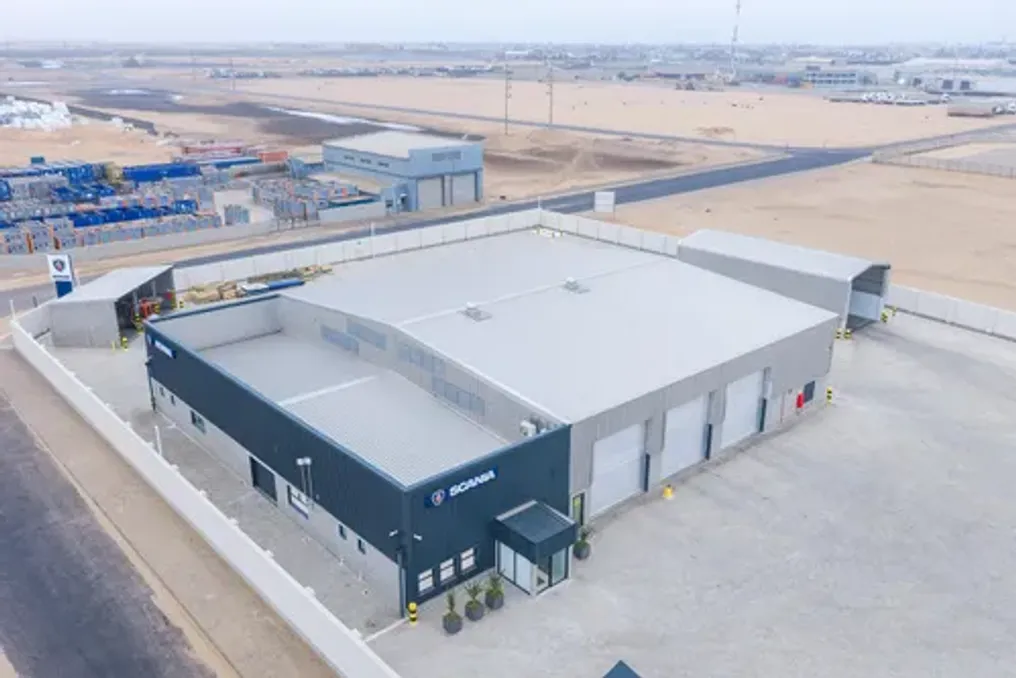
Scania has officially opened its dealership in Walvis Bay, marking significant investments in long-term cooperation with Namibia and strengthening support for customers operating on key South African transport corridors.
This opening also served as the first official presentation of the Scania SUPER model in the region and the introduction of the first SUPER trucks to Namibia. The new facility continues Scania's development of its presence in Walvis Bay, where the branch was established in 2008 as a support point for port users.
Over time, the role of this point has expanded to support transport operations along the Trans-Kalahari, Trans-Caprivi, and Walvis Bay-Ndola-Lubumbashi corridors, thereby emphasizing the strategic importance of the city as a logistics hub.
These investments are aimed at meeting the changing needs of Namibia's transport industry and the growing demand for premium transport solutions. By providing a full range of sales, repair, and after-sales service closer to customers, Scania aims to increase vehicle uptime, enhance technical support, and help operators manage operating costs throughout the vehicle's lifecycle.
Clifford Marchbank, Country Manager for Scania Namibia, stated: 'The opening of our dealership in Walvis Bay represents an important step in strengthening the support we provide to our customers in Namibia.' He added that 'our customers operate in challenging conditions where reliability, transport availability, and operational efficiency are critical. These investments bring our capabilities closer to their operations and reinforce our commitment to supporting their business in the long term.'
Service focused on customer uptime
The Walvis Bay dealership offers a wide range of services, including vehicle sales, workshops, maintenance services, diagnostics, Scania parts, driver support, and customer care solutions.
The workshop is equipped with modern diagnostic equipment and specialized tools for servicing the latest Scania models. Dust-controlled environments, modern cleaning facilities, and highly qualified Scania technicians further ensure the maintenance requirements for vehicles operating in Namibia's harsh conditions.
Customers can also benefit from preventative maintenance programs, technical support, and prompt repair and service capabilities. These services are designed to detect potential issues early, reduce unnecessary downtime, and maintain vehicle performance throughout its service life.
For hauliers operating over long distances and across international borders, reliable after-sales support and access to necessary spare parts are critical for the continuity of goods movement. This facility strengthens Scania's ability to support customers in all aspects of their operations—from vehicle acquisition and service planning to ongoing technical assistance.
Introduction of Scania SUPER in Namibia
One of the key highlights of the opening was the introduction of the Scania SUPER powertrain platform to the Namibian market. This platform reflects Scania's latest achievement in engine efficiency, drivability, and operational characteristics, with a special focus on helping transport operators improve fuel economy and reduce total cost of ownership.
The Scania G460 SUPER model combines an advanced 13-litre engine with the latest gearbox technology and optimized transmission components. These technologies are designed to ensure efficient power transmission, strong torque delivery, and improved handling on the diverse terrain encountered during long-haul transport.
Fuel remains one of the largest operating expenses for transport companies. Therefore, improving fuel efficiency can have a significant impact on fleet economics, especially for operators undertaking complex regional and cross-border routes.
Beyond fuel consumption, the SUPER platform offers advantages through component durability, flexible maintenance scheduling, and driver comfort. These factors contribute to a broader approach to vehicle ownership, where performance is measured not only by the truck's road capabilities but also by its contribution to the client's overall business efficiency.
Marchbank noted: 'The introduction of SUPER is a major milestone for Scania and the Namibian transport industry.' He continued: 'Transport operators are constantly under pressure to manage fuel costs, increase productivity, and maintain a reliable level of service. The SUPER platform meets these priorities through a combination of fuel efficiency, performance, and advanced powertrain technology. Its introduction also reflects our confidence in the Namibian market and our commitment to providing our customers with the latest Scania solutions.'
Supporting Customer Success: EBE Transport takes delivery of five G460 SUPER trucks
The opening coincided with Scania handing over five G460 SUPER trucks to EBE Transport, demonstrating the practical application of the new platform in Namibia's transport sector. EBE Transport chose the G460 SUPER due to its fuel efficiency, reliability, and long-haul capabilities. These trucks will be used in the company's long-distance operations, ensuring the movement of goods across Namibia and neighboring markets.
For an operator working on regional and cross-border routes, vehicle efficiency and availability play a vital role in cost management and maintaining productivity. The G460 SUPER is designed to meet these requirements through efficient powertrain performance, flexible servicing, and reduced total cost of ownership throughout the vehicle's lifecycle.
Scania expects these vehicles to contribute to lower fuel costs, increased fleet productivity, greater uptime, and improved driver satisfaction. The new dealership will further support EBE Transport and other customers through access to technical expertise, service, and spare parts.
Marchbank concluded: 'The handover of vehicles to EBE Transport demonstrates the value of close collaboration with our customers to understand their operational needs and identify solutions that support their business goals.' He added: 'Our responsibility goes beyond simply providing a vehicle. It lies in ensuring the products, services, and continuous support that help customers operate efficiently, remain competitive, and achieve sustainable business results.'
Long-term commitment to Namibia
The Walvis Bay dealership and the launch of SUPER are part of Scania's broader priorities for Namibia: expanding presence, increasing the number of Scania vehicles, strengthening after-sales support, and helping customers reduce operating costs.
As regional trade and cross-border transport continue to drive economic activity, Scania is focused on providing transport solutions that combine vehicle performance, service support, and financial offerings tailored to customer needs.
The new facility strengthens the company's ability to support customers throughout the vehicle's lifecycle, while the SUPER platform expands the range of technologies available to operators striving for greater efficiency and improved operational economics.
Through continuous investment in its network, personnel, and products, Scania aims to build long-term partnerships with customers and contribute to the creation of a more efficient and sustainable transport industry in Namibia.