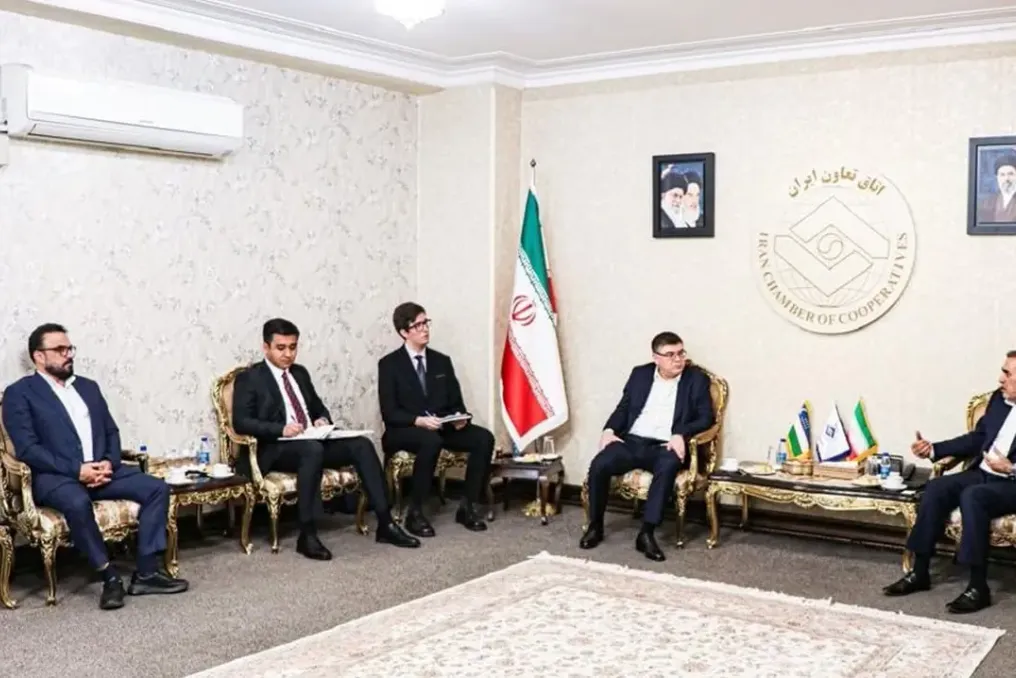
On October 21, Iran's Minister of Industry, Mining, and Trade, Mohammad Atabak, and the Minister of the Eurasian Economic Commission, Andrey Slepinev, reaffirmed the common goal of increasing trade turnover between Iran and the Eurasian Economic Union (EAEU).
According to a report published by TV BRICS and Pars Today, Mr. Atabak stated that Iran possesses the necessary resources and infrastructure to support the expansion of exchanges. The Union presented a list of desired goods, while Tehran prepared its own list based on production capabilities and domestic needs.
Although the statement was brief and lacked specific timelines or figures, its significance lies in the foundation upon which it is built. This meeting followed the entry into force of the full free trade agreement in May 2025, which replaced the temporary agreement that had been in effect since 2019.
As reported by Armenpress, the average customs duty on exports from the EAEU to Iran will decrease from 20 percent to 4.5 percent, with preferential terms applying to approximately 90 percent of goods. Experts cited by the newspaper predicted that annual turnover could reach $12 billion.
The dynamic of cooperation continues. The parties signed a three-year joint work plan in the autumn of 2025. Tehran Times reported that Mr. Slepinev called this partnership a 'qualitatively new level of interaction' at the summit in Kyrgyzstan. The Iranian publication Eghtesad Online reported a 22 percent increase in trade in the first year of the agreement's implementation, although the author notes that a full report is unavailable for verification, and this figure requires caution. Furthermore, the Eurasian Economic Commission announced further steps to eliminate trade barriers on October 15.
Reasons for Both Sides' Endeavors
The logic of this cooperation is clear. For Iran, the union provides a customs zone on its northern borders that is independent of Western financial channels. In turn, Iran offers the EAEU a large market and a southern route to the Persian Gulf and the Indian Ocean.
Russia plays a dominant role in this picture. According to the Jamestown Foundation, bilateral Russian-Iranian trade has increased from approximately $1.5 billion in 2020 to about $5 billion in 2023. Russia exports significantly more to Iran than it imports, supplying nearly $4 billion in exports versus nearly $1 billion in Iranian exports.
Obstacles Are Not Merely Rhetorical
This imbalance points to the core problem. A Jamestown analysis of ruble and rial trade revealed a constant currency mismatch, exchange rate volatility, and the existence of both official and market rates in Iran, which can negatively affect exporters. Traders continue to conduct deals in dollars, converting funds later, which generates disputes.
Efforts to integrate national payment systems and conduct settlements in local currencies, which are now highlighted in Medialine regarding most transactions between Iran and Russia, ease the dollar issue but do not eliminate it entirely. Physical infrastructure is equally important. The Rasht-Astara railway line, connecting Iran and Azerbaijan over approximately 160 kilometers, is intended to complete the North-South Transport Corridor. TASS reported that the project costs 1.6 billion euros, with construction and practical implementation jointly financed by Russia and Iran starting April 1, 2026. Before operation begins, most trade is forced to move via slower and more expensive routes, regardless of tariffs.
Mr. Atabak's emphasis on 'technical issues affecting trade' is telling. Lists of goods and tariff schedules are a simple part. The decisive factors for the actual movement of goods are certification standards, customs procedures, banking channels, and cargo throughput capacity.
What to Watch Out For
Three criteria will determine whether this is real progress or merely a formality. First, whether the lists of goods from both sides will turn into concrete schedules. Second, whether trade will expand beyond Russia to Kazakhstan, Belarus, Armenia, and Kyrgyzstan. Third, whether the Rasht-Astara section will be built on schedule.
There is also structural caution. Trade formed under sanctions pressure can only be sustainable as long as the underlying policy remains stable, as the union members themselves are subject to Western measures. The ambitions are justified, and the legal framework exists; success will depend on railway infrastructure, payment systems, and routine documentation.