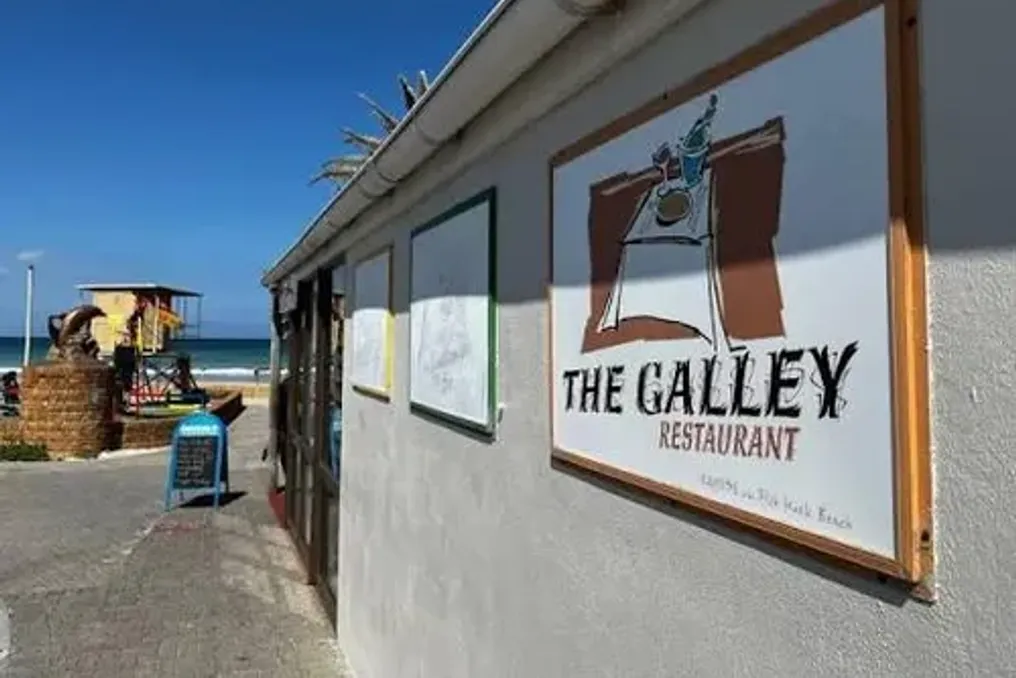
The question of relocating living culture has resurfaced due to the dispute surrounding The Galley restaurant in Fish Hoek, which is managed by indigenous people on the beach in Cape Town. This dispute goes beyond a simple lease agreement, questioning the feasibility of realizing cultural rights if spaces that support indigenous cultures are subjected to commercial competition.
The history of Fish Hoek makes this issue extremely relevant. During apartheid, the beach was exclusively for white people. The inscription 'Previously for whites only' is not just a decorative detail but a description of a landscape where public access was regulated by racial segregation. The abolition of apartheid did not automatically restore broken cultural ties or guarantee indigenous communities significant access to places connected to their identity.
This conflict must be viewed in the context of the colonial dispossession of the Khoikhoi and San peoples, as well as the racial structuring of land and public space during apartheid.
Fish Hoek: A Landscape Older Than the Colonial Map
The history of the Cape Peninsula predates European settlement. For the Khoikhoi and San peoples, this region is a ancestral landscape of memory, identity, spirituality, livelihoods, knowledge, and belonging. Its coastline, caves with rock art, Khoisan fishing traps, freshwater springs, and mountains cannot be reduced to property value, lease agreements, or commercial revenue.
Pierce Cave above the Fish Hoek valley is an important archaeological site documented in the official Khoisan Heritage Report (2021), adopted by the South African Cabinet at the time. Excavations in 1927 discovered remains known as the Fish Hoek Man and evidence of ancient habitation. The wider coastline also records the indigenous connection to marine resources and fishing, challenging versions that begin the history of the Cape with the arrival of colonists.
The Khoikhoi and San are distinct peoples often grouped under the general term 'Khoisan,' despite the diversity of their histories and ways of life. Their presence predated Dutch colonial rule in 1652. Colonial expansion, land seizure, labor exploitation, epidemics, and colonial institutions profoundly altered their relationship with land and resources.
The Galley: A Commercial Venue with Cultural Life
At first glance, the dispute over The Galley seems to concern a commercial lease agreement. The restaurant has been operating on Fish Hoek beach since 1987 under the management of Herb and Mateya Eichel. Mateya Eichel identifies herself as a woman of the Cape Khoi people, belonging to the Khochokwa community.
According to Cultural Survival reports, the premises became more than just a place to eat: it housed a small museum displaying indigenous culture, and the back area was used for ceremonies, cultural gatherings, and community events. A traditional indigenous wedding held on the beach in September 2021 demonstrated how this territory can serve as a site for cultural practice.
The Galley Cannot Simply Be Moved Elsewhere
For Khoisan communities seeking to restore their relationship with Fish Hoek, the argument is not merely that The Galley hosted cultural events. The restaurant, the beach, and the mountain form a single interconnected cultural landscape. The Galley is woven into this living connection: it is a cultural site for gathering, accessing the beach, storing cultural artifacts, exchanging knowledge, and celebrating a landscape whose significance transcends commercial use. Its importance cannot be separated from its location and moved elsewhere unchanged.
The suggestion that cultural activities can simply continue elsewhere risks repeating historical displacement. Khoisan communities have experienced forced evictions and exclusion from places central to their identity and sense of belonging. The loss of this reclaimed space will not be a neutral change of address; it will interrupt the process of healing from historical trauma. Culture is not restored by moving objects to a replaceable venue. It is sustained through relationships between people, memory, place, and practice.
The Galley went beyond the terms of a commercial lease agreement. Mateya and the restaurant act as custodians of culture, allowing Khoisan communities to use the space, store and share artifacts, gather, and celebrate the broader cultural landscape. This stewardship is inseparable from its location: the mountain, the beach, and the restaurant are part of a single living whole. Its influence extends beyond the Khoisan communities.
Mateya's stewardship also serves families using the beach, local pensioners, and schoolchildren from historically disadvantaged communities displaced from Fish Hoek to areas like Ocean View. She supports educational scholarships for single mothers' children and residents of nearby Masifumelele. These contributions do not replace the cultural argument but demonstrate the value at stake for the wider community and the many people who could suffer from its loss.
Thus, the question is not simply whether the restaurant or the tenant can be replaced. It is what happens when a living cultural center is detached from the landscape in which a community is recovering from a traumatic past. Any decision must account for the cumulative harm of renewed displacement and the destructive impact on efforts to restore continuity, dignity, and a sense of belonging.
The cultural role of The Galley does not automatically grant it private ownership, guarantee a lease, or establish official heritage status. However, its cultural significance remains relevant, reflecting decades of social relations, practices, and living heritage that a mere lease agreement cannot encompass.
Section 31: Constitutional Promise
Section 31 of the South African Constitution protects the rights of persons belonging to cultural, religious, and linguistic communities. It states that they may not be denied the right, together with other members of their community, to enjoy their culture, practice their religion, use their language, and to establish, join, and maintain cultural, religious, and linguistic associations and other civil society bodies. Section 31(2) clearly stipulates that these rights may not be exercised in contravention of any provision of the Bill of Rights.
Section 30 also protects the right of everyone to use their language and participate in cultural life of their choice, provided the Constitution is observed. These provisions recognize the collective nature of culture. Cultural life requires spaces for assembly, maintaining associations, transmitting knowledge, and practicing traditions. If these spaces disappear without due consideration, cultural rights risk becoming empty promises.
International Standards and Living Heritage
The United Nations Declaration on the Rights of Indigenous Peoples (UNDRIP) offers an important restorative framework, which South Africa endorsed on September 13, 2007. Article 11 concerns the rights of indigenous peoples to practice and revitalize their cultural traditions and customs, as well as to preserve, protect, and develop their past, present, and future cultural expressions. Article 12 concerns the right to manifest, practice, develop, and teach spiritual and religious traditions, including access to cultural and religious sites.
Article 25 recognizes special spiritual connections to traditionally owned, occupied, or used lands, territories, waters, and coastal seas. Article 26 addresses rights related to lands, territories, and resources traditionally owned, occupied, used, or acquired. The importance of UNDRIP lies in the principles it sets out, including the participation of indigenous peoples and the protection of cultural ties to the land. Combined with constitutional guarantees and relevant domestic legislation, it helps explain why culturally significant sites cannot be assessed solely in terms of their economic benefit.
Indigenous cultures are living systems supported by land, language, knowledge, ceremonies, and intergenerational relationships. Loss of access to a place can harm the entire community, not just its immediate users.
Reconciliation Must Mean More Than Memories
The history of Fish Hoek as once a 'Whites Only' beach lends significance to this dispute that is inextricably linked to the constitutional transformation of South Africa. Space, once structured by racial exclusion, should not be assessed as if history holds no meaning for the present. The question is not whether the past should dictate every modern decision. The question is whether the past will be acknowledged when state institutions decide whose relationship with a place deserves attention.
If the coastline is valued only by the price it can bring, South Africa risks preserving a landscape while losing the histories, connections, and living cultures that give the landscape meaning. The answer is not to declare commercial interests illegal before examining the facts. It is to reject the assumption that commercial value is the only measurable or significant indicator.
The Khoi and San peoples should not be remembered only as peoples who once belonged to this land. Their histories and cultures are part of its present and future. Constitutional reconciliation demands more than memorials, official statements, and occasional celebrations.